The Cross River State Government has pledged to sustain investments in fisheries development, mangrove restoration and climate resilience following the successful completion of the FAO-Nigeria UK PACT project.
This is aimed at strengthening environmental protection and social inclusion in coastal communities.
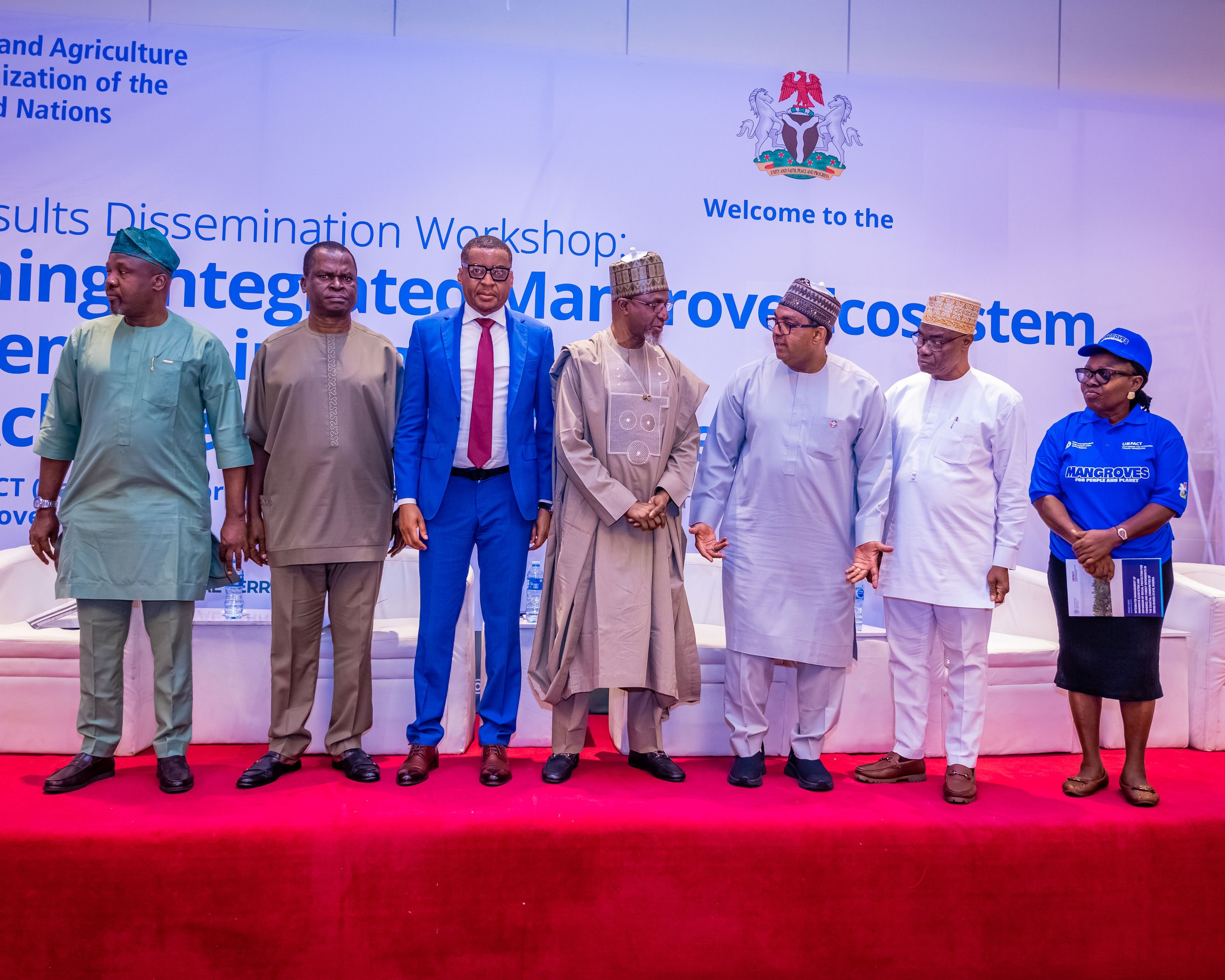
The commitment was made by the Deputy Governor of Cross River State, Peter Odey, at the Project Results Dissemination Workshop and closure event of the UK PACT–FAO Project on Integrated Management of Mangrove Ecosystems and Expansion of Social Protection for Fisheries and Forest Dependents in Coastal Communities of Cross River State, held in Abuja.
Representing Governor Bassey Otu, Odey described the initiative as a transformative intervention that had delivered tangible benefits to communities, government institutions and vulnerable households across the state.
“What you have done in Cross River State has been of great effect,” he said, noting that the project had positively impacted sectors including agriculture, environment, forestry, social welfare and community development.
Although expressing concern over the project’s conclusion, the Deputy Governor assured stakeholders that the state government would build on the gains achieved through continued collaboration with the Federal Ministry of Environment and development partners.
“Cross River State is going to take a walk from there. We remain committed to sustaining the policies, institutions and partnerships that promote sustainable natural resource management, climate-resilient biodiversity conservation and inclusive economic growth,” he said.
Odey noted that Cross River is home to one of the largest and most significant mangrove ecosystems in Nigeria and West Africa, providing critical support for biodiversity conservation, fisheries production, shoreline protection, climate change mitigation and the livelihoods of thousands of residents.
He warned, however, that environmental degradation, unsustainable resource exploitation and climate-related challenges continue to threaten the fragile ecosystem.
According to him, “the project demonstrated that environmental conservation and socio-economic development can be pursued simultaneously through mangrove restoration, capacity building, livelihood diversification and support for fisheries and forest-dependent households.”
The Deputy Governor particularly commended the project’s emphasis on women and youth empowerment, saying it haa created income-generating opportunities while reducing pressure on mangrove resources and strengthening community resilience.
Ecosystem Restoration
Delivering the keynote address, the Minister of Environment, Mallam Balarabe Abbas Lawal said the project had provided a practical model for integrating ecosystem restoration with community development and climate action.
Lawal expressed the Nigerian Government’s appreciation to the Government of the United Kingdom through the UK PACT Programme and the Food and Agriculture Organisation of the United Nations (FAO) for supporting Nigeria’s efforts to strengthen climate resilience, biodiversity conservation and sustainable livelihoods.
The Minister described Nigeria’s mangrove ecosystems as vital natural assets that support carbon sequestration, biodiversity conservation, coastal protection and fisheries-based livelihoods but remain vulnerable to unsustainable exploitation, invasive species and climate change.
He highlighted key achievements of the project, including the restoration of 15 hectares of degraded mangrove forests using indigenous species, the removal of invasive Nypa palm, the establishment of demonstration sites and strengthened local capacity for sustainable mangrove management.
Lawal said the project also improved livelihoods through aquaculture, beekeeping, mushroom cultivation and Afang production, while the distribution of energy-efficient cookstoves and fish-processing ovens helped reduce dependence on mangrove wood.
According to him, “more than 4,800 beneficiaries, particularly women and vulnerable households, directly benefited from the interventions.”
The Minister further pointed to major policy and institutional milestones achieved under the project, including the registration of 50 cooperatives, enhanced access to finance, support for public-private partnerships and the validation of strategic instruments such as the Agriculture, Forestry and Other Land Use (AFOLU) Policy, Legal Framework Analysis and Integrated Coastal Zone Management Plan.
“As this project comes to a close, our focus must shift to sustaining and scaling its achievements. We must strengthen community ownership, expand restoration efforts, promote climate-resilient livelihoods and leverage emerging opportunities in the blue economy and carbon markets,” he said.
Lawal reaffirmed the Federal Ministry of Environment’s commitment to consolidating the gains recorded under the initiative, noting that the project aligns with Nigeria’s Nationally Determined Contributions (NDC 3.0), National Adaptation Plan, commitments under the Ramsar Convention on Wetlands, the Paris Agreement and the Sustainable Development Goals.
FAO
Earlier, the FAO Representative in Nigeria and ECOWAS, Dr. Hussein Gadain said the project had demonstrated the power of partnerships in addressing environmental challenges while improving livelihoods.
Gadain explained that “the initiative adopted a holistic approach that combined ecological restoration, livelihood diversification, gender equality and institutional strengthening.”
According to him, degraded mangrove ecosystems were restored while alternative livelihood opportunities, including aquaculture, beekeeping and mushroom farming, were introduced to reduce dependence on forest resources.
He said that women and young people had taken on greater leadership roles within their communities, strengthening local governance and promoting inclusive participation in conservation efforts.
The FAO representative urged stakeholders to build on the momentum generated by the initiative by embedding sustainable mangrove management into development planning and replicating successful approaches across Nigeria’s coastal regions.