The Nigeria Customs Service (NCS) has warned against wildlife trafficking, warning that Nigeria’s borders and transport corridors remain under surveillance.
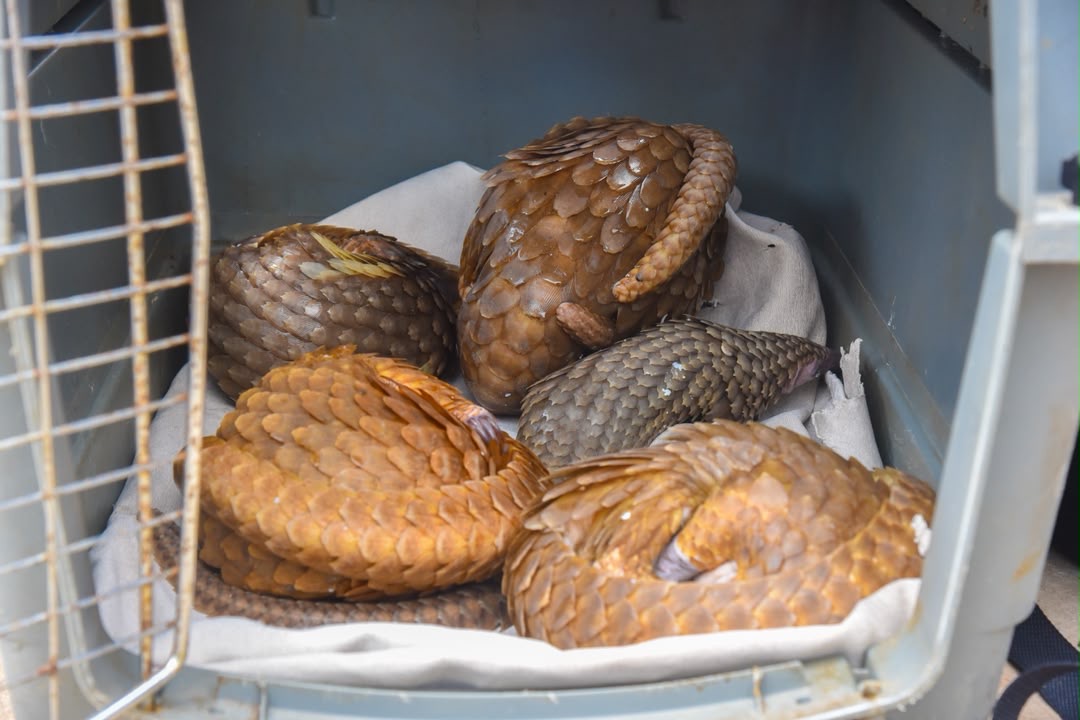
The warning came after the rescue of five live pangolins in Ogun State.
The animals were intercepted at about 1:18 a.m. on Friday, October 23 during an intelligence-led anti-smuggling operation along the Igbo-Ora/Imeko-Afon axis of the state.
The Customs Service said the pangolins were found confined in wire-mesh cages and concealed in a manner intended to evade detection, while the suspected traffickers fled on sighting officers of the Federal Operations Unit (FOU), Zone A.
READ ALSO: Customs foils Wildlife Trafficking Attempt
The latest interception comes amid a series of wildlife seizures within approximately seven days, prompting calls for investigations to identify and dismantle the networks behind the illegal trade.
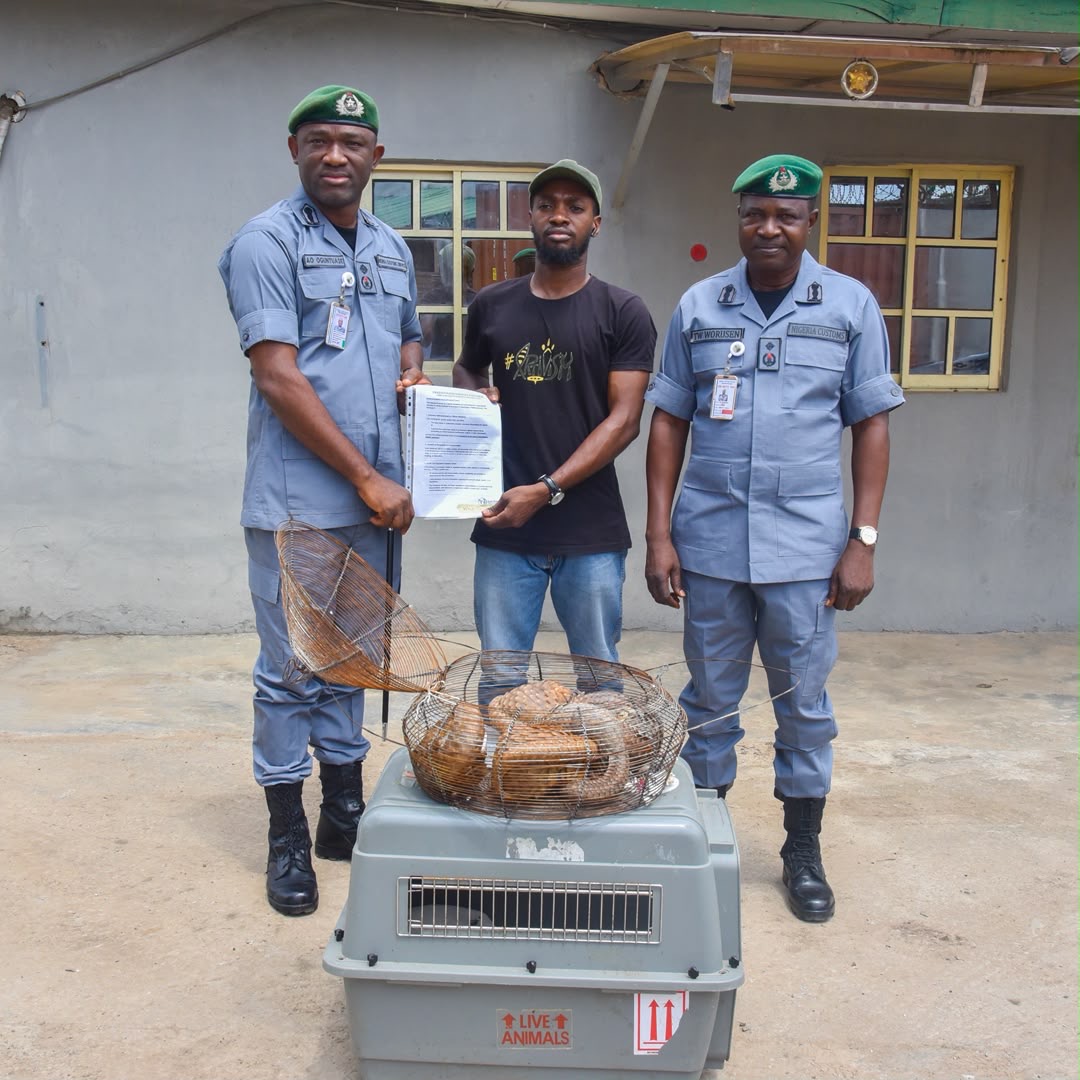
Deputy Comptroller in charge of Enforcement, Oluwaseun Oguntuase, who spoke during the handover of the rescued animals, said the Service would sustain intelligence-driven operations and strengthen collaboration with conservation agencies to combat wildlife trafficking.
“Pangolins are among the world’s most trafficked mammals. This seizure is another clear warning to those involved in the illegal wildlife trade that Nigeria’s borders and transport corridors remain under active surveillance,” he said.
Oguntuase said that offenders would face the full weight of the law, stressing the Service’s commitment to enforcing Nigeria’s obligations under the Convention on International Trade in Endangered Species of Wild Fauna and Flora CITES and relevant national legislation.
Protected Habitat
The rescued pangolins were handed over to the Greenfingers Wildlife Initiative Centre for safekeeping, rehabilitation and eventual release into a protected habitat.
Receiving the animals, the centre’s representative, Dr Austin Tochukwu, commended Customs for the intervention and assured that the pangolins would receive the necessary care.
Pangolins are listed under Appendix I of CITES, which prohibits international commercial trade in wild-caught specimens.
Nigeria’s wildlife protection laws also prohibits relevant forms of illegal hunting, capture and trade.
The Customs Service has reiterated that protecting Nigeria’s biodiversity requires sustained cooperation among security agencies, conservation organisations and members of the public.