The Democratic Republic of Congo plans to tighten state control over geological data used in mining exploration, as it seeks to influence future mineral discoveries and reduce risks for investors, officials say.
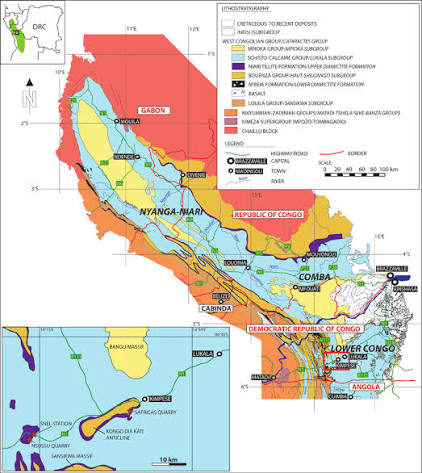
The country is accelerating geological mapping, airborne surveys and the digitisation of historical archives to build a national geological data bank on its critical minerals, according to Raoul Wazenga Vitima, Director General of the National Geological Survey of Congo (SGNC).
The databank is expected to be fully operational by the end of 2026, with the government retaining control over access and charging fees for some information, Vitima said.
He said requests for access would be assessed against investor needs and the protection of Congo’s strategic interests.
“The data generated under these programmes constitute a strategic asset of the Congolese state,” Vitima said.
Tiered Access System
The nationwide mapping programme gained momentum in January after Congo signed a $180 million contract with Spain’s Xcalibur, a global leader in geo data mapping.
The three-year project covers more than 700,000 square kilometres using airborne geophysics, digitised data and advanced analytics to identify exploration targets, Vitima said.
The project is one of several mapping programmes funded by the government, mining revenues and international partners, with results to be added to the national databank.
Vitima said the databank would operate a tiered access system, with basic geological information available free of charge while more sensitive datasets would attract fees.
He said revenue from the data products would help fund continued exploration and mapping, but did not specify the fee structure or categories of data to be charged.
Strategic Mineral Control
Despite hosting some of the world’s richest deposits of copper, cobalt, lithium, tantalum and gold, Congo remains one of the least-explored major mining jurisdictions.
SGNC estimates that systematic exploration covers barely 20% of the country, while mining activity remains0 concentrated in the copper-cobalt belt of Lualaba and Haut-Katanga.
The initiative comes as Congo sits at the centre of intensifying competition between the United States and China for critical mineral supplies.
Both countries have struck separate agreements with Kinshasa aimed at increasing cooperation in the sector.
Vitima said the data bank was not intended to favour either country, adding that Congo would apply the same access rules to all companies regardless of origin.
Mining executives and a geologist said greater control of geological data could allow Kinshasa to influence where exploration capital flows and which future deposits are developed.
“Control of geological data is increasingly becoming a strategic policy tool,” said Mark Jessell, a geology and geophysics expert at the University of Western Australia.
“It affects not only what a country mines today, but what it may discover and develop tomorrow.”
Transparency concerns
Congo’s cobalt reserves grew by more than 76% between 2000 and 2025 to an estimated six million tonnes, more than half of known world reserves, according to the U.S. Geological Survey.
Jean Jacques Kayembe Mufwankolo, Congo head of the Extractive Industries Transparency Initiative, said a transparent system based on objective criteria could attract a wider range of investors and strengthen the country’s negotiating position.
Moise Liboto Makuta, Congo head of the Natural Resource Governance Institute, said comprehensive geological data could help the government negotiate mining deals from a position of knowledge rather than guesswork.
READ ALSO: US Group Sues Apple Over Congo Conflict Minerals
However, some industry participants favour a more open model, citing the importance of transparency and investment.
KoBold Metals, a California-based mining exploration company, said it had made more than 260,000 pages of Congo’s historical geological records publicly available.
Its Congo head, Benjamin Katabuka, said the company’s objective was to have open data for explorers and researchers.
Makuta said the real test of Congo’s system would be whether the government applied its rules fairly and openly, rather than allowing insiders to gain early access.
Reuters