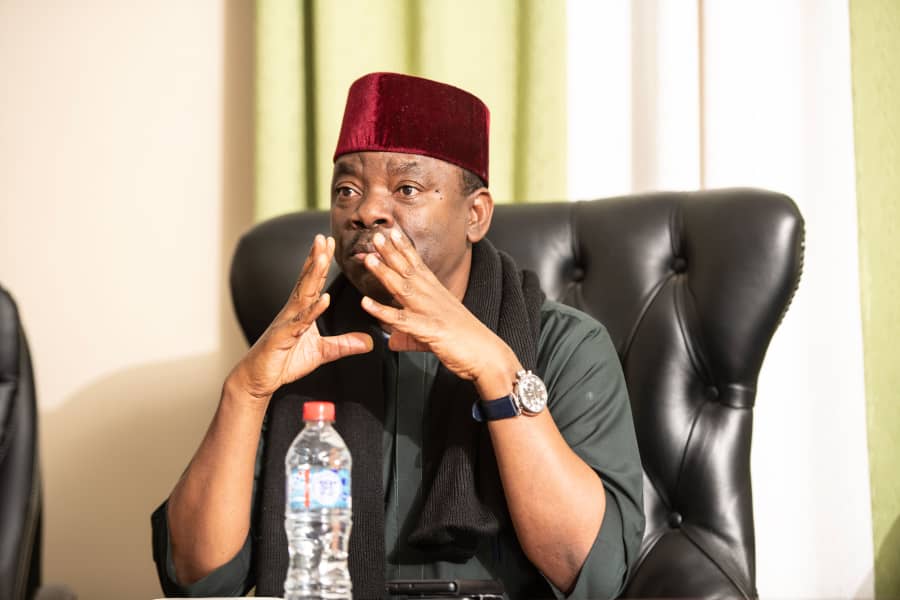
The Acting Nigerian High Commissioner to South Africa, Temitope Ajayi, has solicited more support from private organisations, public-spirited individuals and the public to aid the repatriation of stranded Nigerians in South Africa.
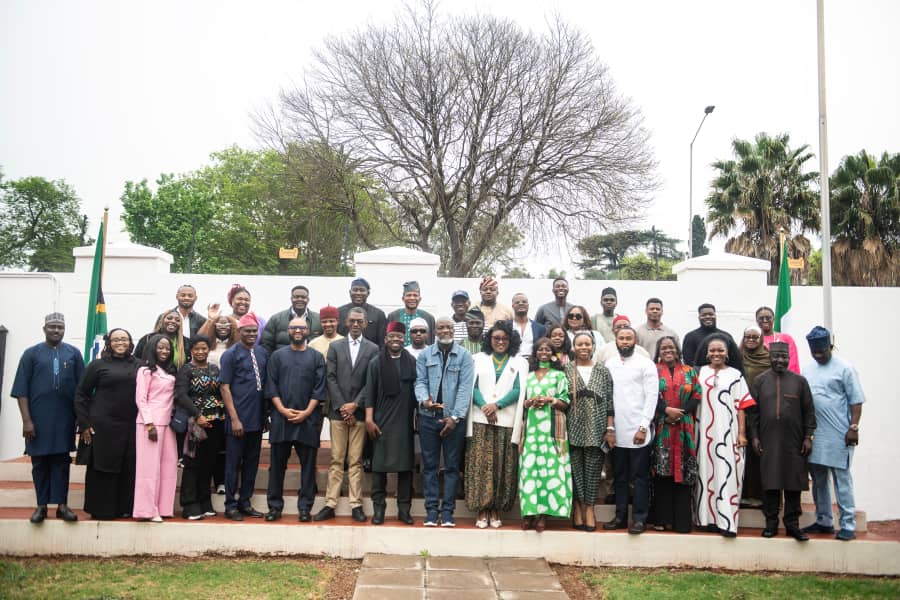
Ajayi stated this at the Nigerian High Commission in Pretoria when the MTN Media Innovation Programme Cohort 5 paid him a courtesy visit. The delegation was led by representatives of MTN Nigeria and Pan-Atlantic University, Lagos.
So far, the Commission has evacuated 1,699 Nigerians from the country this year, in partnership with Air Peace.
However, following a renewed call by the March and March group for foreigners to leave the country by September 30, the Commission is working on another round of evacuations.
Ajayi said; “The March and March group has not relented in terms of calling foreigners to leave the country. And they have also fixed another date of September 30 as the deadline for foreigners to leave South Africa.
“We’re not taking that threat lightly because we have seen the kind of strident resolve on their part to see that people leave. Some have resorted to violence in some cases, and we have not seen any commensurate government response to this group. So, that is the reason we’re not taking that lightly.”
Interventions
The High Commissioner acknowledged recent support from the Redeemed Christian Church of God to evacuate 500 Nigerians from South Africa.
He therefore appealed to other religious bodies, including the General Overseer of Winners Chapel, David Oyedepo, Pastor Jerry Eze of Streams of Joy International, as well as the Supreme Council for Islamic Affairs in Nigeria, to assist in flying back more stranded Nigerians.
According to him, “the Commission is working to commence another round of evacuations through the support being provided by the Redeemed Christian Church of God.”
He appealed to public-spirited individuals and organisations to support efforts to bring the remaining stranded Nigerians back home.
The Nigerian Government had previously sponsored five evacuation flights from South Africa, while some individuals and state governments have also supported the repatriation exercise.
Enugu State has provided administrative and logistical support to assist with the evacuation of its indigenes, while Delta, Edo, Abia, Ondo, Lagos and Imo states have provided allowances for some of their returning indigenes.
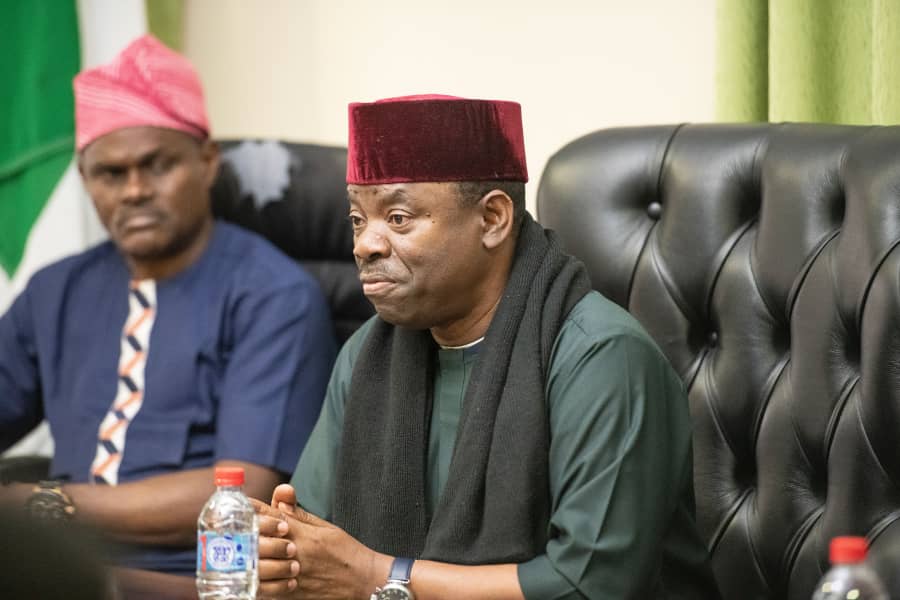
The Nigerian High Commission in South Africa has recorded at least 10 verified cases of xenophobic attacks against Nigerians this year.
“We’ve seen a spate of attacks this year alone, nothing less than 10 in terms of quantifying it,” Ajayi stated.
The High Commissioner also expressed concern over the South African government’s response to the reported attacks against Nigerians.
“I must say we have not been seeing an encouraging response from the South African government in the way we expected it. We would have expected that when a violent crime is committed, you see the government go all out, but we have not seen any arrest, not until recently when we heard that some people would be arrested.
“They have not responded to us to the extent we expected because we believe that they have the capacity, they have the wherewithal, they have everything it takes. If they want to rein in anyone here, government can do it,” he explained.
The Nigerians who were repatriated comprise both legal and illegal migrants. Most of the legal migrants left due to fear, while some became undocumented because their papers took a long time to process.
The mission has been engaging with local and Nigerian communities in the provinces through social cohesion dialogues aimed at fostering peaceful coexistence between the two communities.
Also, under the MoU to be signed by both countries, the Consular and Migration Consultation will provide a platform for the foreign ministries and missions of both countries to engage regularly on consular matters.