Experts have called for data-driven policies and proactive social protection measures to address the effects of conflict, flooding, drought and extreme heat on livelihoods and employment opportunities in Nigeria.
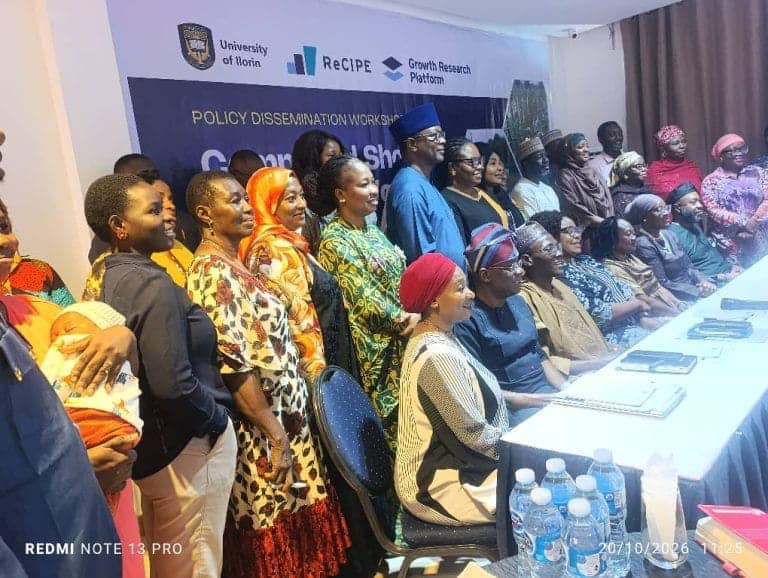
They made the call at a policy dissemination workshop on Climate, Conflict and Gendered Work in Nigeria, held in Abuja, where researchers and stakeholders examined how climate shocks and insecurity affect men and women differently in the labour market.
The workshop presented research findings on the combined effects of climate-related disasters and conflict on employment, livelihoods and household welfare, highlighting the need for gender-responsive policies to protect vulnerable populations.
READ ALSO: COWA Launches Community Climate Action in Nigeria’s Border Regions
The lead researcher and convener, Dr Khadijat Amolegbe, of the Department of Agricultural Economics and Farm Management, University of Ilorin, said the research, conducted over approximately 12 months, examined how conflict and climate-related disasters shape employment opportunities and labour market outcomes for men and women.
Speaking on how Nigeria’s social protection system responds to climate and conflict shocks, Amolegbe stressed the need for co-ordinated interventions that recognise the links between environmental disasters, insecurity and access to decent work.
She said the research provided evidence to guide policy decisions and strengthen social protection systems against the growing challenges faced by vulnerable households.
The Global Lead of the Women Environmental Programme, Dr Priscilla Achakpa, urged governments and other stakeholders to prioritise preparedness and preventive measures rather than wait for disasters to occur before taking action.
Proactive Planning
Achakpa said proactive planning was essential to reducing the effects of climate shocks and conflict on affected communities, particularly those whose livelihoods depended on climate-sensitive economic activities.
The Head of the National Social Register at the National Social Safety Nets Coordinating Office, Mohammed Bala, called for an integrated approach linking social protection, climate change adaptation and conflict-risk mitigation.
Bala said adaptive social protection required reliable data to identify vulnerable households and ensure that government interventions reached those most affected by economic hardship, environmental disasters and insecurity.
He described the National Social Register as a critical tool for identifying poor and vulnerable households but noted that its coverage needed to expand to accommodate more Nigerians requiring assistance.
Citing poverty estimates, Bala said the 2019 Nigeria Living Standards Survey put the country’s poverty rate at 40.1 per cent, while a more recent World Bank estimate placed it at 53 per cent.
He stated that multidimensional poverty affected approximately 63 per cent of Nigerians, underscoring the need to expand social protection coverage and improve the delivery of interventions.
Bala disclosed that the National Social Register covered about 20 million households, representing approximately 78 million people.
He stressed that improved data collection, inter-agency co-ordination and evidence-based planning would enable the government to design more effective interventions for households facing the combined pressures of climate disasters, conflict and economic vulnerability.
The experts also called for stronger collaboration among researchers, government institutions and civil society organisations to translate research findings into practical policies that protect livelihoods and strengthen the resilience of vulnerable Nigerians.
Discussions at the workshop highlighted the need to understand how overlapping shocks affect men and women differently and incorporate these gender-specific impacts into national employment, climate adaptation and social protection policies.