

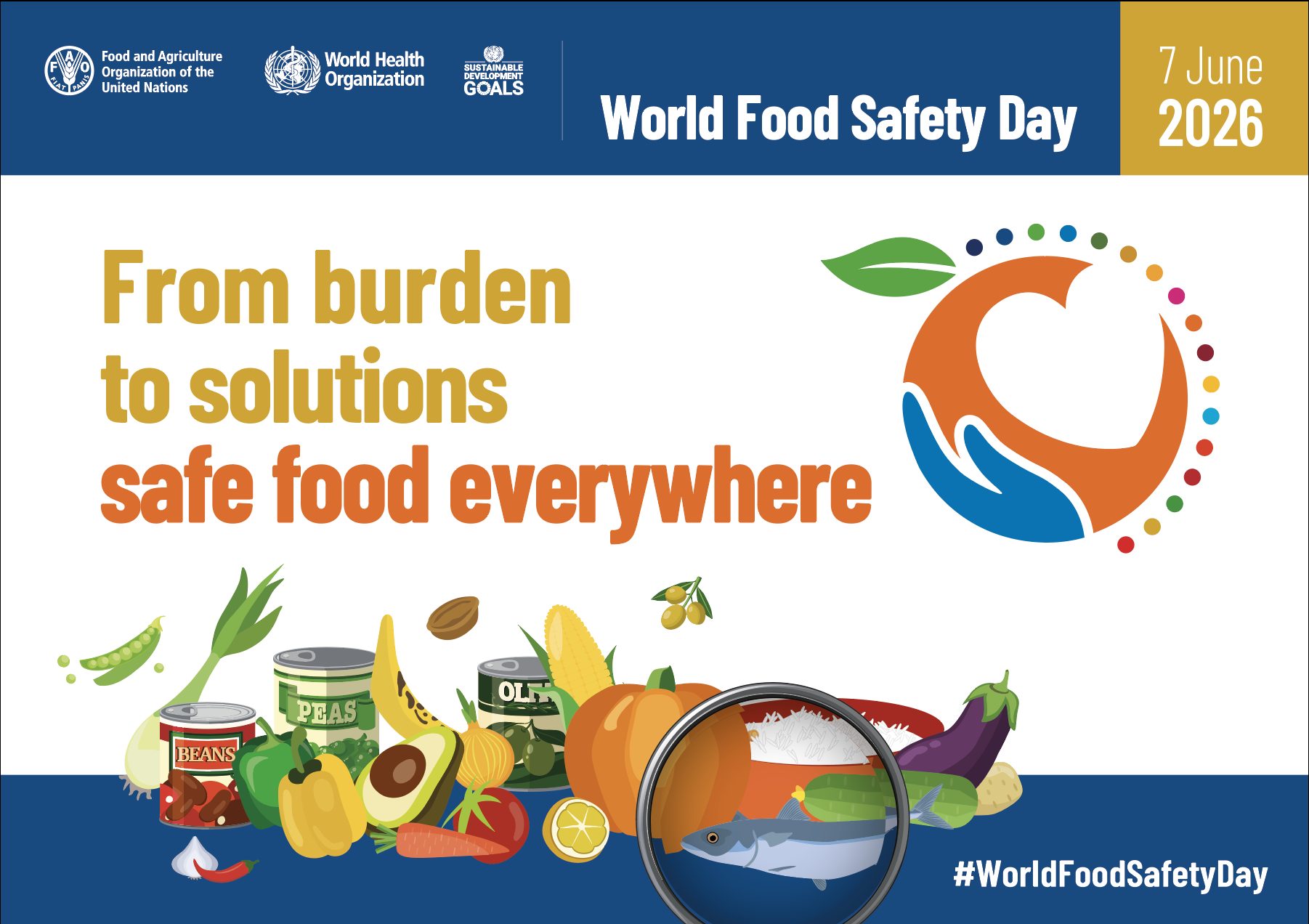
The United Nations Food and Agriculture Organiation (FAO) has emphasised that credible data on the health impacts of unsafe food is essential for developing evidence-based policies, driving coordinated action across sectors, and enabling consumers to make informed decisions.
The FAO Director-General, Dr. QU Dongyu, made the assertion in a message marking the 2026 World Food Safety Day (WFSD), observed annually on June 7. The theme for this year’s celebration is: “From Burden to Solutions: Safe Food Everywhere.”
According to Dongyu, “the theme underscores the importance of using data on foodborne illnesses, their health burden, and related deaths to guide targeted and cost-effective interventions.”
He noted that foodborne diseases can affect anyone, anywhere, stressing that understanding the scale of the problem enables governments, businesses, and stakeholders to implement focused measures to improve food safety.
“Reliable data on the health burden of unsafe food is the foundation for evidence-based policies, coordinated multisectoral action, and informed consumer choices,” he said.
Dongyu explained that the 2026 WFSD theme serves as a reminder that both scientific evidence and practical solutions are needed to ensure food safety globally.
“Science-based evidence on the global burden of foodborne diseases, including their scale and patterns, is crucial for identifying where risks exist and which hazards have the greatest impact,” he stated.
Dongyu, however, stressed that gathering data alone is not sufficient.
“As we gain a better understanding of the burden, we must also focus on solutions. FAO is committed to helping countries transform evidence into action by identifying priorities, designing targeted interventions, using limited resources more effectively, and strengthening decision-making processes.
“We also support nations in assessing and improving their food control systems through innovative tools and approaches,” he stated.
Dongyu further highlighted FAO’s role in supporting the development and implementation of international food safety standards within the One Health framework, which recognizes the interconnectedness of human, animal, plant, and environmental health.
He said the organisation continues to assist member countries in strengthening national food safety systems, prioritizing inspections, and managing risks through evidence-based approaches.
“These efforts contribute to reducing foodborne illnesses, safeguarding public health, and promoting economic growth,” he said.
The FAO chief reiterated that food safety is a shared responsibility, noting that the slogan “Food safety is everyone’s business” remains central to World Food Safety Day celebrations.
Dongyu urged governments to use available data to formulate effective policies, encouraged food businesses to adopt safer practices, and called on consumers to make informed choices that protect their health.
“Together, through sustained commitment and science-based solutions, we can reduce the burden of foodborne diseases and ensure safe food for everyone, everywhere,” Dongyu added.
NAN


 has emphasized that credible data on the health impacts of unsafe ....)