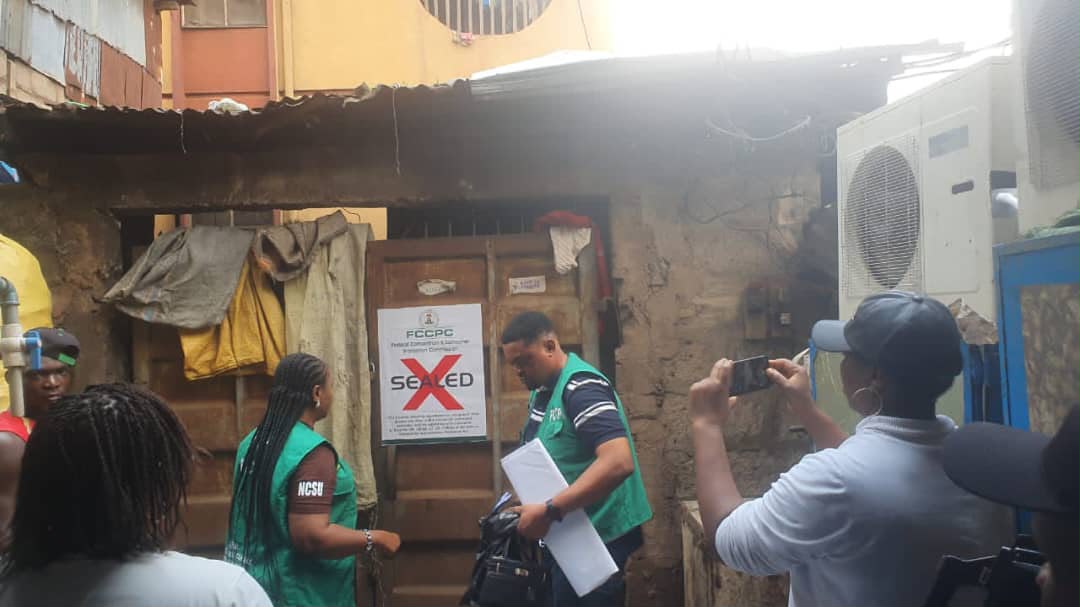
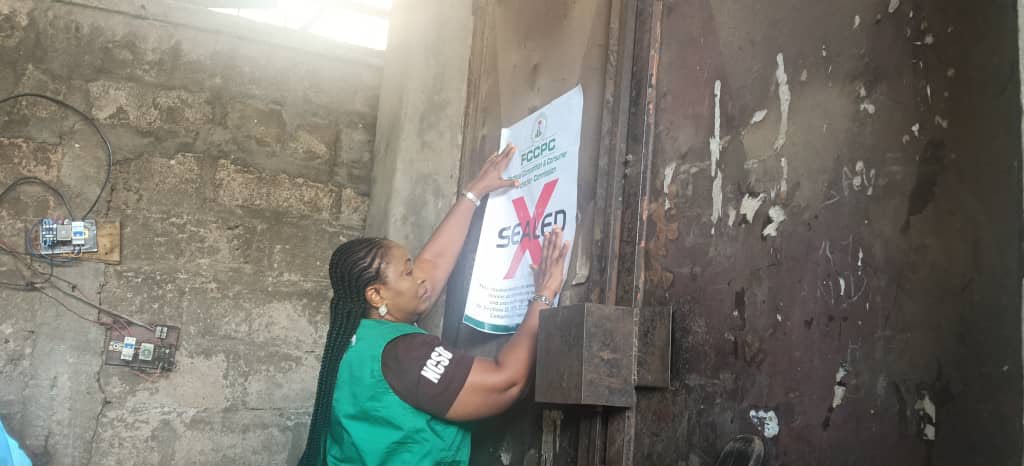
The Federal Competition and Consumer Protection Commission (FCCPC) has sealed two soya milk production facilities in Awada-Obosi, Onitsha, Anambra State, over alleged violations of food safety and consumer protection regulations.
The Commission said the enforcement action followed inspections that uncovered unsafe production practices capable of endangering public health.
FCCPC Southeast Zonal Coordinator, Obialor Francisca, said the affected facilities failed to meet the minimum safety and quality standards required for food production.
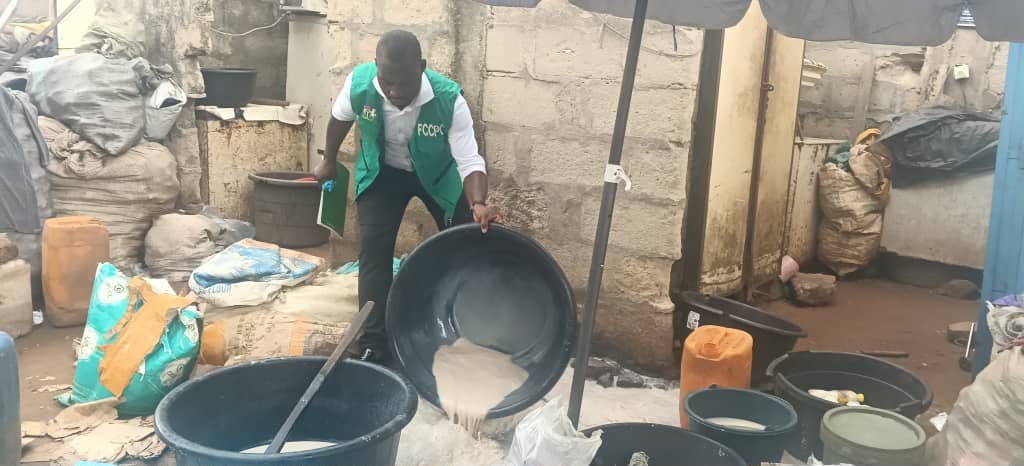
According to her, inspectors discovered that the operators collected used plastic bottles from the streets, washed them with untreated water and reused them for packaging soya milk under unhygienic conditions.
READ ALSO: FCCPC Seals Firms Over Consumer Protection Violations Allegations
Francisca said the inspection also revealed the absence of basic food safety measures, including the use of personal protective equipment, proper hygiene procedures, water treatment systems, quality control mechanisms and laboratory testing of finished products before distribution.
She described the practices as a serious threat to consumer health.
The zonal coordinator disclosed that the Commission had previously visited the facilities and directed the operators to suspend production and report to the FCCPC office in Awka for guidance on regulatory compliance.
However, she said the operators allegedly ignored the directive and continued production, leading to the enforcement action.
Francisca explained that the operation was carried out under the provisions of the Federal Competition and Consumer Protection Act, particularly Section 18(f), which empowers the Commission to seal premises involved in the production or sale of hazardous and unwholesome goods.
She stated that the facilities would remain sealed until they comply fully with regulatory requirements.
The FCCPC official also confirmed that one of the operators had been taken in for questioning while investigations continue.
According to her, the affected producers will be required to implement corrective measures and undergo fresh inspections before any consideration is given to reopening the facilities.
Francisca urged food manufacturers to adopt good manufacturing practices, maintain hygienic production environments and establish effective quality assurance systems to ensure consumer safety.
She noted that compliance with regulatory standards is essential to protecting public health and strengthening consumer confidence.
The zonal coordinator identified inadequate security personnel as a challenge during the enforcement exercise but said the Commission had sufficient operational staff to carry out its mandate.
She further disclosed that preliminary investigations indicate similar food safety violations are more prevalent in Abia State, followed by Anambra, while fewer cases have been recorded in other states across the South-East region.