Pointe-Noire, the economic capital of the Republic of Congo, is home to more than a dozen rivers including the Tchinouka. But despite their potential as sources of freshwater fish, many are unusable due to pollution.
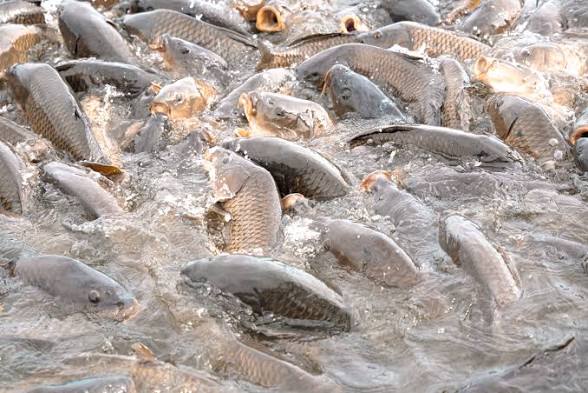
With marine and freshwater fish increasingly scarce — partly due to overfishing — fish farming is emerging as a possible solution.
“We are operating right in the city, using tanks and ponds. This makes it easier to harvest the fish and monitor them. Under the traditional system, you might put 1,000 fingerlings in a natural pond. Six months later, when you return to harvest them, you may find that only 100 or 200 fish remain,” said Wilde Bahamboula, a fish farmer.
The shortage is hitting consumers hard. In a country where the minimum wage is 50,000 CFA francs, a single giant catfish can cost more than 7,000 CFA francs — putting fish out of reach for many low-income households and turning it into a luxury, while meat is increasingly seen as a basic necessity.
Fish farmers say high feed costs remain their biggest challenge, accounting for about 75 percent of production costs. They are calling for closer links with the agricultural sector and greater local production of fish feed.
According to the FAO, Congo-Brazzaville produces nearly 1,500 tonnes of farmed fish each year, while average fish consumption stands at 25 kilograms per person annually.
As prices rise and supplies remain limited, aquaculture is being presented as a way to make fish more accessible and help feed future generations.