


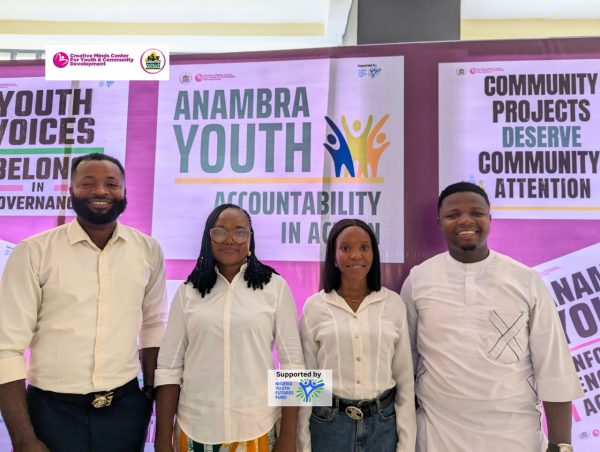
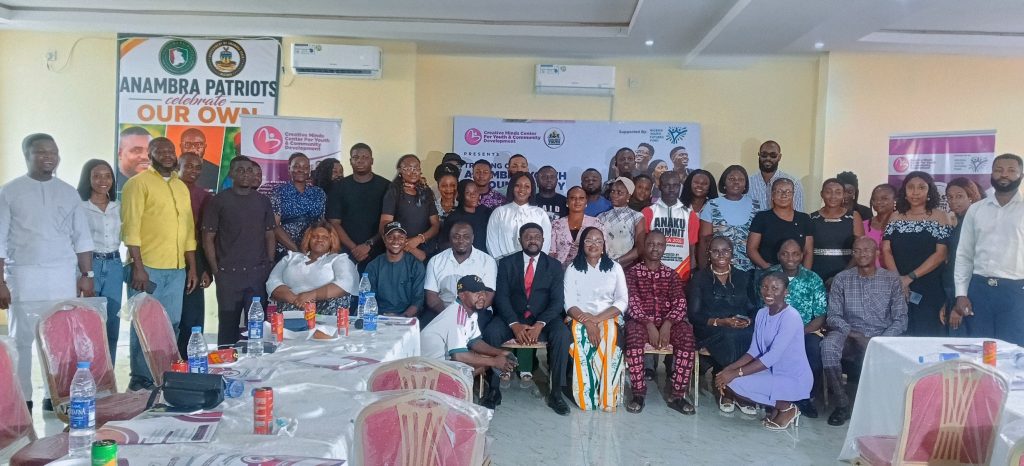
The Creative Minds Centre for Youth and Community Development (CYCD) has trained 50 young people from the 21 Local Government Areas of Anambra State to monitor public infrastructure projects, track government spending and promote transparency in governance.
The six-month Anambra Youth Accountability Hub (AYAH), supported by the Nigeria Youth Futures Fund (NYFF), aims to monitor and document at least 100 public infrastructure projects across the state’s three senatorial zones.
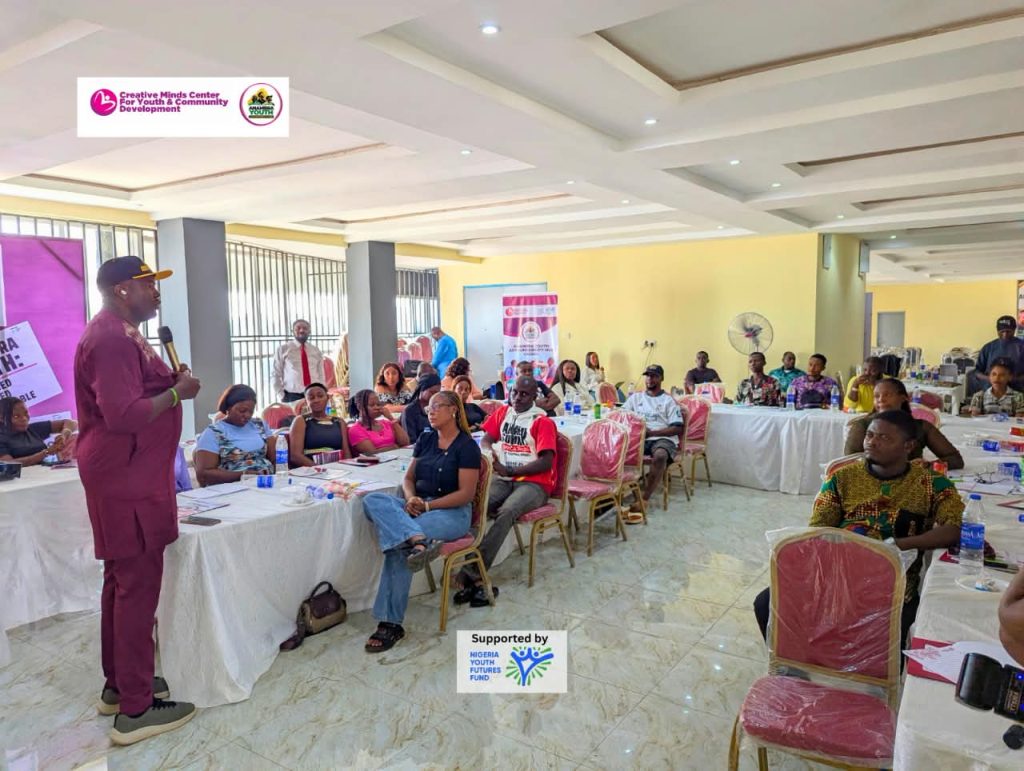
Speaking during a two-day technical capacity-building training in Awka, the Executive Director of CYCD and Project Lead of AYAH, Mrs Ugochi Freeman, said the initiative was designed to equip young people with practical skills to participate in governance and improve public service delivery.
She described the fellows as emerging accountability champions whose involvement would strengthen community oversight of public resources.
Freeman said the training covered public budget tracking, procurement processes, infrastructure monitoring, the Freedom of Information Act, data collection, project documentation, verification and evidence-based advocacy.
She stressed that young people should be regarded as active citizens capable of influencing governance rather than merely leaders of tomorrow.
She stated that the initiative was not intended to antagonise the government or embarrass public officials but to promote constructive engagement based on credible information.
She urged the fellows to prioritise evidence over rumours and dialogue over confrontation, while upholding integrity, impartiality, respect, inclusion and confidentiality.
The Director of the Anambra State Project Evaluation, Monitoring and Supervision Unit (PEMSU), Professor Ebuka Nwankwo, described the fellows as additional eyes and voices in their communities, whose reports could help the government identify gaps in project implementation and improve service delivery.
He said the initiative aligned with PEMSU’s mandate to monitor and evaluate public projects to ensure quality, value for money and timely delivery.
Nwankwo stressed that effective monitoring required reliable data, field verification, community participation and objective reporting. He assured the fellows of PEMSU’s readiness to collaborate with the initiative and provide technical support.
Also speaking, the President-General of the Anambra State Town Union Council (ASTUC) Youth Wing, Comrade Ken Okoli, described youth participation as essential to strengthening democratic governance and public accountability.
He urged young Nigerians to move beyond complaining about governance challenges and actively contribute to finding solutions through constructive engagement and civic responsibility.
Okoli said public budgeting, procurement and other governance processes required greater citizen participation, noting that public resources and development projects belonged to the people.
He also called for greater support for locally manufactured goods and services, saying domestic production could create jobs, strengthen businesses and contribute to economic growth.
The Anambra State Commissioner for Budget and Economic Planning, Mr Chukwukadibia Okoye, represented by Rev. Dr Jude Nwadavid, said citizen oversight was necessary to ensure that public expenditure translated into measurable development outcomes.
He explained that the state’s development priorities were guided by citizens’ needs, available data, its medium-term development plan and long-term Vision 2070, with emphasis on health, education, infrastructure and youth empowerment.
The Resident Anti-Corruption Commissioner of the Independent Corrupt Practices and Other Related Offences Commission (ICPC) in Anambra State, Mr Dio Emmanuel, represented by Superintendent Sanni Ohiare Samson, urged the fellows to uphold integrity, monitor public projects responsibly and report suspected wrongdoing through lawful channels.
Lilian Osakwe of the Anambra State Ministry of Justice, who is also Secretary of the Anambra State Anti-Corruption Strategy (ANSACS), spoke on institutional accountability, the rule of law and efforts to tackle corruption.
The training also covered civic leadership, investigative journalism, advocacy, public speaking, policy formulation and ethical, safe and conflict-sensitive field engagement.
It began with a session on ‘Self-Awareness, Values and Civic Leadership’, facilitated by Dr Kelvin Freeman, which focused on developing responsible leadership qualities and equipping participants to promote transparency and accountability in their communities.

