
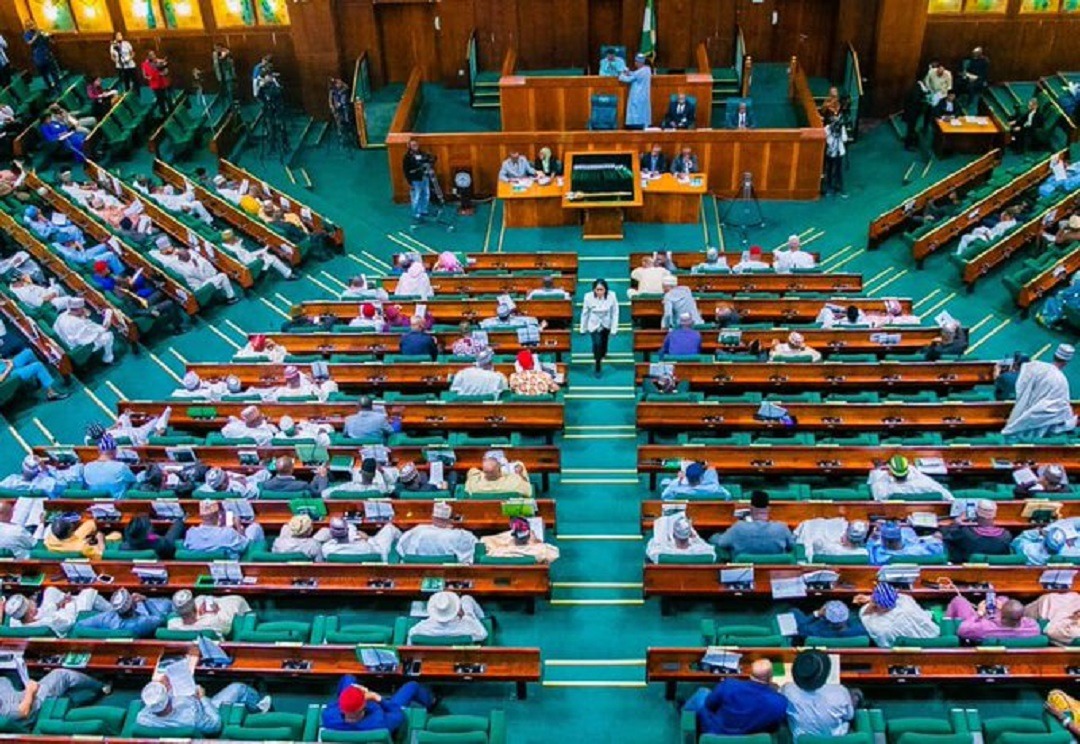
The House of Represeplntatives has called for urgent revitalisation of Nigeria’s key economic sectors to address youth restiveness, insecurity and violent crime across the country.
The call followed a Motion on Matter of Urgent Public Importance sponsored by Mr Billy Osawaru, who said reviving labour-intensive industries could create jobs, strengthen livelihoods and reduce the pool of unemployed young people vulnerable to recruitment by criminal groups.
Insecurity, Unemployment
Citing Section 14(2)(b) of the 1999 Constitution, as amended, which mandates government to ensure the security and welfare of citizens, Osawaru highlighted the rise in banditry, kidnapping and cultism.
READ ALSO: House of Reps Dissolves All Ad Hoc Committees
The motion, citing data from SBM Intelligence, stated that more than 10,000 people were killed and 7,500 kidnapped in over 1,700 incidents up to 2024, while the first quarter of 2025 recorded 2,683 deaths and 1,107 abductions.
The motion also cited National Bureau of Statistics (NBS) data indicating a 5.34 per cent youth unemployment rate and 13.5 million out-of-school children.
Osawaru argued that the large number of idle young people provided a recruitment pool for criminal networks, terrorist groups and bandit organisations.
Industrial Revival
The lawmaker highlighted the decline of key labour-intensive sectors, particularly agriculture and manufacturing, which he said had previously provided significant employment opportunities.
On agriculture, Osawaru said post-harvest losses exceeded 40 per cent due to inadequate storage and processing infrastructure, while 70 per cent of farmland remained uncultivated amid rural insecurity.
He also said Nigeria spent billions of dollars annually importing food.
On manufacturing, the motion stated that more than 800 factories had shut down in the past five years due to foreign exchange shortages, erratic power supply and insecurity.
It added that multinational companies, including Unilever, Procter & Gamble, GlaxoSmithKline and PZ Cussons, had scaled back operations or exited the country, affecting thousands of semi-skilled jobs.
Osawaru also highlighted the decline of Nigeria’s textile industry, particularly in Kaduna State, which he said had previously served as a major textile hub in West Africa, with more than 160 operational mills in the late 20th century.
He argued that reviving the factories was critical to restoring industrial employment and reducing youth restiveness.
On the solid minerals sector, Osawaru said Nigeria had 44 mineral types valued at more than $700 billion, but that the sector contributed only 0.5 per cent to the country’s Gross Domestic Product (GDP), compared with 10 per cent in South Africa.
He cited reports from the Nigeria Extractive Industries Transparency Initiative (NEITI), Global Initiative Against Transnational Organized Crime (GI-TOC) and investigative media linking illegal mining activities to the financing of banditry and organised crime in the North-West.
Youth Jobs Emergency
To address the challenges, Osawaru urged the Nigerian Government to declare a “National Youth Jobs Emergency”.
He called on the Ministries of Agriculture, Trade and Investment, and Solid Minerals Development to collaborate on establishing modern storage hubs and agro-processing clusters across the six geopolitical zones within 12 to 24 months.
He also proposed the establishment of six designated Mineral Processing Zones to formalise artisanal mining.
The motion urged the Bank of Industry (BOI) and Central Bank of Nigeria (CBN) to create a single-digit interest “Manufacturing Revival Fund”, tied to local raw-material sourcing and youth recruitment targets.
It also called for mandatory patronage of Made-in-Nigeria textiles by security agencies, the National Youth Service Corps (NYSC) and public schools, alongside a ban on used clothing imports.
Following deliberations, the House mandated the Committees on Labour, Employment and Productivity, and Commerce to liaise with relevant executive ministries on the proposals.
The committees are expected to conduct stakeholder engagements and report back to the House within four weeks for further legislative action.

