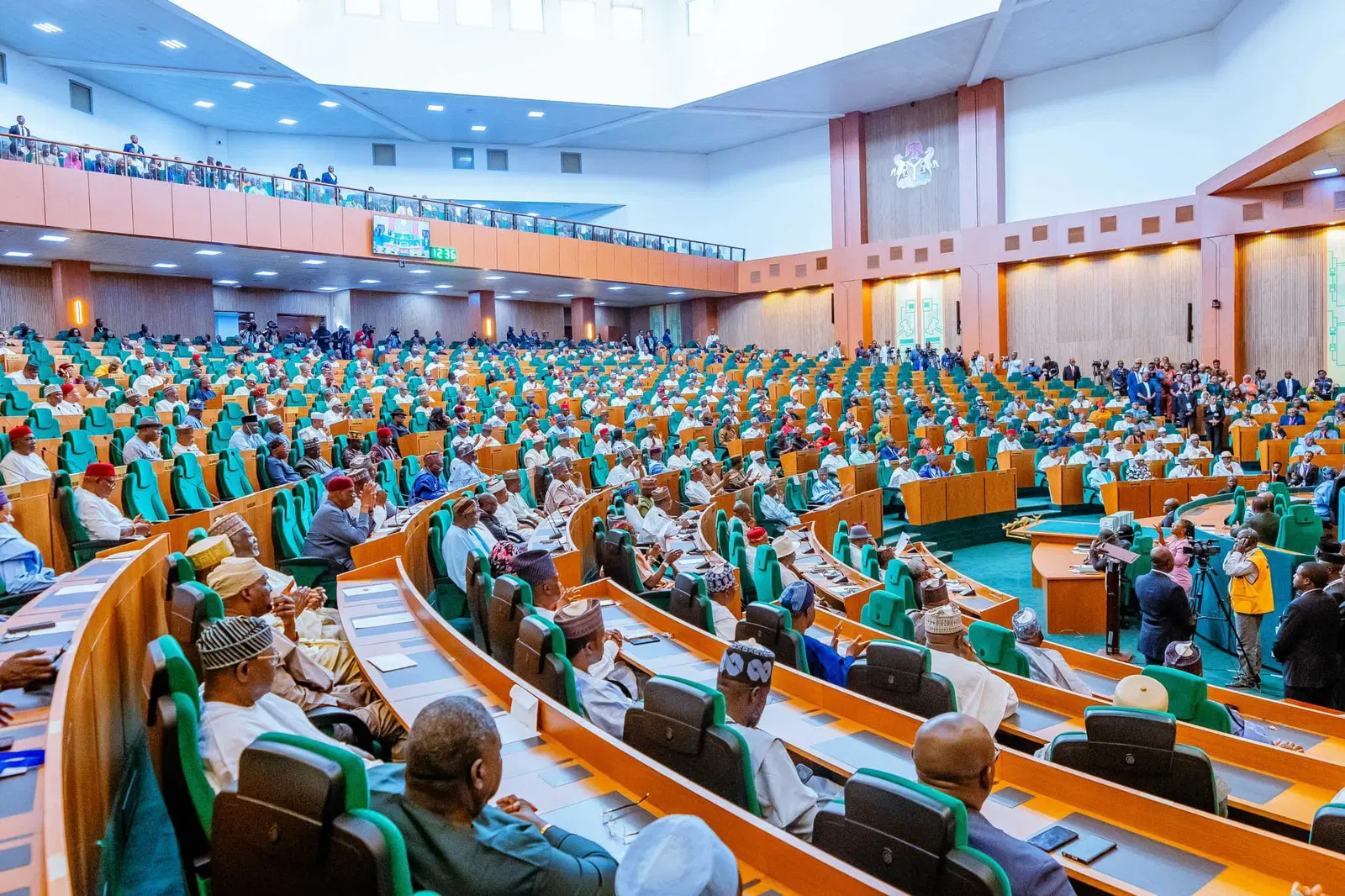
The House of Representatives has passed the bill to establish Federal College of Fisheries Technology and Marine Engineering, NGO, Rivers State.
This followed the consideration and adoption of the report presented by the Chairman, House Committee on Ocean and Fisheries, Akarachi Etinosa Amadi at the plenary on Thursday.
The report reads, “That the House do consider the Report of the Committee on Ocean and Fisheries on a Bill for an Act to Amend the Agricultural Research Council of Nigeria Act, Cap A12, Laws of the Federation of Nigeria, 2004 to Establish Federal College of Fisheries Technology and Marine Engineering, NGO, Rivers State and for Related Matters (HB. 2189) and approve recommendations therein” (Laid:13/11/2025).”
Presenting the report, the Chairman of the Committee said that”the House concluded debates on the general principle of the bill on Wednesday 7th May 2025 and referred it to the Committee for further Legislative action.”
He said following its initial legislative readings, a public hearing was conducted on July 14, 2025 where key maritime, educational, and regional stakeholders evaluated the proposal.
Amadi noted that “the bill received widespread endorsement during the session, with stakeholders unanimously approving it for final passage to help drive economic growth and capacity building in the Niger Delta’s coastal region.”
The lawmaker further informed that, “The proposed legislation seeks to establish the Federal College of Fisheries Technology and Marine Engineering an NGO, within the Andoni Local Government Area of Rivers State. The primary objective of the bill is to provide a statutory framework for the creation of a specialized tertiary institution focused on bolstering Nigeria’s blue economy. By embedding technical training in fisheries management, aquaculture, and marine engineering within a coastal riverine community, the bill aims to address local manpower deficits in the maritime sector, expand access to technical vocational education, and stimulate economic development across the Niger Delta region.”
He emphasised that, the proposed legislation is structured into three concise clauses designed to amend the existing statutory framework of Nigeria’s agricultural and research institutions which include; “Legislative Structure (Clauses 1 & 2): Clauses 1 and 2 establish the statutory foundation for amending the Agricultural Research Council of Nigeria Act, Cap. A12, Laws of the Federation of Nigeria, 2004 (the Principal Act).
“Institutional Capacity & Operational Mandate (Clause 3): Clause 3 serves as the primary operative provision of the bill. It embeds the new college directly into the Third Schedule of the Principal Act, listing it alongside established federal institutions. By virtue of Clause 3, inserting the institution into the Third Schedule provides the vital legal backing and statutory recognition needed for the college to become fully operational. This legal effect formally empowers the institution to access federal funding streams and execute its specialized mandate in fisheries technology and marine engineering.”
The House passed the bill after the consideration and voted for its adoption and passage.