


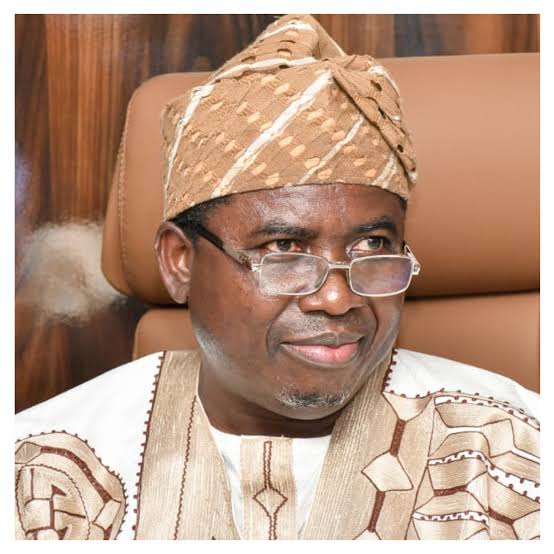
The Chairman of the Independent National Electoral Commission (INEC), Professor Joash O. Amupitan, has told Resident Electoral Commissioners (RECs) that Nigerians expect results from the Commission, not explanations.
He further explained that Nigerians are asking for competence, impartiality, transparency, and courage in the execution of our constitutional mandate.
Professor Amupitan spoke today in Abuja on Wednesday 25th November, 2026, while declaring open a strategic consultative meeting with RECs from the 36 States and the Federal Capital Territory (FCT).
The meeting was held fifty-one days before the Presidential and National Assembly elections on Saturday, 16th January 2027.
Addressing the Commissioners, the Chairman said the Commission had reached a defining moment. “History has placed a demanding and consequential national trust on our shoulders,” he said.
He noted that attention on the Commission extended well beyond Nigeria’s borders. “Across Nigeria and across West Africa, citizens, political stakeholders, development partners, and observers are watching how we translate legal reforms and technical upgrades into dependable field execution,” he said.
The Chairman told the RECs that the time for deliberation was over. “At this decisive stage of the electoral cycle, the calendar no longer allows for leisurely deliberation or deferred action,” he said.
He explained that policies and technical systems designed at the Commission’s Headquarters must now be executed in every state, Local Government Area and Registration Area. According to him, the RECs are central to that effort.
“As Resident Electoral Commissioners, you are the Commission’s chief operational commanders in the field,” Professor Amupitan said. “You stand at the intersection of national policy and grassroots reality.”
The Chairman reminded participants of the scale of the task ahead. Millions of Nigerians will vote across 177,299 polling units, with a verified register of over 100 million voters, 57,000 newly procured Bimodal Voter Accreditation System (BVAS) devices and more than 1.41 million ad hoc personnel to be deployed.
“In an exercise of that scale, even minor administrative lapses in one state can trigger national headlines and cast doubt on otherwise solid work elsewhere,” he said. “Margin for error simply does not exist.”
Mock Accreditation
Professor Amupitan said the Commission’s next major test would come this Saturday, 28th November 2026, when it conducts a nationwide mock accreditation and result transmission exercise in all 36 States and the FCT.
He described the exercise as “far more than a routine ceremonial drill,” stating that it was “a live operational stress test” of the Commission’s upgraded BVAS devices, logistics workflows and automated result validation safeguards on the INEC Result Viewing Portal (IReV).
The Chairman directed every REC to personally oversee preparations in their state and to submit a comprehensive technical audit to Headquarters by Monday, 30th November 2026. The reports, he said, must document any network dead zones, device anomalies or procedural bottlenecks so that technical teams can address them immediately.
Turning to logistics, Professor Amupitan stressed the importance of a prompt start to voting on election day. “Delayed openings breed suspicion, anxiety, and avoidable tension,” he said.
On security, he said the Commission’s approach must be proactive. “Election security must be preventive, intelligence-led, and granular rather than reactive,” the Chairman said.
He urged the RECs to work closely with security agencies and to make full use of the Commission’s Election Risk Management (ERM) maps.
The Chairman also warned against misinformation. “Disinformation, synthetic media, and coordinated false narratives spread like contagion whenever official information is delayed or ambiguous,” he said. He asked the RECs to maintain regular engagement with political parties, observers, civil society organisations and the media.
On institutional neutrality, Prof. Amupitan was firm. He said the Commission would not tolerate any breach of its code of conduct by its staff.
“Under the Electoral Act 2026, the Commission will not shield any staff member or official who compromises neutrality, facilitates malpractice, or breaches statutory rules,” he said.
He urged the participants to use the consultative session to confront field challenges honestly. “Let us use today’s consultative session to examine every field challenge candidly, resolve operational bottlenecks decisively, and leave Abuja fully aligned and focused for Saturday’s nationwide mock exercise and the historic general elections in January and February 2027,” he said.
Professor Amupitan said the conduct of the RECs in the coming days would shape the credibility of the elections. “Every detail you verify today, every contingency plan you test on Saturday, and every standard of neutrality you uphold in your state brings us closer to an election whose outcome reflects the genuine, peaceful choice of the voters,” he said.
He also reminded the RECs of the weight of their leadership. “Your leadership sets the ethical and operational tone in your respective states,” the Chairman said.
He then gave a direct charge on supervision and reporting. “Stay close to your Electoral Officers, supervise field audits personally rather than relying solely on secondhand assurances, and report realities on the ground with complete candour so Headquarters can support you swiftly,” he directed.
The Governorship and State Houses of Assembly elections will follow on Saturday, 6th February 2027.
Professor Amupitan expressed the Commission’s appreciation to the RECs for their service. “I thank you once again for your dedicated service, steady leadership, and commitment to the Commission and the nation,” he said, before formally declaring the meeting open.
On Election Violence, the INEC Chairman condemned the surge in campaign violence across the country, as well as attacks on electoral workers and journalists, ahead of the 2027 General Elections.
The Chairman, who was represented by his Chief Press Secretary and Media Adviser, Mr. Adedayo Oketola, spoke in Abuja in a keynote address at the Nigeria Election Risk and Readiness Summit 2026, organised by the Centre for Journalism Innovation and Development (CJID).
Professor Amupitan, in the address, said the Commission condemned the violence “in the strongest possible terms.”
“Election officials and accredited reporters are not combatants in a partisan war; they are constitutional public servants and civic watchdogs discharging a sacred national duty,” he said.
According to the Chairman, assaulting, intimidating or blackmailing such officials is “a direct attack on the Nigerian state and the sovereign rights of voters.”
Threats Against Journalists
He noted that since open campaigns commenced, there had been attacks on campaign convoys, party offices and supporters, as well as harassment and hostility directed at INEC officials, field staff and ad hoc workers, alongside recurring threats against journalists covering the political beat.
Professor Amupitan explained that INEC would deploy over 1.41 million ad hoc personnel for the elections, predominantly National Youth Service Corps (NYSC) members, alongside university academics and career civil servants, supported by security operatives, journalists and observers.
“Electoral democracy does not run on software; it runs on human courage,” he said.
The Chairman clarified the division of responsibilities in the country’s democracy. “INEC is an electoral management body, not a security agency; we lack both the constitutional mandate and the operational capacity to maintain public order, effect arrests, or deploy armed security,” he said.
He mentioned that the responsibility for maintaining public order rests with the Nigeria Police Force and its partner security agencies, and urged the Police to ensure swift arrests, thorough investigations and timely transmission of case files to the Commission “so that impunity is decisively checked well before January.”
Professor Amupitan reminded political parties, candidates and their supporters that the Electoral Act 2026 had raised the cost of impunity.
He said Section 96 prohibits abusive, slanderous or inflammatory language likely to incite violence, and forbids parties and candidates from retaining, organising, training or equipping groups to employ physical force.
Political Support
He said that Section 97 prohibits the use of threats or coercion to compel or prevent political support, with penalties of up to ₦5 million or twelve months imprisonment for individuals, and up to ₦10 million for political parties on initial breaches.
The Chairman said that under Section 148, the Commission is empowered to prosecute electoral offenders directly upon receiving investigative case files from the Police.
“Party leaders bear direct responsibility for the conduct of their supporters and must refrain from financing or mobilising groups that disrupt public peace,” he said.
On information integrity, Prof. Amupitan said the 2027 electoral cycle was unfolding in a transformed information ecosystem shaped by generative artificial intelligence, deepfake videos and Foreign Information Manipulation and Interference (FIMI).
“Disinformation is no longer merely a nuisance; it is an operational security risk,” he said.
He said that INEC had established a dedicated Artificial Intelligence Division within its ICT Department to detect coordinated manipulation targeting electoral infrastructure.
He noted that the Commission could not police the information space alone, and called for an alliance among the Commission, fact-checkers such as DUBAWA, newsrooms, civil society and the National Orientation Agency (NOA).
On election security, the Chairman said the Commission had worked with the Office of the National Security Adviser (ONSA) and the Nigeria Police Force to restructure the Inter-Agency Consultative Committee on Election Security (ICCES) into decentralised ICCES Tentacles operating down to every Local Government Area and Registration Area (Ward). He said the arrangement is guided by the Election Risk Management (ERM) Tool, which classifies states, Local Government Areas and wards into actionable risk levels.
Professor Amupitan stressed that preventing political violence could not rest on the Police alone. “Peace is a collective civic covenant,” he said, calling on political parties, traditional rulers, religious leaders, civil society and the media to play their part.
He reiterated the Commission’s commitment to neutrality. “We have no preferred party, no favoured candidate, and no hidden agenda beyond ensuring that every eligible citizen can vote safely and that every valid vote counts,” he said.
The Chairman also noted that the elections would hold on Saturday, 16th January 2027 for the Presidential and National Assembly polls, followed by the Governorship and State Houses of Assembly elections on Saturday, 6th February 2027, while the Commission would conduct a nationwide mock accreditation and result transmission exercise this Saturday, 28th November 2026.
He commended CJID, DUBAWA and other partners for convening the summit.
Regional Cooperation
In another development, Professor Amupitan has called for stronger regional cooperation and a whole-of-society approach to combating misinformation, disinformation and Foreign Information Manipulation and Interference (FIMI) in electoral processes across West Africa.
The Chairman, who was represented by his Chief Press Secretary and Media Adviser, Mr. Adedayo Oketola, made the call in a goodwill message at the Multi-Stakeholders Forum on Disinformation in Electoral Contexts in West Africa, held in Abuja, Nigeria.
The forum was organised by the Fundación para la Internacionalización de las Administraciones Públicas (FIAP), under the European Union Support to ECOWAS in Peace, Security and Governance (EPSG) Project, in collaboration with its implementing partners, the German Corporation for International Cooperation (GIZ) and Expertise France.
Professor Amupitan described the growing spread of disinformation as a serious threat to electoral integrity, public confidence and democratic stability in the sub-region.
He observed that the rapid spread of false narratives across digital platforms, amplified by artificial intelligence, deepfakes, synthetic audio-visual content and coordinated online networks, had made the electoral information environment increasingly complex.
According to the Chairman, false narratives originating in one West African country are often recycled and adapted for use in others, with the potential to create public panic, discourage voter participation, inflame social tensions and undermine the credibility of electoral outcomes.
Speaking on Nigeria’s preparations for the 2027 General Election, he said the Commission remained committed to strengthening information integrity through improved electoral technology, institutional transparency and stakeholder engagement.
Professor Amupitan outlined three key areas of intervention: enhanced verification safeguards on the INEC Result Viewing Portal (IReV); proactive institutional communication, supported by the establishment of a dedicated Artificial Intelligence Division within the ICT Department; and strengthened collaboration with relevant stakeholders to promote accurate electoral information.
He said that the Commission was working with the National Orientation Agency (NOA), civil society fact-checking networks, accredited media organisations and security agencies through the Inter-Agency Consultative Committee on Election Security (ICCES) framework.
The Chairman stressed that electoral commissions alone could not effectively address the challenge. He said citizens, journalists, political actors, religious and community leaders, and social media users all have important roles to play in protecting the information environment.
He urged Nigerians to cultivate the habit of verifying information before sharing, particularly during sensitive electoral periods, and to rely on official INEC communication channels and credible media organisations rather than unverified social media reports.
Learning and Cooperation
Professor Amupitan further called for sustained peer learning and cooperation among electoral management bodies, technology platforms, fact-checking organisations and development partners across the region.
He reaffirmed the Commission’s commitment to institutional neutrality, transparency and regional cooperation, while expressing appreciation to FIAP, the European Union and other development partners for supporting initiatives aimed at strengthening democratic governance in West Africa.

, Professor Joash O. Amupitan, has told Resident Electoral Commissioners (RECs) that Nigerians expect results from the Commission, not explanations.)