


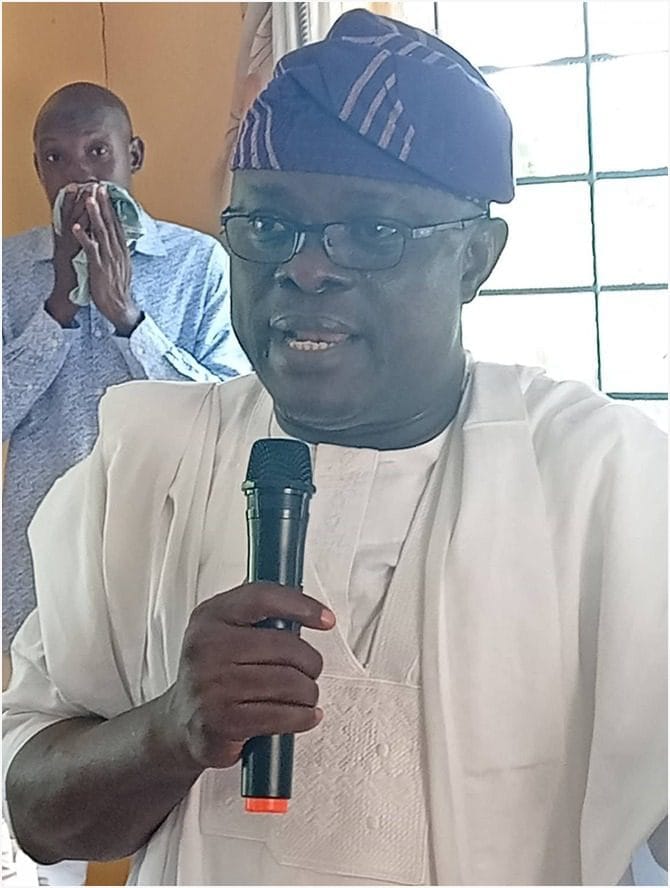
The Independent National Electoral Commission (INEC) has assured voters in Ondo State of a transparent electoral process ahead of the 2027 general election, pledging that only votes freely cast by the electorate will determine election outcomes.
The commission also urged journalists to intensify fact-checking and responsible reporting to counter misinformation, particularly artificial intelligence-generated content capable of misleading voters and undermining electoral credibility.
The Resident Electoral Commissioner (REC) in Ondo State, Dr Mutiu Agboke, gave the assurance while delivering a public lecture at the NUJ Press Centre, Alagbaka, Akure, as part of activities marking the 50th anniversary of the Nigeria Union of Journalists (NUJ), Ondo State Council, and its 2026 Press Week.
READ ALSO: INEC Boosts Logistical Preparations for 2027 Elections in Ondo
Agboke, who was represented by the Head of Voter Education, Mr Olayinka Ogunseye, said INEC remained committed to conducting credible elections in which every vote would count, irrespective of political affiliations or interests.
Electoral Transparency
On electoral transparency, he reaffirmed the commission’s commitment to the prompt and complete uploading of polling unit results to its Result Viewing Portal (IReV) to enable public scrutiny of the electoral process.
He stated that INEC would make election result data available in accessible formats to enable media organisations and fact-checking institutions to independently verify information.
The REC also pledged that the commission would publicly explain any interruption in the uploading process and establish a rapid response channel through which credible media organisations and fact-checkers could obtain confirmation of official information on election day.
Agboke stressed the importance of understanding the different stages of result collation, explaining that uploaded polling unit results, partial tallies and final declarations had distinct legal statuses.
He cautioned media organisations against prematurely declaring election winners without adequate verification.
Addressing the growing threat of misinformation, the REC expressed concern over the circulation of artificial intelligence-generated content, manipulated images and deepfakes, particularly on social media platforms such as WhatsApp.
He urged journalists to strengthen their fact-checking capacity and ensure information was verified before publication to prevent false narratives and political propaganda from influencing voters’ decisions.
Agboke identified verification, editorial independence, fairness and clarity as essential principles of election reporting.
Beyond Reporting
He encouraged journalists to go beyond reporting political activities and personalities by educating voters on electoral procedures, examining candidates’ policies, investigating allegations and holding political actors and institutions accountable.
He also called for conflict-sensitive reporting, urging media organisations to verify reports of violence, avoid inflammatory narratives and properly investigate allegations of electoral malpractice.
However, he maintained that the responsibility to promote peaceful elections should not discourage journalists from reporting intimidation, vote-buying and other electoral irregularities.
The REC described the media as an important partner in voter education and democratic development, noting that INEC could not independently reach every community and voter without the support of journalists, civil society organisations and other stakeholders.
He said the media’s contribution to credible elections should be measured not by the volume of coverage but by the accuracy, fairness and usefulness of information provided to the electorate.
Agboke congratulated the Ondo State Council of the NUJ on its 50th anniversary, describing the golden jubilee as an opportunity for journalists to reflect on their contributions to democratic development and renew their commitment to professional responsibility.

 has assured voters in Ondo State of a transparent electoral process.)