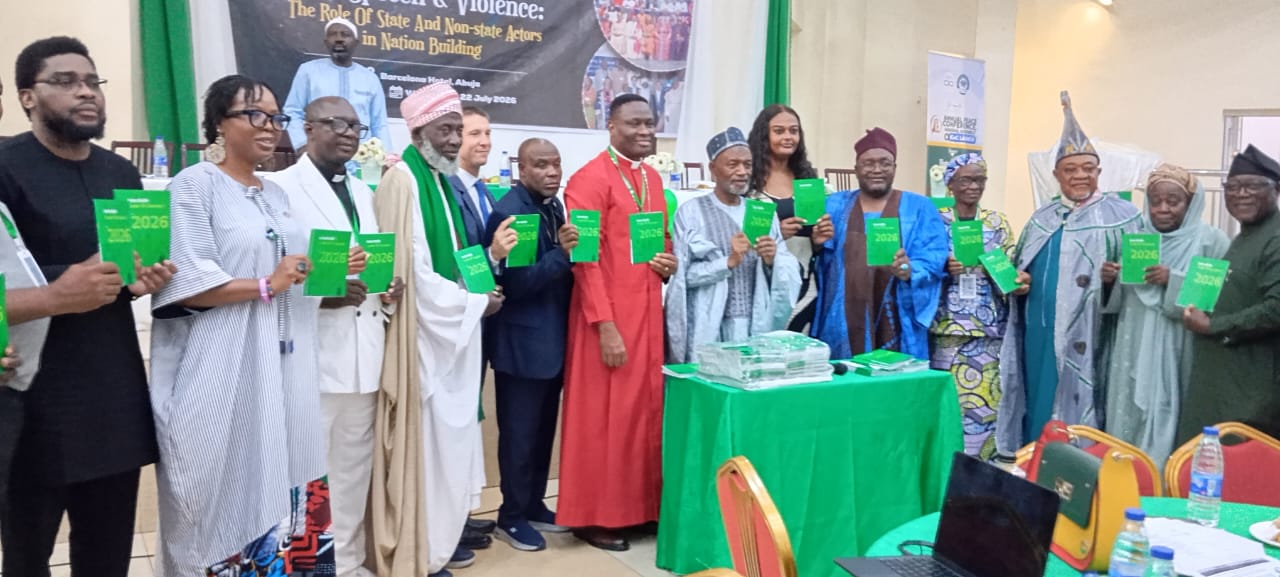
Interfaith leaders in Nigeria have called for stronger collaboration among government, religious institutions, civil society organisations and citizens to combat hate speech and violence, describing dialogue as a critical tool for nation-building.
The call was made by the Co-Chairs of the Inter-Faith Dialogue Forum for Peace Nigeria (IDFPN), Imam Dr. Yusuf Arrigasiyu and Reverend Akila Hamman Jr, at the Forum’s 8th General Assembly, the launch of the Inter-Faith Code of Conduct (ICOC), and a Peace Conference in Abuja, Nigeria, with the theme “Hate Speech and Violence: The Role of State and Non-State Actors in Nation Building”.
The co-chairs said Nigeria continues to face some levels of challenges of religious intolerance, ethnic suspicion, misinformation, insecurity, violent extremism and political tensions, stressing that peace must be deliberately built, protected and sustained through the collective efforts of all stakeholders.
They described hate speech as a major threat to national cohesion, warning that inflammatory statements made in places of worship, political gatherings, community meetings and on social media can incite violence and deepen divisions.
“We urge government, traditional rulers, faith-based organisations, the media and citizens to promote responsible communication, while encouraging young people to become ambassadors of peace rather than instruments of violence,’ they said
A major highlight of the event was the unveiling of the inter-faith code of conduct, which they said would promote responsible religious leadership, mutual respect, peaceful communication and dialogue, while discouraging hate speech and incitement.
The forum also appealed to embassies, development partners and the private sector to support community peacebuilding, early warning and response mechanisms, youth and women-led initiatives, and other programmes aimed at preventing violent conflicts.

Speaking on the significance of the conference, the co-secretary of the forum, Imam Majemu Abdulkareem Shefiu, said religious leaders wield enormous influence over their followers and must use their platforms responsibly.
“The conference brought together about 200 faith leaders to remind them of the importance of speaking the truth, promoting non-violence and avoiding statements capable of inciting conflict,” he said
He noted that Nigerians look up to religious leaders for guidance.
Delivering the keynote address, Professor Abubakar Sadeeque Abba of the Department of Political Science and International Relations, University of Abuja, identified ethnic profiling as a major driver of hate speech in Nigeria and a threat to national unity. He described many promoters of hate speech as “Facebook tigers” citing a study by the Social Science Academy of Nigeria which found that many of them lack credibility and influence within their communities.
Edited by Jack Acheme