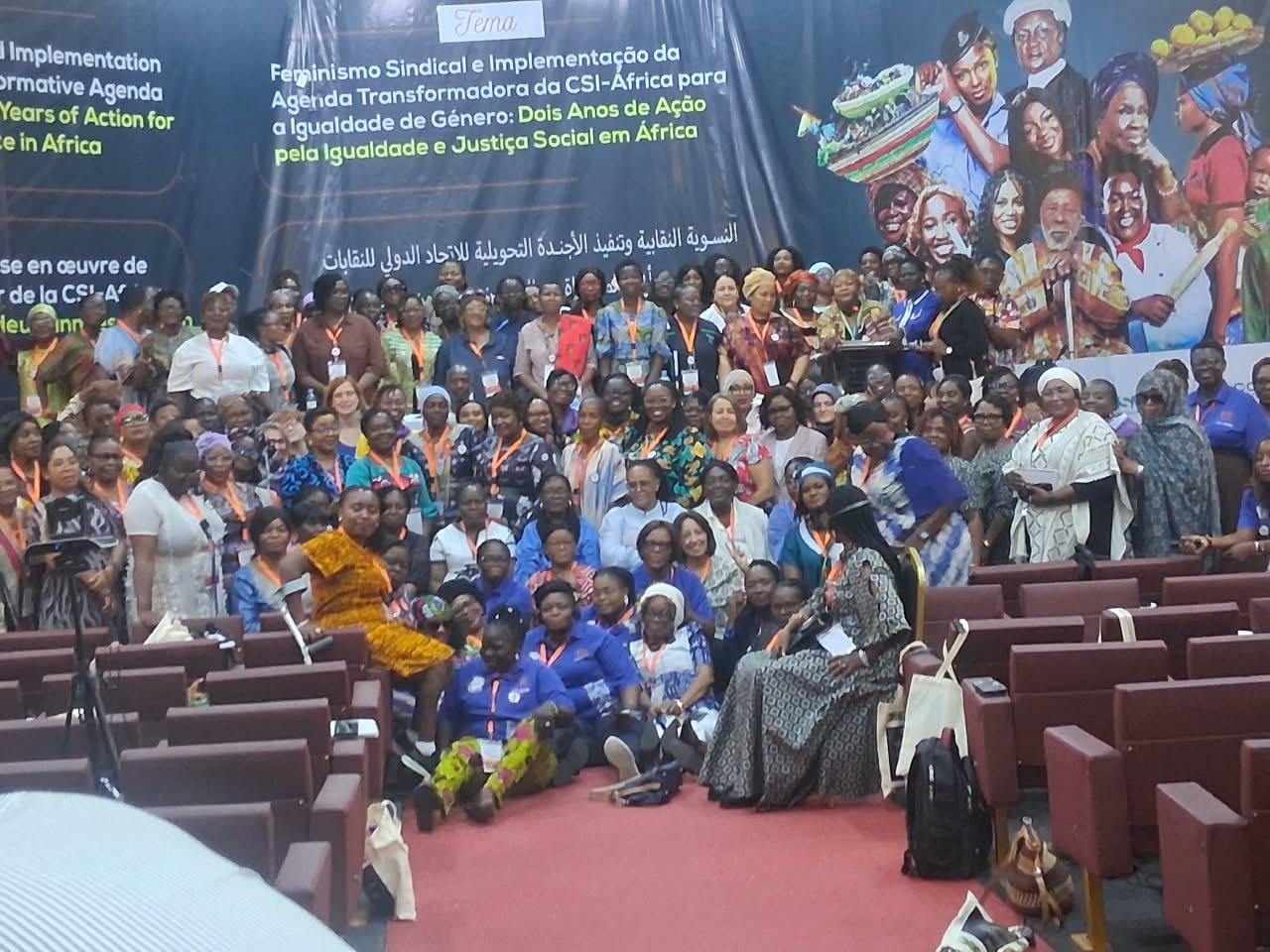
The International Trade Union Confederation-Africa (ITUC-Africa) has called for renewed efforts to sustain momentum towards the ratification of International Labour Organisation (ILO) Convention 190 on violence and harassment in the world of work.
The General Secretary of ITUC-Africa, Comrade Joel Odigie, made the call while addressing participants at the ongoing 2nd ITUC-Africa Women’s Biennial Conference in Lomé, Togo.
Odigie expressed concern over what he described as declining momentum towards the ratification of the Convention, which seeks to eliminate violence and harassment, including gender-based violence, in the workplace.
The conference is themed: “Trade Union Feminism and the Implementation of ITUC-Africa’s Transformative Gender Agenda: Two Years of Action for Equity and Social Justice in Africa.”
According to Odigie, the campaign for the ratification of Convention 190 had gained significant momentum two years ago, but this had since declined.
“Today, it is very low. We appeal that since it is not yet Uhuru, it is not yet freedom. We have not really got to where we want to,” he said.

He called for renewed and sustained action to strengthen protections against gender-based violence and harassment, particularly in workplaces and other environments.
Odigie said ITUC-Africa had developed a sexual harassment policy and encouraged its affiliate unions to adopt the document to help create safer working environments.
Speaking on the conference theme, which seeks to assess progress made since the previous women’s conference in Cotonou, Benin, he said inadequate resources remained one of the major challenges affecting the implementation of gender-related commitments.
He said the organisation’s assessment received 57 responses from 51 trade union organisations across 27 African countries.
“Forty-nine respondents reported increased efforts to organise women since August 2024, while 28 reported documented growth in women’s trade union membership,” he said.
Odigie added that women’s issues were increasingly being incorporated into collective bargaining demands at workplace, community and national levels.
He also said more women were entering trade union leadership, attributing the development to affirmative action, gender quotas and increased awareness among union leaders.
On funding, Odigie stressed the need for unions to provide adequate resources to sustain women’s participation and strengthen measures to protect them from violence and harassment.
“We cannot build a transformative movement on commitments that we refuse to resource,” he said.
Odigie urged unions to prioritise women workers in the informal economy, noting that many faced economic inequality, precarious employment and inadequate social protection.
He said the conference would assess achievements since the Cotonou conference and develop a 2026–2028 roadmap with measurable targets for organising, leadership, collective bargaining and social protection.
He also called for stronger youth participation in trade unions, saying young workers should be given opportunities to influence policies, negotiate demands and assume leadership positions.
The Chairperson of the ITUC-Africa Women’s Committee, Mrs Gladys Branche, said the organisation’s 14-point Gender Transformation Agenda included campaigns for the ratification of ILO Conventions 190 and 189.
“We are here today to take stock of what has happened over the past two years, give account of our gains and achievements, and shape a new pathway for better conditions of living for all,” she said.
Branche said the agenda also focused on the recognition of care work, women’s economic concerns and efforts to secure 50 per cent representation for women in national and international decision-making structures.
She said women workers continued to face sexual harassment, bribery and other risks at border crossings, while gender gaps, reduced social spending and patriarchy remained major concerns.
“We are here to demand our rights. We want equity, space at the table, the opportunity to organise and the ability to defend our rights,” she said.
The keynote speaker and guest lecturer, Professor Akua Beitwum, Associate Professor at the University of Cape Town, South Africa, urged trade unions to examine patriarchal control of social reproduction and its implications for women.
Speaking on “Trade Union Feminism as a Framework for Transformation,” Beitwum called for care work to be placed at the centre of workers’ negotiations and campaigns for public provision.
She also urged unions to examine patriarchal masculinity, noting that addressing its effects on men and women was important to advancing gender equality in workplaces, trade unions and wider society.