

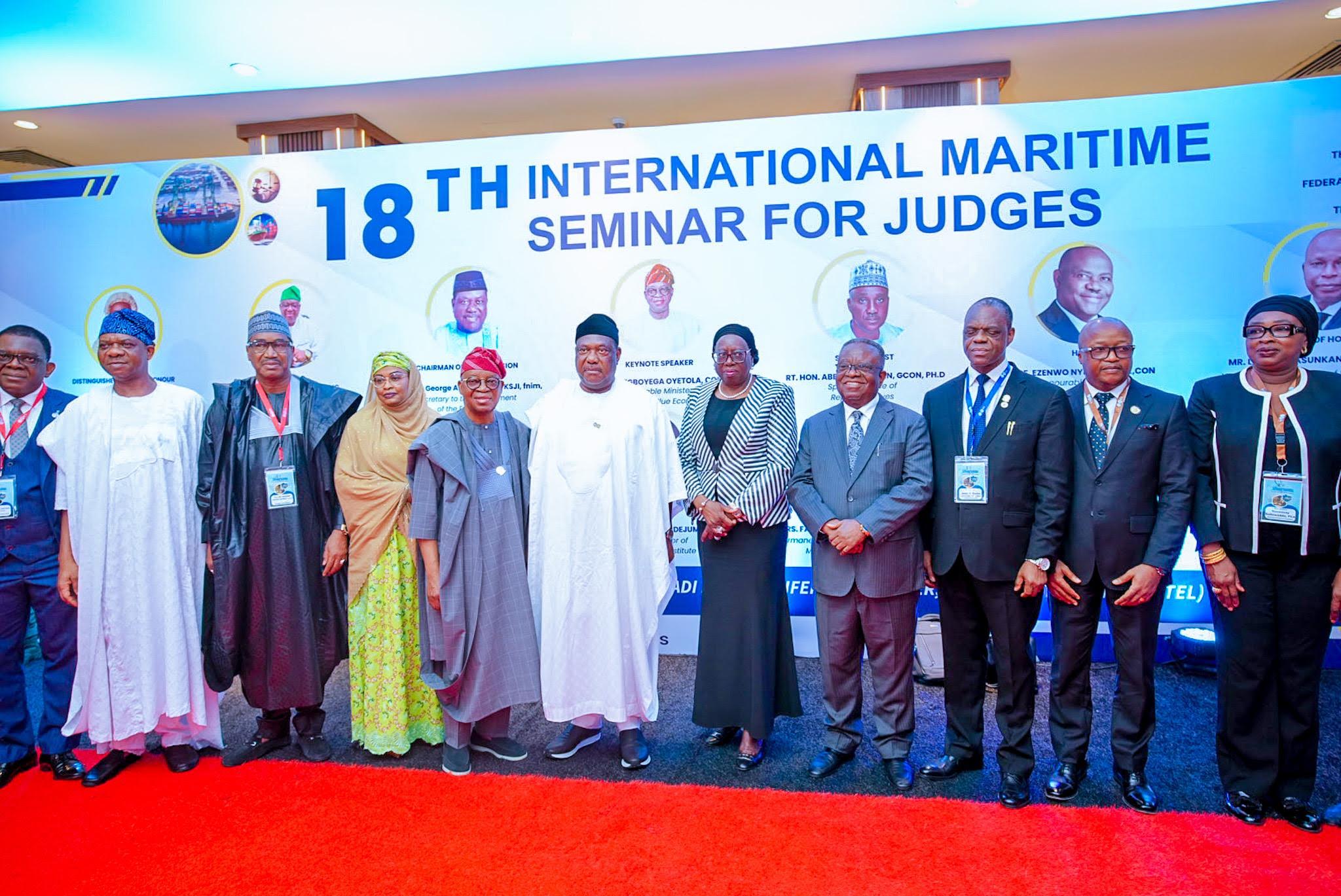
The Chief Justice of Nigeria (CJN), Justice Kudirat Kekere-Ekun says an efficient, independent and commercially responsive judiciary is indispensable to unlocking Nigeria’s blue economy and sustaining investor confidence in the maritime sector.
Speaking on Wednesday at the opening of the 18th International Maritime Seminar for Judges in Abuja, the CJN said legal certainty remains one of the strongest incentives for investment, innovation and sustainable economic growth.
Justice Kekere-Ekun stressed that no blue economy can attain its full potential without a judicial system that delivers timely, impartial and effective dispute resolution.
“The effective administration of maritime justice is therefore an indispensable pillar for advancing economic prosperity, safeguarding national interests and fostering investor confidence in Nigeria’s maritime sector,” she said.
Justice Kekere-Ekun noted that with nearly 90 per cent of global trade transported by sea, maritime law has become central to international commerce, food security, energy supply chains and economic development.
She further said that Nigeria’s strategic location on the Gulf of Guinea and its vast marine resources position the country to benefit significantly from the blue economy through maritime transport, fisheries, offshore renewable energy, marine biotechnology, coastal tourism and other ocean-based industries.
Justice Kekere-Ekun however, observed that rapid technological changes, climate change, maritime insecurity and evolving international legal obligations are creating new challenges for courts.
“Legal certainty remains one of the greatest incentives for investment, innovation and sustainable economic development,” she said.
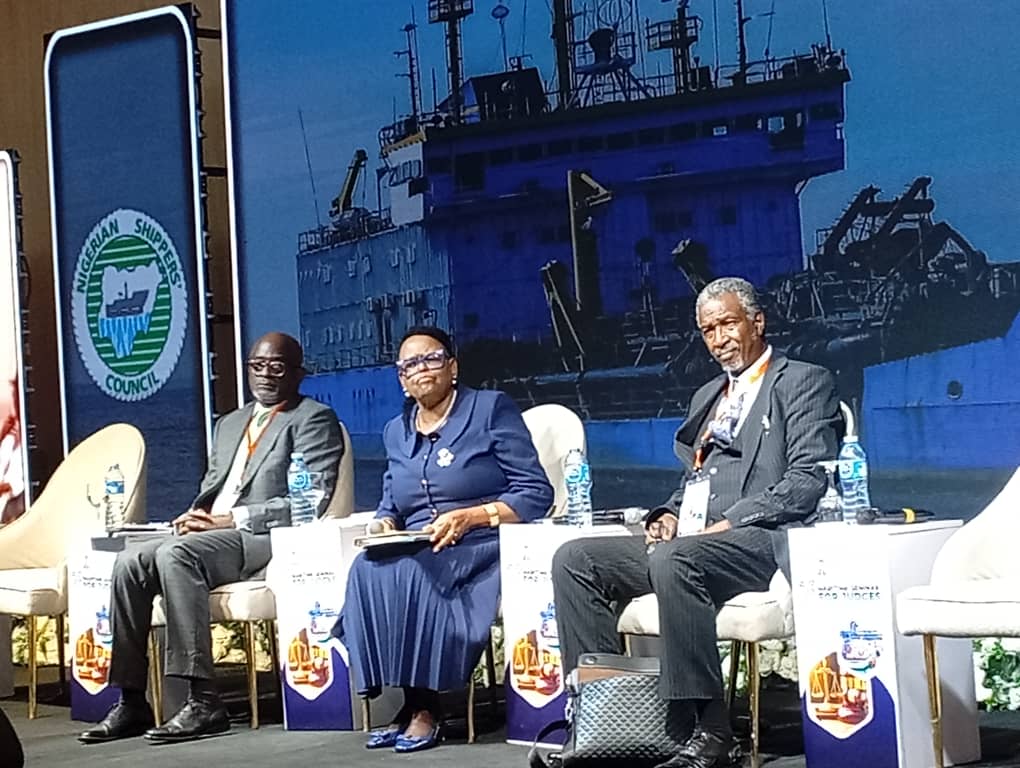
The CJN noted that judges must continue to develop jurisprudence that balances environmental protection with commercial certainty, while remaining responsive to emerging issues such as autonomous vessels, artificial intelligence, cybersecurity and digital maritime operations for stronger judicial cooperation across jurisdictions.
She noted that maritime disputes are inherently transnational and require greater collaboration among African judiciaries.
“The administration of maritime justice is strengthened when courts across jurisdictions engage one another, exchange ideas and share experiences in confronting common legal challenges,” Justice Kekere-Ekun said.
Also speaking, the Secretary to the Government of the Federation (SGF), Senator George Akume, described maritime justice as a national economic imperative rather than merely a legal issue, pledging Federal Government’s support for implementing recommendations from the seminar.
“When a maritime claim is delayed in court, trade suffers. When a ship arrest is poorly executed, investor confidence falls. When cargo liability disputes go unresolved, the cost of import of essential goods rises and it is ordinary Nigerians who bear that cost,” Akume said.
He announced that his office would support the implementation of practical recommendations from the seminar through legislative engagement, executive coordination and stronger inter-agency collaboration.
“The work done in this hall over the next three days should not remain in this hall. It must find expression in policy, in legislation, in institutional reform, and ultimately in the daily experience of every Nigerian who does business through our ports or seeks justice in our courts,” he stated.
Delivering a goodwill message, Chief Justice and President of the Supreme Court of Kenya, Justice Martha Koome, described African judiciaries as active enablers of economic transformation rather than passive observers.
“Our courts are not passive observers of economic transformation; they are active enablers of economic transformation,” she said.
Justice Koome noted that the implementation of the African Continental Free Trade Area (AfCFTA) presents unprecedented opportunities for regional integration and economic growth but requires efficient and predictable maritime justice systems to support trade.
She urged African judges to continually strengthen their expertise in maritime law through international collaboration and comparative learning, saying such exchanges would deepen public confidence in the administration of justice across the continent.
The three-day seminar, organised by the Nigerian Shippers’ Council in collaboration with the National Judicial Institute and the Nigerian Maritime Law Association, has drawn Chief Justices, judges, maritime experts and policymakers from Nigeria, Ghana, Kenya, Liberia, Sierra Leone, The Gambia and other jurisdictions to deliberate on emerging issues in maritime law, regional cooperation and the development of Africa’s blue economy.


, Justice Kudirat Kekere-Ekun says an efficient, independent and commercially responsive judiciary)