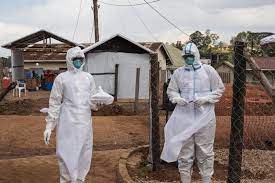
The Kenya Medical Practitioners, Pharmacists and Dentists Union (KMPDU) has called on the government to protect health workers after the country reported its first Ebola death.
In a statement, the union’s Secretary-General, Dr. Davji Atellah, said, “Health workers must not be left vulnerable in the response effort.
“Our health workers must not be the weakest link in our response. They must be the first line of protection,” Atellah said.
The call comes after Health Cabinet Secretary Aden Duale announced the death of a Kenyan national who contracted the virus while living in the Democratic Republic of Congo (DRC).
Duale said the patient, a 40-year-old businessman, fell ill about a month ago and had been treated in the DRC. He later travelled overland to Kampala, Uganda, and flew to Nairobi on October 3, where he received treatment before dying on Monday evening.
ALSO READ: Kenya Confirms First Imported Ebola Case From Congo
Dr. Atellah demanded that the government act with “urgency, transparency and responsibility.”
He said healthcare professionals who came into contact with the infected patient must “receive immediate monitoring, psychological support and appropriate follow-up.”
The union also called for “rigorous” contact tracing and adequate preparedness of health facilities.
According to Kenyan authorities, 28 contacts of the deceased, including family members and healthcare workers, have been identified, but none have tested positive for the virus so far.
Authorities said they are pursuing a further 23 passengers and four crew members who were on the same flight as the patient, adding that potential quarantine for those at risk had been prepared.
Kenya had never previously reported an Ebola case. Neighbouring Uganda recorded 20 cases – almost all people who had travelled from the DRC – and two deaths, before being declared Ebola-free in August.
As of October 2, the World Health Organization had recorded 4,082 deaths out of 8,463 cases since the emergence in the DRC of the Bundibugyo strain of the Ebola virus, for which there is still neither a vaccine nor a specific treatment.