


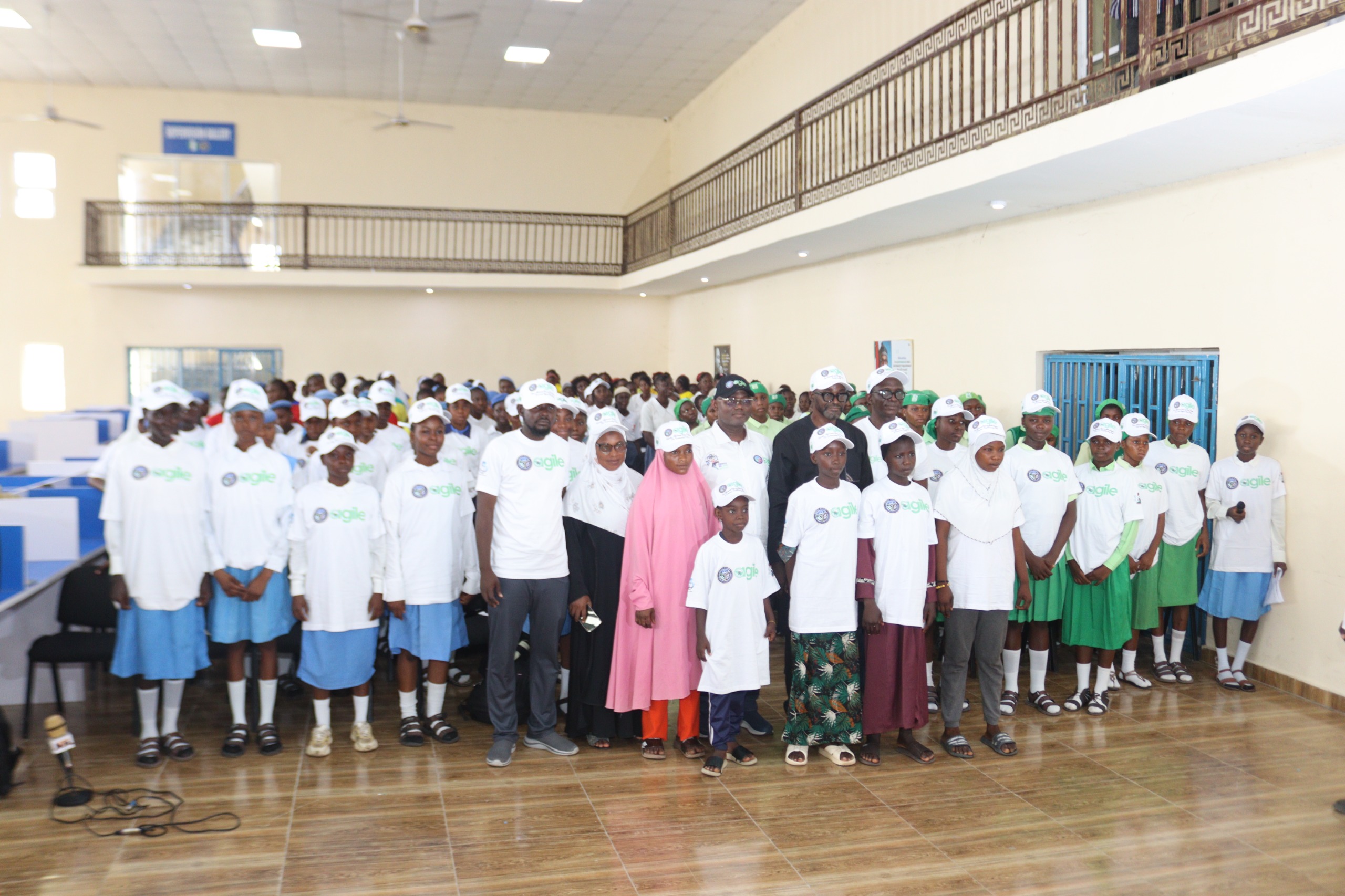
The Kogi State Government has reaffirmed its commitment to ending child marriage and expanding access to quality education for adolescent girls across the state.
The Commissioner for Education, Mr Wemi Jones, gave the assurance in Lokoja during the 2026 International Day of the Girl Child celebration, organised by the Kogi State Adolescent Girls Initiative for Learning and Empowerment (AGILE) Project in collaboration with the State Ministry of Education.
The event, held at GYB Model Science Secondary School, Lokoja, was themed “End Child Marriage and Invest in Girls’ Rights” and brought together students, out-of-school girls, teachers, traditional and religious leaders, government officials and other stakeholders.
Jones said the theme reflected the state government’s commitment to creating an enabling environment in which adolescent girls could access education, develop their potential and contribute meaningfully to society.
He said the government was working closely with AGILE to ensure that girls benefited from interventions aimed at improving their educational opportunities.
“We are working in close collaboration with AGILE and doing everything possible to ensure that the girl child does not suffer in the provision of a learning environment,” he said.
The commissioner explained that the government was supporting the project’s implementation across its various components to ensure that its objectives were achieved.
He stated that the administration of Governor Ahmed Usman Ododo was committed to providing the necessary support for the successful implementation of the initiative.
Jones urged the girls to remain focused on their education and take advantage of the opportunities available to them through the project.
He also condemned child marriage, describing it as a criminal offence and warning that anyone found culpable would face the consequences of the law.
He stressed that girls should be allowed to complete their education and pursue their aspirations without being exposed to harmful practices that could jeopardise their future.
Earlier, the Kogi AGILE Project Coordinator, Alhaji Ahmed Tijani Oricha, said the commemoration provided an opportunity to renew collective efforts towards protecting girls’ rights and ensuring that more adolescent girls remained in school.
He explained that the project was designed to address barriers to girls’ education while encouraging parents, teachers, caregivers and community leaders to support their educational development.
Oricha commended Governor Ododo for supporting the project and acknowledged the Ministry of Education’s role in driving its implementation.
He identified school infrastructure development, Conditional Cash Transfers (CCT), Life Skills Education, Safe Spaces and second-chance education opportunities for girls who had dropped out of school as some of the project’s key interventions.

According to him, the initiatives are designed to help girls enrol in school, remain in education and complete their secondary education.
However, he emphasised that government interventions must be complemented by stronger community participation to tackle child marriage and other harmful social practices.
“When a girl is married before adulthood, her education is interrupted, her opportunities restricted, and her ability to make informed decisions about her future greatly undermined,” he said.
Oricha urged traditional rulers, religious leaders, parents and other stakeholders to challenge social norms that prevent girls from accessing education and fulfilling their potential.
The event featured goodwill messages from traditional and religious leaders, as well as the participation of out-of-school girls, highlighting the importance of inclusive approaches to educational empowerment.
Students from participating schools, including Crowther Memorial College, Army Day Secondary School, Muslim Community Secondary School and GYB Model Science Secondary School, took part in an inter-school debate titled “Child Marriage or Secondary Education”, alongside poetry recitals and drama presentations.
The activities provided a platform for students to express their views on girls’ rights, education and the consequences of child marriage.


AGILE also showcased its interventions through exhibition stalls featuring Life Skills Education, Conditional Cash Transfers, Safe Spaces and the Grievance Redress Mechanism (GRM).
The celebration reinforced calls for stronger collaboration among government institutions, schools, families, community leaders and development partners to remove barriers to girls’ education.
The Kogi AGILE Project reaffirmed its commitment to working with stakeholders to expand educational opportunities for adolescent girls and ensure that they have the support needed to complete their education and achieve their full potential.

