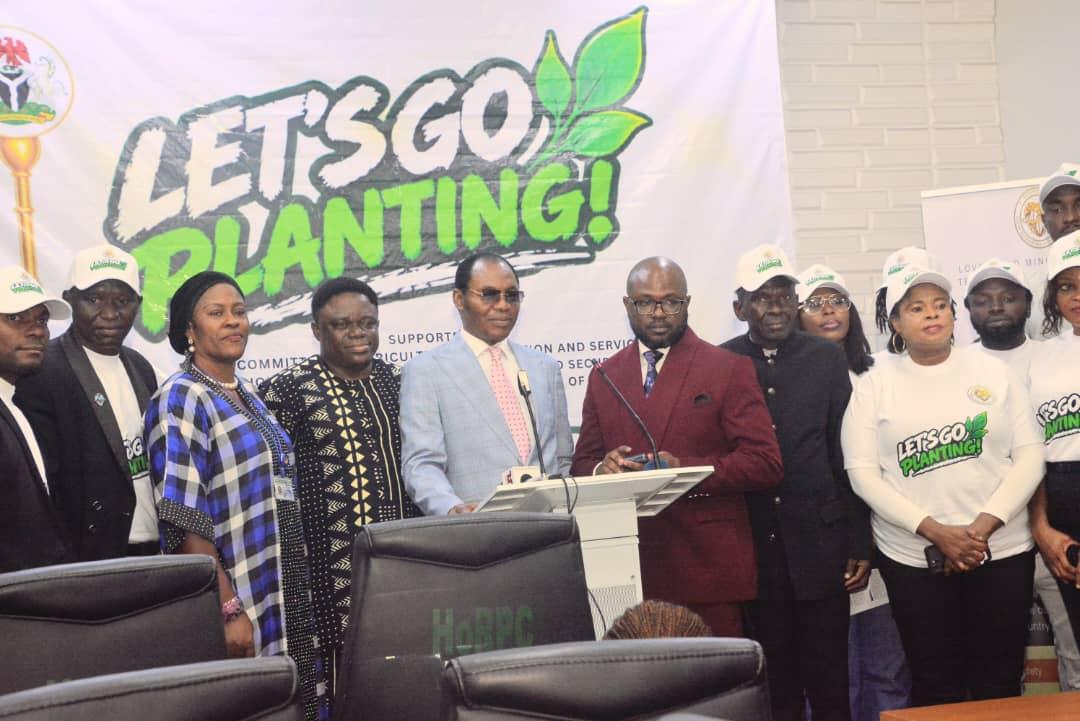
The House of Representatives Committee on Nutrition and Food Security and stakeholders in Nigeria’s food value chain have called for stronger and enforceable laws to safeguard the country’s food system as the world marks World Food Day.
They also raised concerns over rising cases of malnutrition, food insecurity and organ failure in Nigeria.
They stressed the need to protect consumers from toxic chemicals and adulterated food.
They also urged Nigerians to embrace food production and promote safer farming, processing and packaging practices to strengthen food security.
The Committee and Stakeholders made the call at a media parley making the 2026 World Food Day, organised by the Centre for Food Safety and Agriculture Research in conjunction with LoveWorld Ministry of Food Technology and Sovereignty, in Abuja.

The Chairman of the House Committee on Nutrition and Food Security, Mr. Chike Okafor, represented by the Committee’s Clerk, Mrs. Millicent Egenti warned that stunting, wasting, anaemia and low exclusive breastfeeding rates persist despite existing policies.
According to the committee, Nigeria continues to face high levels of malnutrition, stunting, wasting and anaemia, as well as poor exclusive breastfeeding practices.
“We have many policies, but few enforceable laws,” the chairman said, calling for legislative action to address Nigeria’s food and nutrition challenges.
He said the goal was to ensure that every Nigerian, from the unborn child to the child in the cradle and the farmer in the field, had access to safe, nutritious and affordable food through all available legislative means.
The committee also warned that unsafe food production practices and the indiscriminate use of chemicals could aggravate public health challenges, including kidney and liver diseases.
Agricultural stakeholders at the event cautioned that Nigeria’s growing dependence on imported seeds could undermine its food sovereignty. They called for increased investment in local seed production, organic farming and household food cultivation.
The Executive Director of CAfPRA and Deputy Director of CEFSAR, Mr Segun Adebayo, said a country could have sufficient food for consumption but lack food sovereignty if it relied heavily on external suppliers for seeds needed to sustain agricultural production.
He warned that excessive dependence on imported seeds, particularly varieties that could not be replanted after harvest, could expose Nigeria’s food system to risks arising from disruptions to international supply chains.
Adebayo advocated increased investment in locally produced, regenerative seeds that farmers could preserve and replant, stressing that control over seed production was essential to building a resilient and self-sustaining food system.
He said; “Everybody must eat. Food is not discriminatory. But we have to be very careful about what we eat because what we eat matters a great deal.”
He urged Nigerians to translate discussions on food security into practical action by cultivating their own food.
Also speaking, the Director of the Department of Agriculture at the Loveworld Ministry of Food Technology and Sovereignty, Tom Obiazi, expressed concern over the use of pesticides and other agricultural chemicals, advocating farming practices that protect soil health, the environment and human well-being.
Drawing on his experience growing up around an agricultural plantation, Obiazi said; “agricultural development should not be measured solely by increased yields but should also consider the long-term effects of farming practices on food safety and environmental sustainability.”
He called for greater emphasis on organic farming and the adoption of suitable alternatives to reduce dependence on potentially harmful agricultural chemicals.
The Chief Executive Officer of Women Food, Mrs Juliet Okumoku Eniakor, also stressed the importance of access to quality organic seeds in improving food production and safety.
Eniakor said her company prioritised organic seeds for farmers supplying its food-processing operations.
She added that the Let’s Go Planting initiative provided an opportunity to educate Nigerians on sustainable agricultural practices and healthier food choices.
Similarly, Mr Ifeanyi Nwaokolo, representing the Ministry of Food Sovereignty, called for stronger collaboration among farmers, researchers, investors, food processors and distributors to build a more sustainable and resilient food system.