


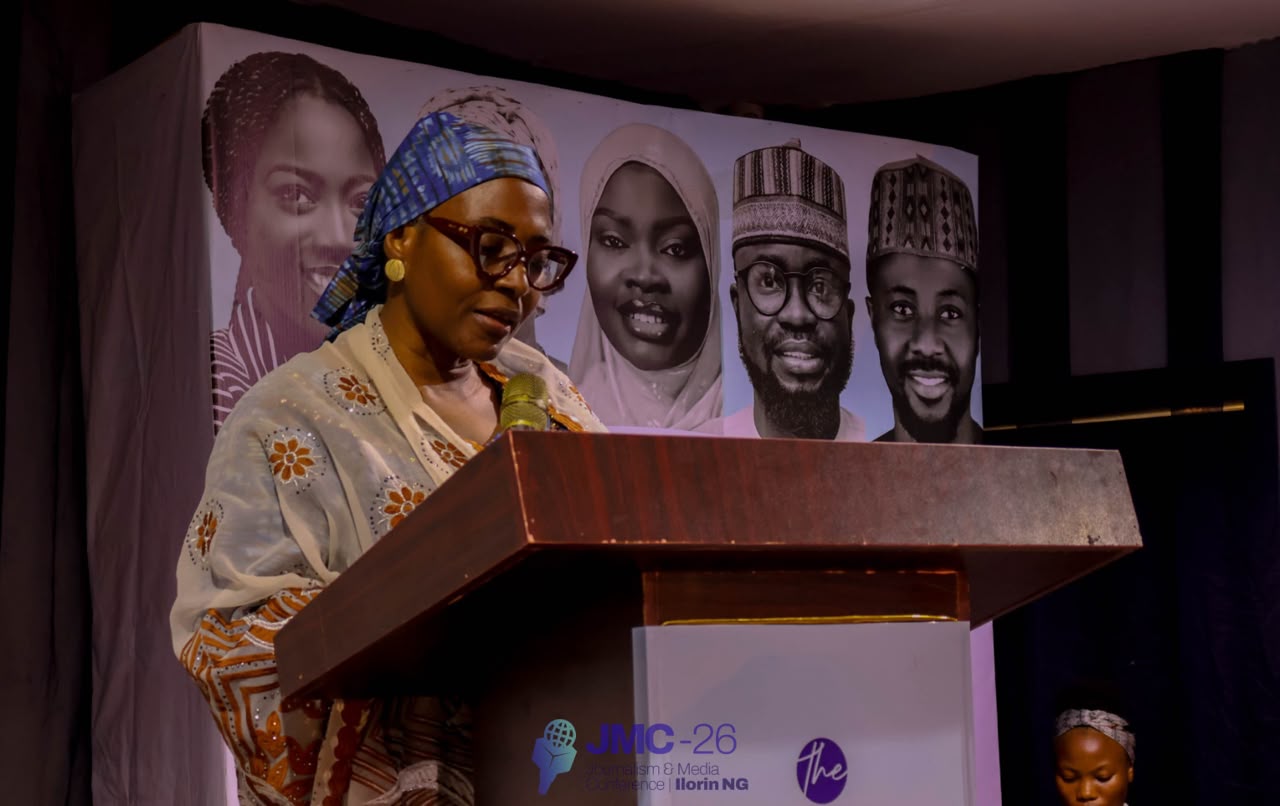
Media professionals have urged Nigerian journalists to resist political pressure, financial inducements and the growing temptation to sacrifice professional ethics for online popularity.
They also caution that such practices threaten media credibility and public trust.
The call was made at the maiden Journalism and Media Conference 2026, organised by The Journalism Academy in Ilorin, Kwara State Capital, with the theme, “The Future of Journalism: Truth vs Trends.”
READ ALSO: President Tinubu Advocates Responsible Journalism to Safeguard Democracy
The speakers, including the Founder of The Journalism Academy, Mosunmola Ajibade; Chief Correspondent of the PUNCH, Dare Akogun; media professional, Rasheedat Oladotun-Iliyas; and broadcast journalist and media entrepreneur, Joseph Chidiebere Emeribe, stressed the need for journalists to uphold accuracy, accountability and editorial independence.

Ajibade identified intimidation, unlawful detention, political interference and brown-envelope journalism as major threats to the credibility and independence of the profession.
She said journalists must remain courageous and committed to truth despite pressures, while calling for a review of journalism education in Nigeria to bridge the gap between classroom learning and practical newsroom demands.
Responsibilities of Media Practice
Ajibade explained that The Journalism Academy was established to promote practical media education through training, mentorship and professional development, adding that the conference was designed to expose young journalists and students to the realities and responsibilities of media practice.
Delivering the keynote address, Emeribe warned against sacrificing journalistic standards for social media popularity, urging practitioners to use digital trends to reach wider audiences without allowing them to determine editorial decisions.
He said the competition for online attention had encouraged sensational headlines, unverified allegations and the amplification of rumours, thereby weakening the media’s responsibility to provide credible information.
Emeribe also urged journalists to pay greater attention to community challenges, including collapsed infrastructure, flooding and electricity shortages, rather than allowing political controversies and viral developments to dominate public discourse.
On artificial intelligence, he acknowledged its potential to improve journalism through transcription, translation and data analysis but warned that AI-generated materials must be independently verified before publication.
He further cautioned that excessive dependence on politicians, government institutions and individual benefactors could undermine editorial independence, advocating diversified revenue sources, including subscriptions, digital publications, sponsorships, grants and media partnerships.
Scrutinise Public Expenditure
Similarly, Akogun called for stronger investigative journalism, urging reporters to move beyond reproducing official statements to scrutinising public expenditure, monitoring project execution and exposing wrongdoing in government institutions.
Citing the abandoned Ilesha Baruba-Gwanara road project in Kwara State, he stressed that journalists must establish whether budgetary allocations and contract awards translate into completed projects and tangible benefits for citizens.
Akogun encouraged journalists to make greater use of the Freedom of Information Act, procurement documents, audit reports and financial records to uncover irregularities. He also called on media organisations to establish adequately funded investigative desks, invest in journalists’ safety and training, and strengthen collaboration with researchers and civil society organisations.
Also speaking, Oladotun-Iliyas warned that the growing competition with bloggers, influencers and social media commentators was encouraging speed at the expense of accuracy.
She urged journalists to strengthen fact-checking and editorial processes, particularly in the face of misinformation and manipulated digital content, stressing that information circulated through verified social media accounts should not be published without independent confirmation.
Oladotun-Iliyas also advocated stronger public-interest reporting, particularly in healthcare, education, security, livelihoods and environmental protection.
She called for solutions journalism, balanced gender reporting and continuous training in investigative reporting, data journalism, digital security and the responsible use of artificial intelligence.
The speakers collectively maintained that the future of Nigerian journalism depended on practitioners’ ability to embrace technological advancements without compromising truth, professional ethics and editorial independence.
They also called for improved professional accountability and better protection for journalists against intimidation and undue influence, stressing that public trust remained central to the media’s constitutional responsibility as the Fourth Estate of the Realm.
The conference brought together journalists, media professionals, students and other stakeholders to examine emerging challenges and opportunities in the media industry.

