


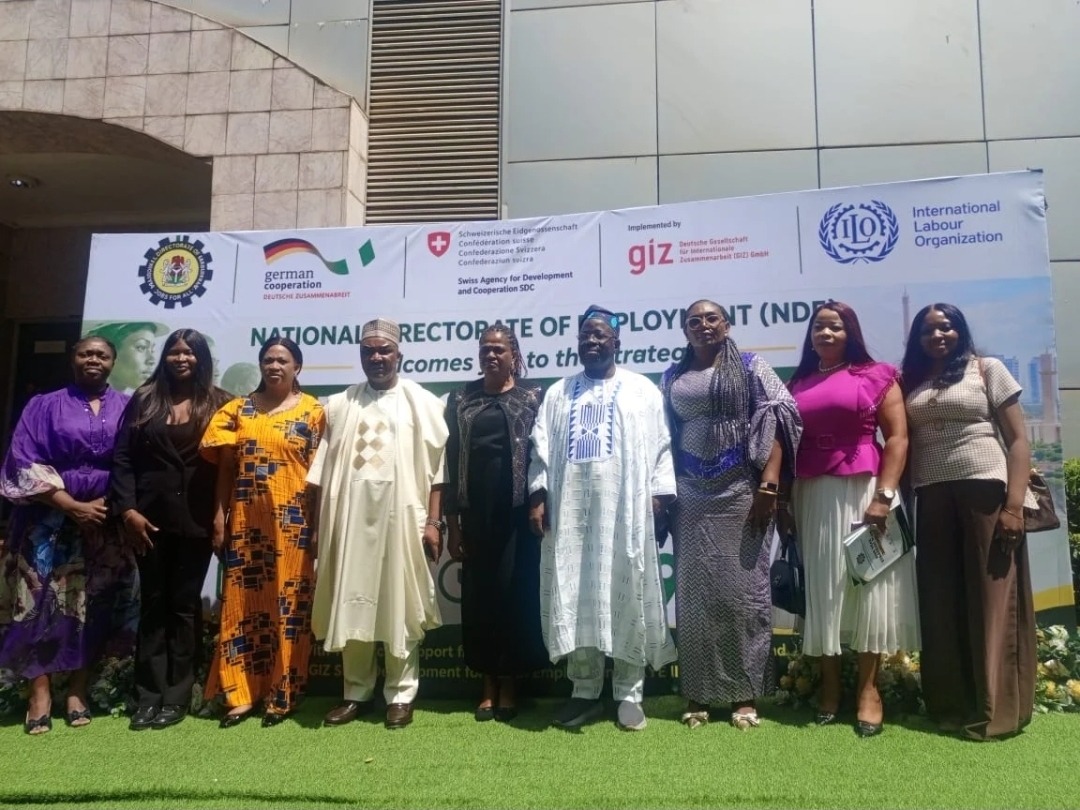
The Nigerian Government has urged the National Directorate of Employment (NDE) to prioritise actual job creation over training figures to ensure measurable employment outcomes.
The Minister of Labour and Employment, Dr Muhammad Dingyadi, made the call on Friday in Abuja at the unveiling of the NDE’s five-year strategic plan for 2027–2031.
Dingyadi, represented by the ministry’s Permanent Secretary, Dr Kamil Shoretire, said the plan should translate into actionable programmes, realistic targets and measurable performance indicators.
“The true value of a strategic plan lies not merely in its development or inauguration, but in its effective implementation.
“We must look beyond the number of persons trained to consider the number who secure jobs, establish viable enterprises, improve their incomes, and sustain their livelihoods.
READ ALSO: National Directorate of Employment trains youths, artisans in Ebonyi state
“I encourage all stakeholders to sustain their engagement and support for the implementation of this plan so that its objectives can translate into tangible benefits for Nigerians.”
The minister urged the NDE to ensure that women, young people, persons with disabilities and other vulnerable groups had equitable access to skills development, entrepreneurship support and sustainable employment opportunities.
Earlier, the Director-General of the NDE, Mr Silas Agara, said the strategic plan provided a roadmap for tackling unemployment, strengthening skills development and expanding sustainable job opportunities across Nigeria.
Agara said the plan would move the directorate from fragmented interventions to a coordinated, evidence-based and results-oriented approach, with its programmes aligned with evolving labour market demands.
“The NDE is not merely unveiling a policy document, but setting out a clear strategic direction for the next five years.
“It reaffirms our institutional purpose and strengthens our commitment to creating employment opportunities, developing skills, promoting entrepreneurship and improving the livelihoods of Nigerians.
“Our collective resolve is to move from fragmented interventions towards a more coordinated, evidence-based, measurable and results-oriented approach to employment promotion,” Agara said.
He said implementation would require clear responsibilities, adequate resources, measurable targets and effective monitoring, with the plan integrated into annual work plans, budgets and performance assessment systems.
Agara disclosed that the directorate operated 87 Skills Training Centres, alongside Agricultural Training Centres and Common Facility Centres, many of which required rehabilitation, upgrading or complete overhaul to meet current training demands.
He called for sustained support from the Nigerian Government, development partners and the private sector to modernise the facilities, harmonise training curricula and strengthen post-training assistance for beneficiaries seeking jobs or establishing viable enterprises.
The NDE Director-General commended the governments of Germany and Switzerland, the International Labour Organisation (ILO), GIZ and other stakeholders for supporting the plan’s development, expressing confidence in stronger partnerships and improved employment outcomes.
The ILO Country Director, Ms Vanessa Phala, represented by the Head of Programmes, Mrs Chinyere Emeka-Anuna, also commended the NDE for developing the strategic plan.
Phala said the plan would strengthen employment promotion, decent work and livelihood development while improving the responsiveness and inclusiveness of employment interventions across Nigeria.
She said the plan aligned with the objectives of the National Employment Policy 2025, providing a framework for strengthening institutional capacity and addressing changing labour market demands.
“The result is a plan that is grounded in evidence, shaped by stakeholders’ inputs, and aligned with the evolving realities of Nigeria’s labour market and employment landscape,” she added.
NAN

