Nigeria is targeting annual vehicle procurement of three million units, with local assemblers expected to produce about 80 per cent under the Nigerian Government’s Nigeria First Policy.
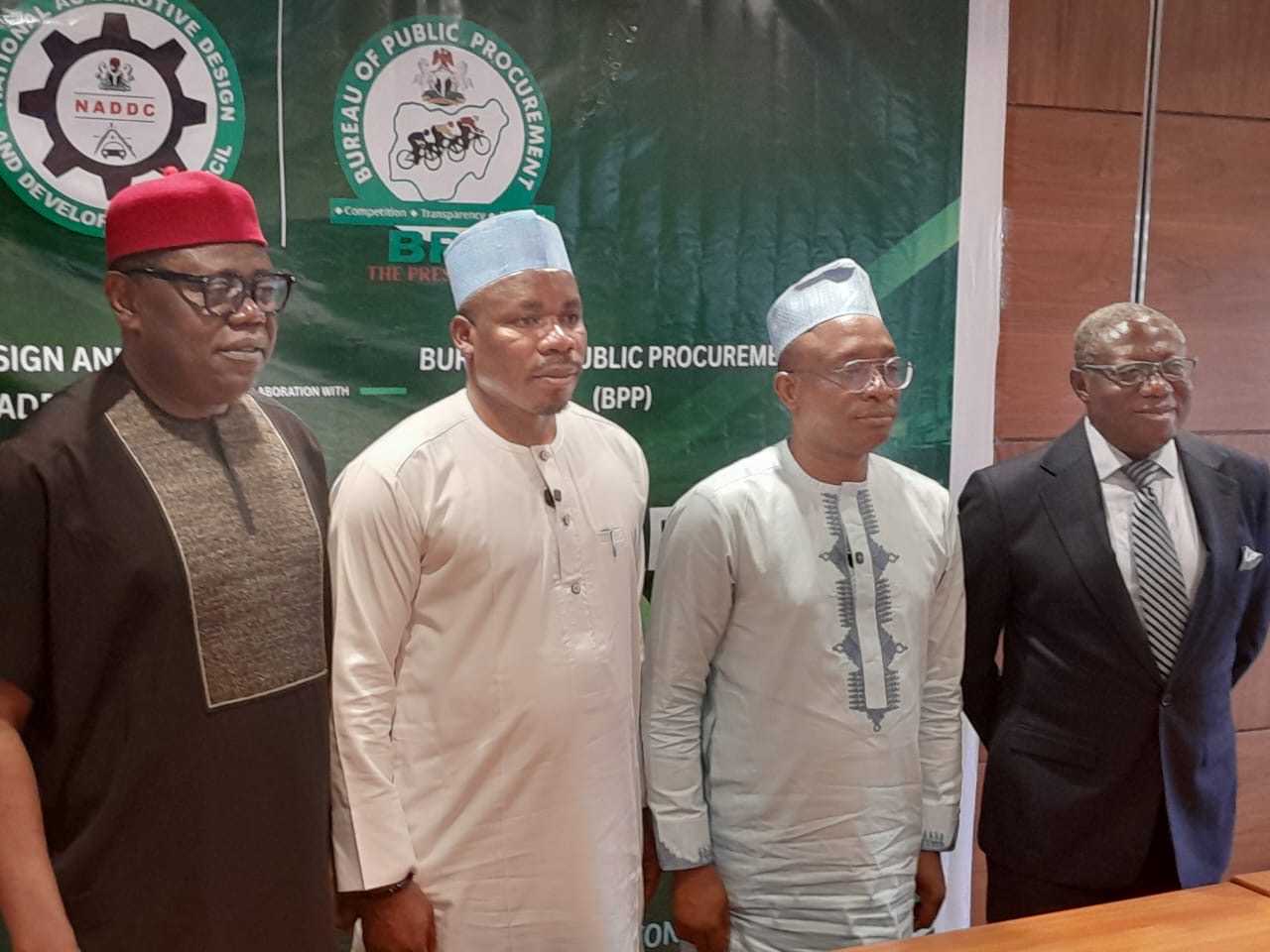
The Director-General of the National Automotive Design and Development Council (NADDC), Joseph Osanipin, disclosed this at a press conference on the policy’s implementation and its implications for the automotive industry in Abuja.
The event was organised by the Bureau of Public Procurement (BPP) in collaboration with NADDC.
READ ALSO: President Tinubu Forwards NDDC 2026 Budget Proposal to Reps
Osanipin said the policy was designed to promote local manufacturing, increase the use of locally produced components and create sustainable markets for Nigerian automotive manufacturers.
He said the government expected vehicle assemblers to transition from Semi-Knocked-Down (SKD) production to Completely-Knocked-Down (CKD) assembly, which requires greater local content.
According to him, increased government patronage of locally assembled vehicles would also create sustained demand for locally manufactured spare parts and maintenance services.
He stated that the policy would help prepare Nigerian manufacturers for the African Continental Free Trade Area (AfCFTA), which requires evidence of 40 per cent local content under its rules of origin.
“And also with this Nigerian First Policy, we are preparing for AfCFTA. Because the AfCFTA has specified a 40% rule of origin. It means for Nigerian manufacturers to be able to sell their product in any African country under AfCFTA, we must have evidence that we have 40% local components,” Osanipin said.
The NADDC director-general said the council would work with the BPP to monitor government patronage, assess compliance with standards and track manufacturers’ investments, employment and production growth.
Also speaking, the Director-General of the BPP, Dr Adebowale Adedokun, said the Nigeria First Policy had demonstrated the potential to reduce the cost of locally assembled vehicles.
He cited a procurement exercise in which the price of a vehicle reportedly dropped from about N72 million to N35 million.
Adedokun said the policy aimed to promote local manufacturing, create jobs, strengthen technical skills and ensure that Nigerian products received priority in federal government procurement.
He said President Bola Tinubu had identified automobiles, healthcare, textiles and apparel, energy, and agriculture as key sectors for the policy’s initial implementation.
“All federal government entities must as a priority procure, buy, and use Nigerian assembled vehicles,” he said.
Adedokun added that the bureau had begun implementing the policy following consultations with local vehicle assemblers and component manufacturers to understand the challenges facing the industry.
Meanwhile, the Chairman of the Nigeria Automotive Manufacturers Association (NAMA), Bawo Omagbitse, said the policy could reduce investment risks and accelerate local content development in the automotive industry.
He said the implementation framework would encourage manufacturers to deepen industrialisation and strengthen local production rather than focus solely on vehicle sales.
Omagbitse noted that the capital-intensive nature of the industry and concerns about policy stability had discouraged some potential investors.
“The industry is capital-intensive, like we know, and sometimes we look at the capital risk involved in this industry, and we say we shy away from it because policy is not directed towards ensuring that the market is sustained, policy stability is sustained, but what we are seeing today is a big departure,” he said.
He assured government agencies that automotive manufacturers would work towards meeting and exceeding the policy’s requirements, adding that the initiative could help reduce the risks associated with investing in the sector.