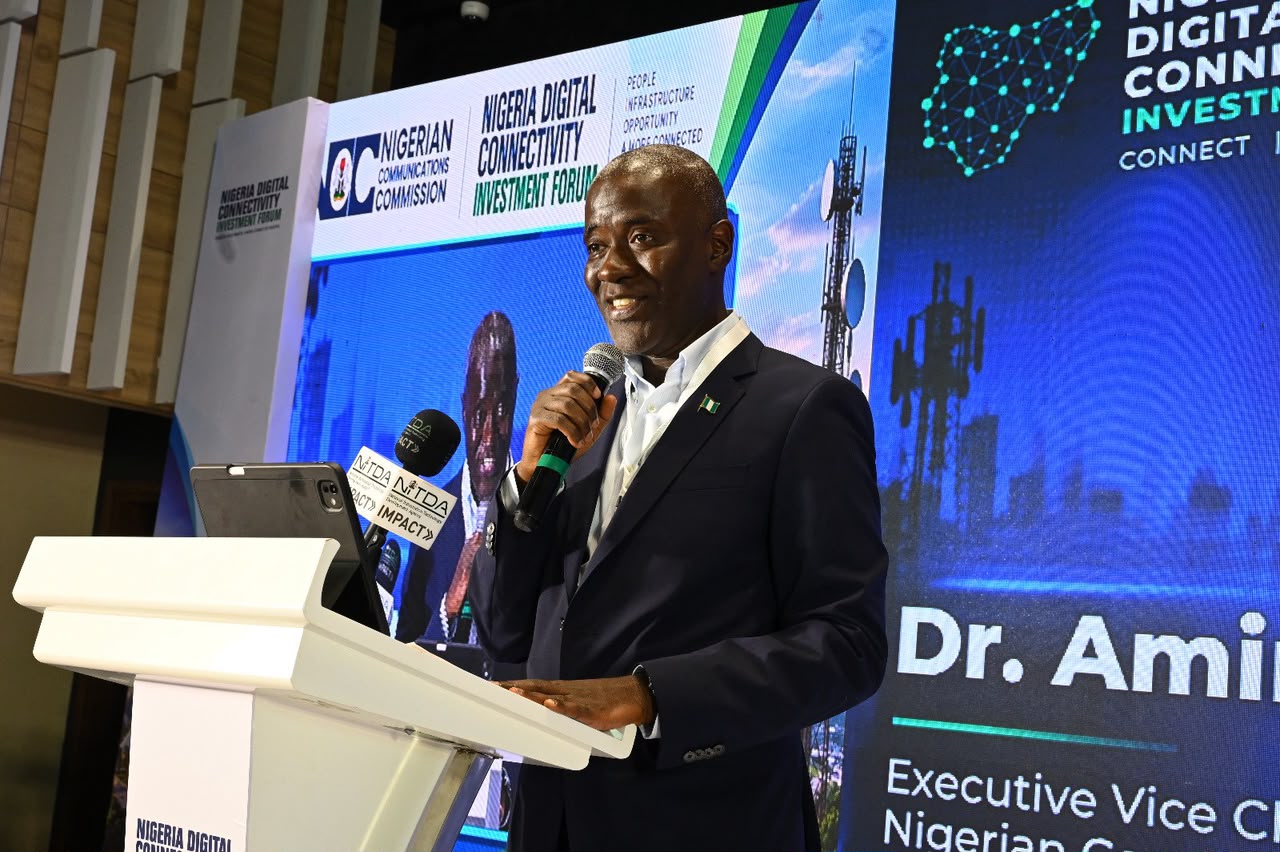
The Nigerian Communications Commission (NCC) has called for increased investment and stronger partnerships to expand digital connectivity across the country.
The Executive Vice Chairman and Chief Executive Officer of the NCC, Dr Aminu Maida, made the call at the opening of the Nigeria Digital Connectivity Investment Forum in Abuja, organised by the commission in collaboration with Swedfund International AB and Ookla.
Maida said the forum was designed to bring government, investors, development finance institutions, technology companies and other stakeholders together to identify investment opportunities and address barriers to digital infrastructure deployment.
He said Nigeria’s experience with the rollout of GSM services over the past 25 years demonstrated the importance of policy reforms, transparent licensing and private-sector investment in expanding telecommunications access.
Accordibg to Maide ,“this forum comes as we mark twenty-five years of GSM in Nigeria. At a time when a telephone line was beyond the reach of most Nigerians, policy reform and a transparent licensing process gave private investors the confidence to enter the market. The networks they built changed how we communicate and opened opportunities that have continued to grow.”
READ ALSO: NCC Hackathon Targets Inclusive Digital Innovation
He said the demand for connectivity has grown significantly, with Nigerians consuming about 1.66 million terabytes of data in July, compared with 1.13 million terabytes in the same period a year earlier, representing an increase of almost 47 per cent.
Maida said sustained investment would be required to expand networks and improve the quality of services for existing users, particularly as cloud services and artificial intelligence become more widely adopted.
Investment Environment
He noted that the NCC had taken steps to improve the investment environment, including the 2025 tariff adjustment, the designation of telecommunications infrastructure as Critical National Information Infrastructure and engagement with state governments on Right of Way issues.
The NCC boss also emphasised the importance of evidence-based regulation, saying reliable data would help investors identify connectivity gaps and assess areas requiring further deployment or network upgrades.
He highlighted the commission’s collaboration with Ookla and Swedfund, as well as its Consumer Data Lab, which brings together network performance data, consumer complaints and information on operators’ interventions.
“This helps us investigate service problems and assess whether operators’ interventions have improved consumers’ experience. It also gives us a more useful picture of where further deployment or network upgrades may be needed. We want investors to benefit from that understanding, and from regulatory decisions that are clear, proportionate and supported by evidence.”
In her remarks, the Swedish Ambassador to Nigeria, Anna Westerholm, said significant gaps remained in connectivity coverage, quality, affordability and supporting infrastructure.
She stressed that government, industry and investors would need to work together to address them.
Westerholm said data on network performance and user experience could help identify areas requiring investment, reduce uncertainty andstrengthen investor confidence.
She also identified energy, cybersecurity anddigital skills as important components of asustainable connectivity ecosystem.
The Ambassador said Sweden was interested in deepening commercial and investment relations with Nigeria, particularly in digitalisation and connectivity.
She noted that Swedish institutions and companies could contribute technology, commercial expertise, development finance, export financing and project development tosupport Nigerian infrastructure priorities.
Representing the Minister of Communications, Innovation and Digital Economy, Dr Bosun Tijani, the Director of the National Frequency Management Council, Adetunji Adeyemo, said reliable, affordable, resilient and accessible digital infrastructure was essential to Nigeria’s economic transformation.
He said the Nigerian Government had identified infrastructure, policy and innovation, entrepreneurship and capital as key strategic priorities.