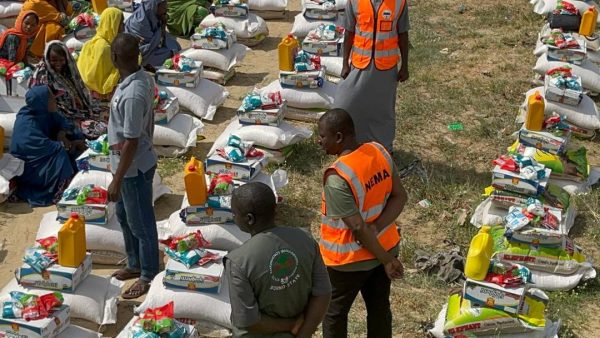
- The National Emergency Management Agency (NEMA) says it has sustained humanitarian interventions in Borno and Yobe States since the outbreak of the Boko Haram insurgency in 2009, providing food, medical supplies, water and other essential relief materials to displaced and vulnerable communities.
NEMA Head of Operations for Borno and Yobe, Mr Surajo Garba, told the Voice of Nigeria (VON) in Maiduguri that the agency began its emergency response immediately after the insurgency started displacing communities across the North-East.
He said NEMA initially provided basic necessities, including food, water and medicines, to people forced from their homes before the Borno State Government established formal Internally Displaced Persons (IDP) camps.
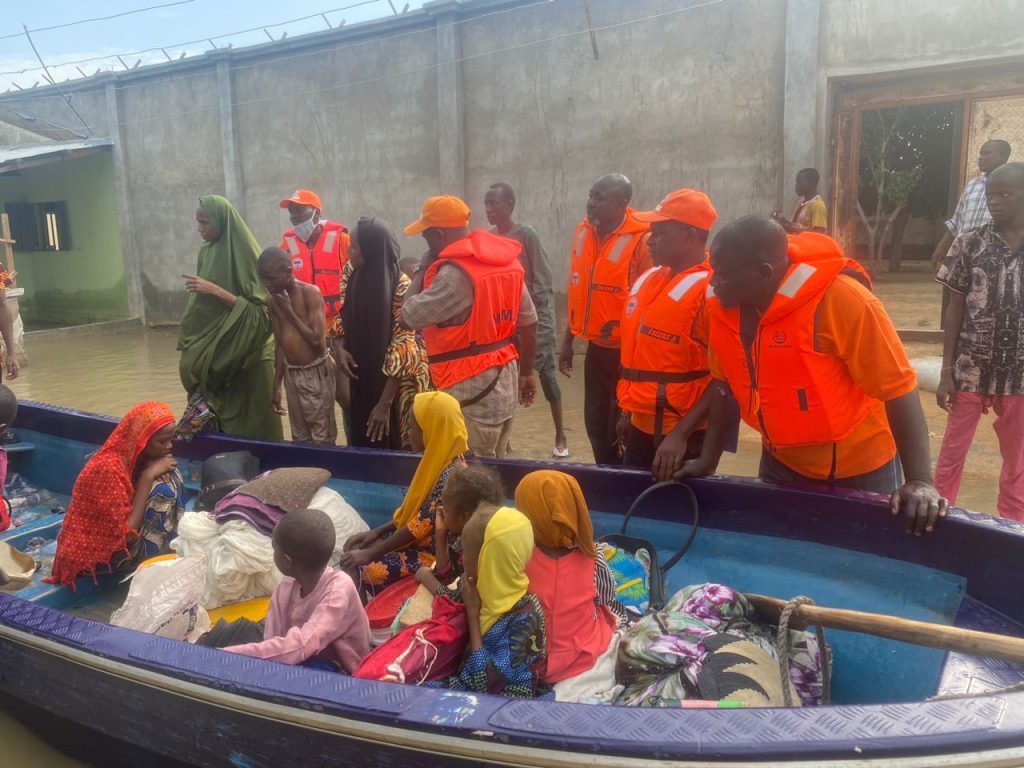
According to him, major camps at the height of the crisis included Bakassi, Teachers’ Village and Muna IDP camps, while many displaced persons also sought refuge within host communities.
Garba said that at the peak of the humanitarian crisis, NEMA’s interventions reached more than 100,000 households each month, although the figure later declined as the security and humanitarian situation gradually improved.
He said the Nigerian Government’s emergency intervention in the North-East provided significant support through the supply of food and non-food items.
The NEMA official said the agency continues to support vulnerable populations affected by displacement and resettlement, including communities such as Goshe.
He noted that the closure of several IDP camps by the Borno State Government under Governor Babagana Umara Zulum had also resulted in resettlement support for affected families.
Garba said NEMA had established coordination platforms to prevent duplication of interventions and ensure humanitarian gaps were identified and addressed.
He said regular meetings involved security, health, humanitarian and other relevant sectors, as well as traditional institutions and civil society organisations.
“Camp administration is a huge task,” Garba said, stressing the importance of coordination in ensuring that humanitarian assistance reaches those who need it.
On relief supplies, Garba said NEMA initially provided cooked meals to displaced persons before transitioning to food distributions.
The supplies included rice, beans, maize, cooking condiments, salt and vegetable oil, while non-food items included mattresses, blankets and mosquito nets.
He explained that the quantity and type of food supplied depended largely on materials received from the Federal Government and available stock in NEMA warehouses.
Garba said NEMA’s operational capacity had expanded significantly, growing from six zonal offices to 17 operational offices, allowing personnel to deploy closer to communities affected by emergencies.
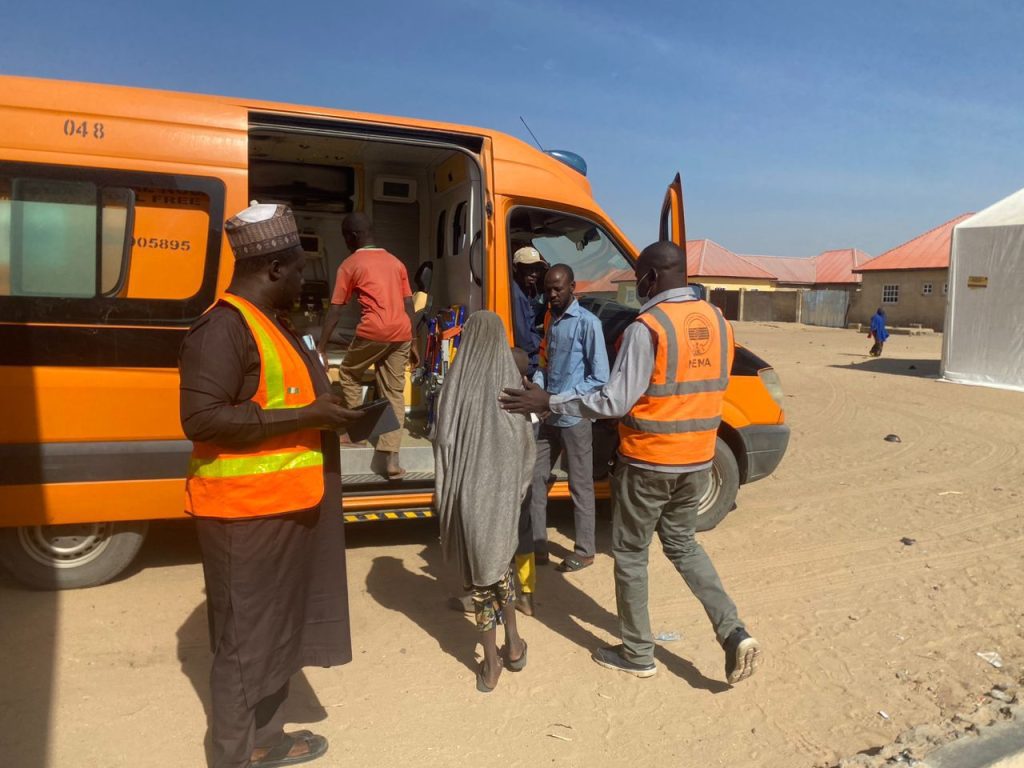
He also highlighted equipment including a Mobile Intensive Care Unit (MICU), mobile clinics, ambulances, search-and-rescue equipment and life locators.
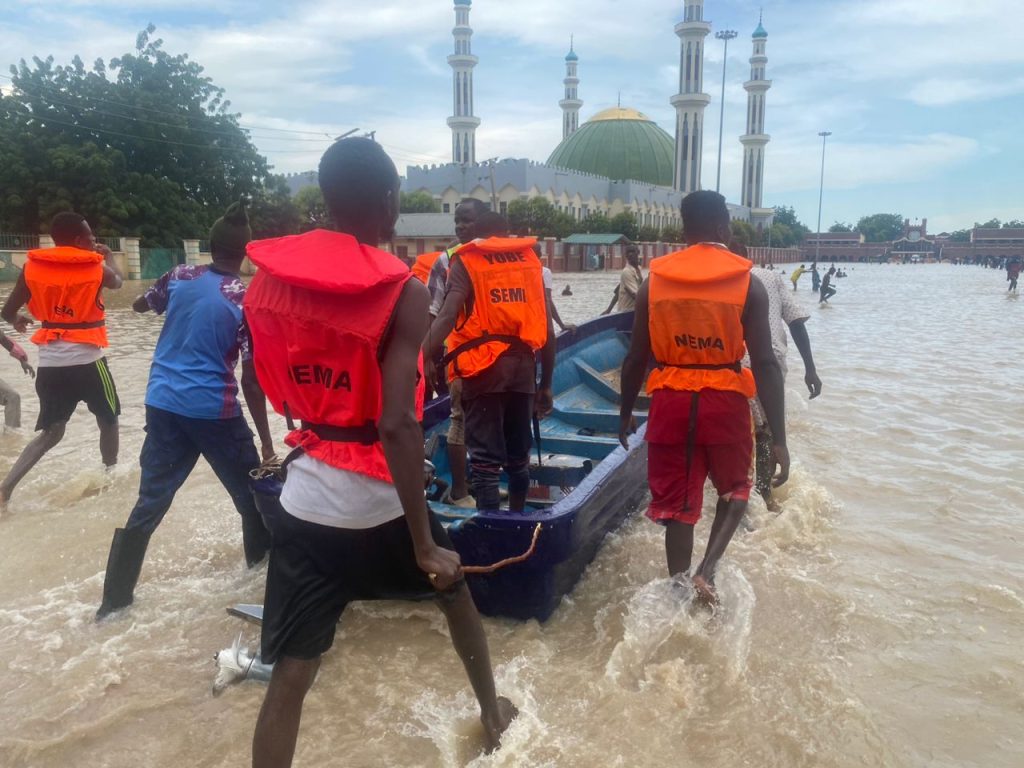
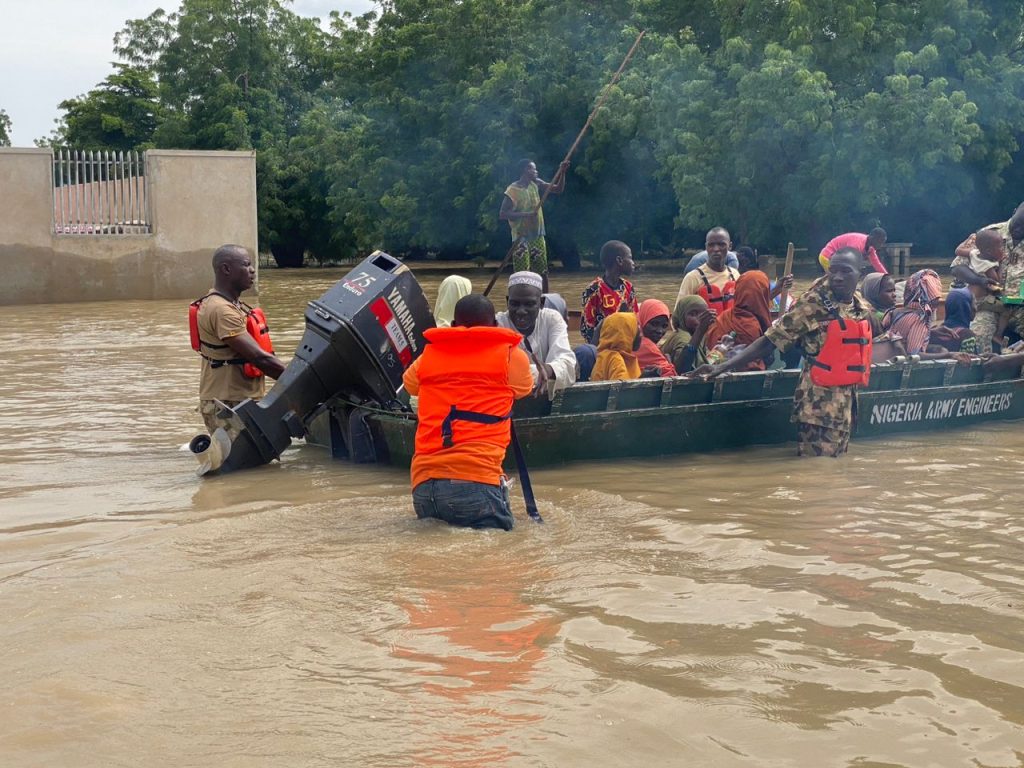
On the 2024 Maiduguri flooding, Garba said NEMA received warnings about rising water levels and worked with the state government and other stakeholders to alert residents.
However, the scale of the flooding presented an unprecedented challenge, disrupting communication and movement and effectively dividing Maiduguri into different sections.
He said NEMA’s Emergency Operations Centre became difficult to access, forcing the agency and its partners to establish an alternative operational base provided by the Borno State Government.
Garba said the experience underscored the importance of preparedness, coordination and early warning systems in responding to large-scale emergencies.
He assured that NEMA would continue working with government authorities, security agencies, development partners and communities to strengthen disaster preparedness and humanitarian response across Borno and Yobe States.