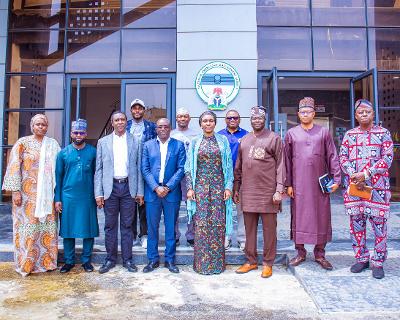
The National Emergency Management Agency (NEMA) says the success of the Early Warnings for All (EW4All) initiative is not dependent on the efforts of a single institution, but on the combined and unique strengths of all relevant agencies.
The Director-General of NEMA, Mrs Zubaida Umar, who convened the meeting of all relevant agencies in Abuja, said the launch will mark the beginning of a fully operational multi-hazard early warning system in Nigeria.
According to her, the EW4All initiative will also enable stakeholders to develop a shared understanding, clearly define institutional roles and responsibilities, establish practical coordination mechanisms, identify immediate actions and timelines, and reaffirm their commitment to sustaining collaboration beyond the launch.
The NEMA boss recalled that the United Nations Secretary-General, António Guterres, has described Early Warnings for All as a “survival agenda for humanity,” stressing that, for Nigeria, the initiative should equally be regarded as a national security and development priority.
READ ALSO: NEMA Improves Flood Response Coordination Nationwide
“Our collaboration directly supports the Sendai Framework for Disaster Risk Reduction; the Sustainable Development Goals; the Paris Agreement’s adaptation agenda; and the Renewed Hope Agenda of President Bola Ahmed Tinubu, particularly in protecting lives, safeguarding development gains and building resilient communities”, she said.
In his remarks, the Executive Vice Chairman and Chief Executive Officer of the Nigerian Communications Commission (NCC), Dr Aminu Maida, underscored the critical role of effective communication in ensuring that early warning information reaches people at risk promptly.
“We want to protect our citizens from events which are unplanned, from disasters, etc. And each and every one of us here in the room has a critical role to play.
“But I believe, coming to this meeting, together in this way, will enable us to achieve the required and necessary results in the shortest possible time, using the least amount of resources,” he emphasised.
The Director-General of NASRDA, Matthew Adepoju, highlighted the importance of space science and technology in disaster risk management and assured the partners of NASRDA’s readiness to contribute its technical expertise, data, and technological capabilities towards strengthening the national early warning systems.
Similarly, the Director-General of NIHSA, Ahmed Ibrahim Mohammed, noted that effective early warning enables authorities and communities to take appropriate measures before disasters occur, thereby reducing their potential impact on lives, livelihoods, and infrastructure.
He commended NEMA for convening the meeting and affirmed NIHSA’s commitment to providing the hydrological data, forecasts, and technical support required for the successful implementation of the initiative.
Also present was the Director-General of NiMet, Charles Anosike, who reaffirmed the agency’s commitment to strengthening collaboration towards the delivery of timely and actionable weather and climate information.