Nigeria and other African countries have called for increased local processing of raw materials to boost industrialisation, create jobs and retain more economic value within the continent.
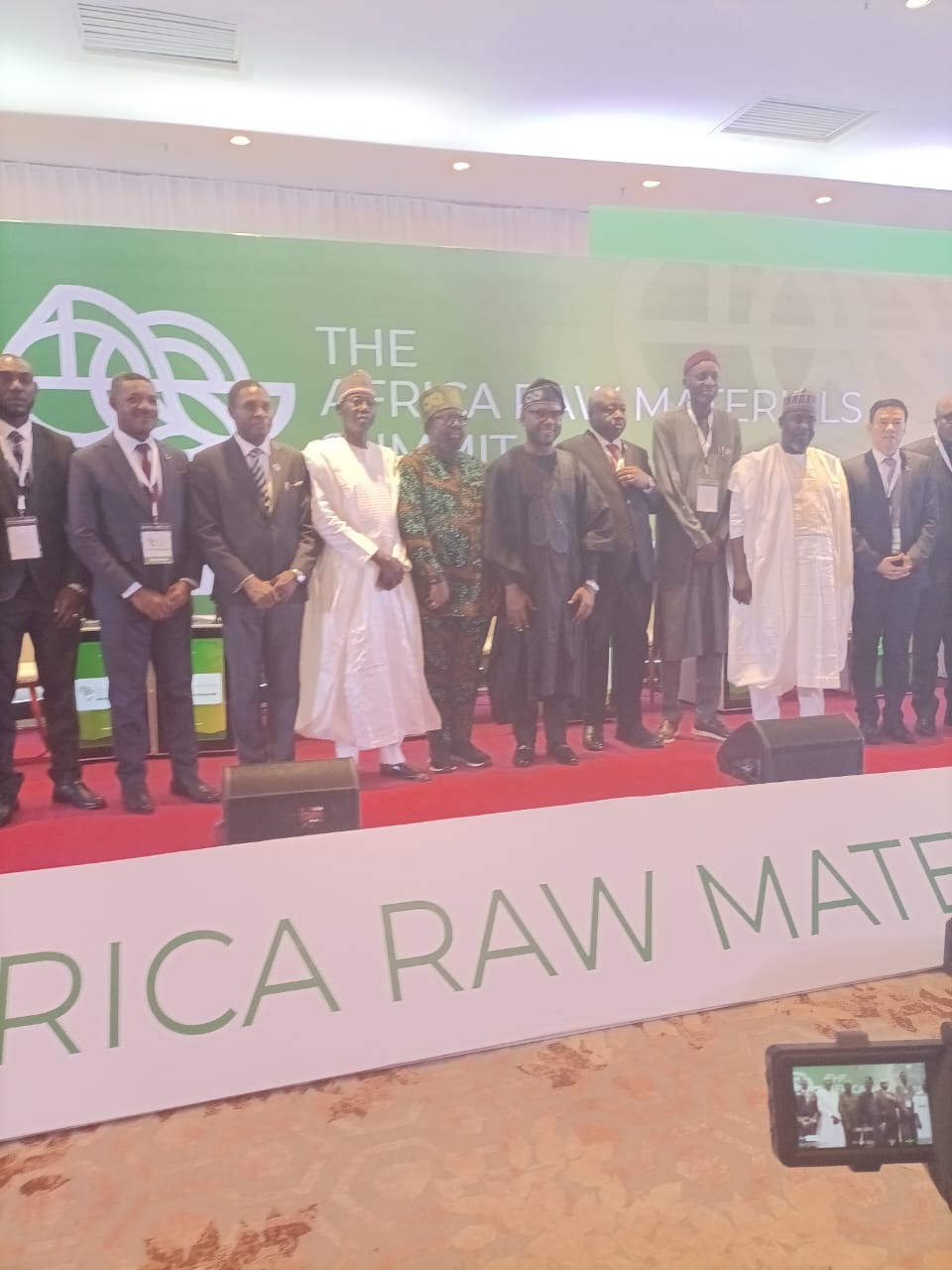
The call was made at the Second African Raw Materials Summit 2026 in Abuja, themed “From African Feedstock to African Factories”.
Participants, including government officials, industry experts and development partners, stressed the need for stronger policies, investment, research and regional cooperation to transform Africa’s natural resources into finished products.
READ ALSO: Minister Pledges Economic Revival Through Local Processing of Raw Materials
The Minister of Innovation, Science and Technology, Dr Kingsley Tochukwu Udeh, said a bill proposing a minimum of 30 per cent value addition to raw materials had been returned to President Bola Tinubu for assent following a review by the Ministry of Justice and further legislative action.
Udeh said the proposed legislation was part of efforts to support the President’s ambition of growing Nigeria’s economy to one trillion dollars.
He emphasised that local processing and the commercialisation of research and innovation were critical to achieving the target.
“Because if we spend the whole of the day talking, it will still not address the challenges or proceed to action that we need to address the challenges,” the minister said, urging stakeholders to prioritise implementation.
He cited a Chinese investor who, according to him, had expressed readiness to process lithium exported from Nigeria into finished products locally.
The investor, he said, already had a battery manufacturing plant in Abia State but required coordinated support to expand the initiative.
Udeh also disclosed that the Federal Executive Council had approved the establishment of a National Research and Innovation Development Fund, with the relevant bill before the National Assembly.
To ensure that the summit produced measurable results, the minister called for a review of commitments made at the first edition, the establishment of national and continental value-addition targets, an active summit secretariat, and sustained engagement among governments, researchers, manufacturers and investors.
He proposed that the secretariat, which could be based in Nigeria, South Africa or another participating country, should monitor progress and preserve records of commitments, with the possibility of rotating its location.
Udeh also advocated regular post-summit engagement, including a dedicated communication platform, to track agreed actions.
“Please let there be no third African Raw Materials Summit if we do not collate all the things that we have said that we ought to do, all the calls to action,” he cautioned.
A Turning Point
The Director-General of the Raw Materials Research and Development Council (RMRDC), Professor Nnanyelugo Ike-Muonso, urged African countries to make the summit a turning point in the continent’s industrial development.
He said exporting unprocessed resources while importing finished products deprived Africa of jobs, wealth and opportunities for its young population.
“We dug the cobalt, but imported the batteries. We harvested 69% of world’s cocoa, but imported the chocolates. We mined the lithium, but bought back the electric vehicles, We exported our soil’s riches, and with them, we exported our jobs, our wealth, and the dreams of our youth,”Ike-Muonso said.
He proposed five action areas: a continental raw materials value-addition compact, an industrial investment pipeline, a raw materials intelligence platform, regional value chains linked to the African Continental Free Trade Area (AfCFTA), and partnerships to transfer African research and technology into local industries.
The RMRDC director-general also highlighted the council’s work on locally adapted processing machinery and the Nigerian Integrated Information Statistical System for Raw Materials and Products (NISRAM), designed to map raw material deposits, processing capacity and manufacturing demand.
He urged delegates to focus on concrete industrial agreements rather than speeches and declarations.
“The world is waiting to see what Africa will do with its vast riches. And the answer must come from us, right here, right now,” he said.
The Chairman of the Senate Committee on Science and Technology, Senator Aminu Abbas, reaffirmed the National Assembly’s commitment to the proposed 30 per cent value-addition legislation.
Abbas said the bill had been returned to the legislature following observations by the Ministry of Justice, adding that lawmakers were working on it again.
He expressed hope that it would be passed within the following two to three weeks.
According to him, processing raw materials locally would create employment opportunities across manufacturing and related industries.
“You can imagine the number of employment if you process 30 percent of all our raw materials within Africa,” he said.
Abbas stressed that cooperation between the executive and legislative arms of government was essential to advancing Nigeria’s industrial development.
Stronger Research and Innovation
The United Nations Industrial Development Organisation (UNIDO) Representative to Nigeria and the Economic Community of West African States (ECOWAS), Ambassador Philbert Johnson, said Africa’s dependence on unprocessed raw-material exports constrained industrial development, job creation and economic diversification.
Johnson called for stronger research and innovation, reliable infrastructure, workforce development, regional trade partnerships and investment in agricultural and mineral value chains.
He also highlighted the need for resource efficiency, recycling and the use of industrial by-products and biomass in new production processes.
“The challenge before us is clear, Africa must move from exporting raw materials to producing value-added goods,” Johnson said.
He noted that UNIDO was supporting Nigeria’s industrial development through its Programme for Country Partnership, including technical assistance for agricultural and mineral value chains.
Johnson urged participants to develop practical recommendations addressing infrastructure gaps, technology constraints, financing and policy implementation.
The Director-General of the Nigerian Geological Survey Agency, Professor Olusegun Ige, called for stronger collaboration between the Ministry of Solid Minerals Development and other ministries that depend on mineral resources.
READ ALSO: RMRDC Urges Africa to Process Raw Materials Locally
Ige said reliable geological information was necessary to identify the location of raw materials and determine how best to develop them for local industries.
“Before we start the processing, we need to know where these things are. Then we need to bring them out onto the surface. Then we begin to ask for processing method,” he said.
He urged government institutions to make greater use of Nigeria’s natural resources to support local manufacturing and reduce unnecessary dependence on materials sourced from outside the country.
Sudan’s Minister of Minerals, Professor Nour Al-Daem Taha, also called for increased local mineral processing to create jobs and retain more economic value within Africa.
Taha identified local processing and refining, reliable energy supply, responsible mining practices and improved investment conditions as priorities for mineral development.
He further called for cooperation to curb mineral smuggling and strengthen training, technology transfer and workforce development.
“We need Africa to work together, to cooperate, and to share all our knowledge and business for our people and our continent,” he said.
The Sudanese minister said successful partnerships should be measured by completed projects, trained workers and opportunities created for local communities.
Participants at the summit agreed that Africa’s natural resource wealth could deliver greater economic benefits through investment, technology, infrastructure, research and consistent policies.
They also highlighted the need to strengthen regional value chains under the AfCFTA, allowing African countries to source raw materials from one another and manufacture finished products for continental and international markets.
For Nigeria, the proposed 30 per cent value-addition legislation is one of the measures aimed at advancing this objective. Its impact will depend on effective implementation, reliable energy and transport infrastructure, access to finance, industrial capacity and sustained cooperation between government and the private sector.