The Nigerian Government has directed contractors handling the Calabar-Ebonyi-Benue-Kogi-Nasarawa-Abuja Superhighway Project, to open multiple work fronts for the project, and intensify construction activities, particularly on Section Two of the corridor.
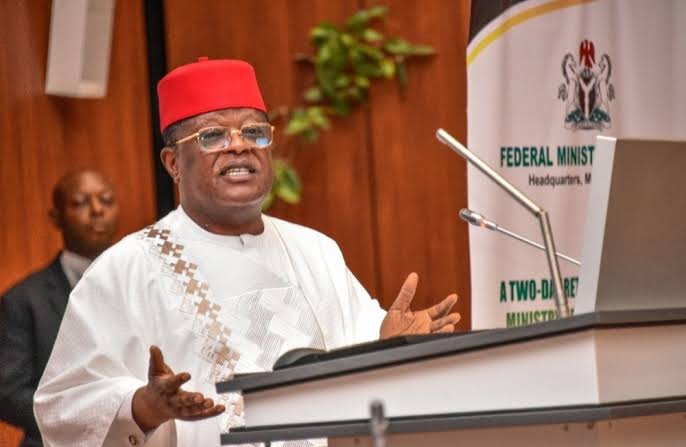
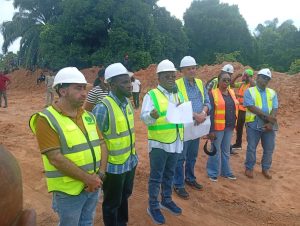
The Minister of Works, David Umahi, gave the directive at the weekend during an inspection tour of the project sites, insisting that contractors must deploy sufficient manpower and resources to accelerate delivery, and ensure that existing structures along the alignment are protected.
Umahi said the directive became necessary to overcome engineering challenges being experienced along the route, because of rivers and swampy sections, and ensure that construction progresses simultaneously at different locations.
The Minister said contractors must find engineering solutions to difficult terrain without compromising the quality or durability of the highway.
“I do not believe in engineering that anything is impossible. We’ve sat this morning and we’ve agreed on how to cross the bridge.
“Let me also remind the contractor that no building should be touched while work is being done on this corridor. No building should be demolished merely because it falls within the proposed alignment without further technical assessment.
“The contractor handling Section Two of this corridor should open at least three work fronts, and intensify efforts around the river crossing and other difficult portions of Section,” Umahi said.
READ ALSO: Works Minister Urges Government Reps to Share Project Facts
He explained that the Ministry of Works would continue to make necessary technical adjustments to the alignment where they are necessary, especially around sharp curves and built-up areas, and also ensure that such modifications did not impose additional costs on the financing arrangement of the Nigerian Government.
He noted that temporary motorability would be achieved where necessary to enable movement while permanent works continue, stating that the contractor had made significant progress since his previous inspection.
The Senior Special Assistant to the President on Community Engagements, South-East, Chioma Nweze, had earlier commended the Federal Ministry of Works for its intervention in connecting communities across the country.
She noted that the project has so far, generated direct and indirect employment opportunities, while opening up communities for increased economic activities.
Nweze said the highway project was consistent with the broader infrastructure and economic development objectives of the Nigerian Government, noting that improved connectivity would facilitate movement of people, agricultural produce and other goods.
At Section One, the Controller of the Calabar-Ebonyi-Benue-Nasarawa-Abuja Superhighway, Maxwell Oko, disclosed that the section, being handled by Infiouest, covers about 123 kilometres and has attained 39.33 per cent progress.
He said construction had progressed with rigid pavement technology, from the Ndibe Beach axis through Timber Junction, Akpoha, Amudo and Onueke, among other areas.
Continuous Reinforcement
Oko noted that continuous reinforcement of concrete pavement had progressed to about kilometre 43 on both sides of the alignment, with further construction activities planned towards Onueke Junction and subsequent sections.
The Project Manager of Section One, Mohammed Moustapha, said the contractor had intensified work on the rigid pavement and would continue work, towards the next segments.
He explained that the contractor planned to extend the rigid pavement from the current work front around kilometre 43 towards Onueke Junction and subsequently advance through the succeeding kilometres.
The project Manager of Section Two, Nabeel Munaya, said the contractor was encountering some difficult terrain, but was working with the Ministry to overcome the engineering constraints.
The Federal Ministry of Works has described the Calabar-Ebonyi-Abuja corridor as a strategic component of its wider road infrastructure programme, with the route expected to improve connectivity between the South-east, South-south, and North-central.
According to the ministry, Section Two covers the Ebonyi State border through Benue, Enugu, Kogi and Nasarawa, forming part of the Trans-Sahara Super Highway network.