Nigeria is intensifying efforts to grow trade, attract investments and boost non-oil exports as part of its economic diversification agenda.
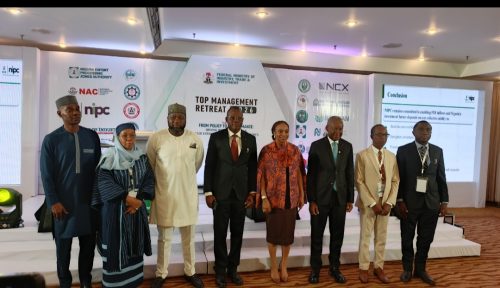
Minister of Industry, Trade and Investment, Jumoke Oduwole, disclosed this at the 2026 Top Management Retreat of the Federal Ministry of Industry, Trade and Investment (FMITI) in Abuja.
READ ALSO: Nigeria Launches Cooperative Digitalisation, Bank Reform Initiative
Oduwole said the government is focused on achieving measurable economic results through industrial growth, expanded trade and stronger investment partnerships.
According to Oduwole, Nigeria attracted about $21 billion in capital imports within the first 10 months of 2025, while non-oil exports exceeded $6.1 billion.
She said Intra-African trade also reached about N4.82 trillion during the first half of the year.
The Minister stressed that more than 115,000 Micro, Small and Medium Enterprises (MSMEs) benefited from grants, loans and trade financing provided through government-backed institutions.
Improved Connectivity
She said Nigeria has continued to record progress in 2026 through improved export connectivity, investment facilitation and support for manufacturers and exporters.
She cited the East and Southern African Air Cargo Corridor and ongoing implementation of the African Continental Free Trade Area (AfCFTA) as key drivers of growth.
Minister of State for Industry, John Enoh, said the success of Nigeria’s industrial policy would be measured by its impact on businesses, job creation, exports and investor confidence.
He revealed that the ministry has released its first 90-day implementation report and is advancing a $380 million African Development Bank-supported MSME Industrial Cluster Development Programme aimed at boosting productivity and strengthening industrial clusters.
Chairman of the Senate Committee on Industries, Senator Francis Fadahunsi, reaffirmed the National Assembly’s support for policies and legislation that promote industrialisation, competitiveness and private-sector-led growth.
He described the retreat as an important platform for reviewing progress, addressing challenges and improving implementation of Nigeria’s industrial policy.