The Managing Director and Chief Executive Officer of Steron Mining Company, Geologist Abubakar Umar, says Nigeria is making significant progress in the exploration and development of its solid mineral resources, citing rising indigenous participation, expanding discoveries and growing investment opportunities.
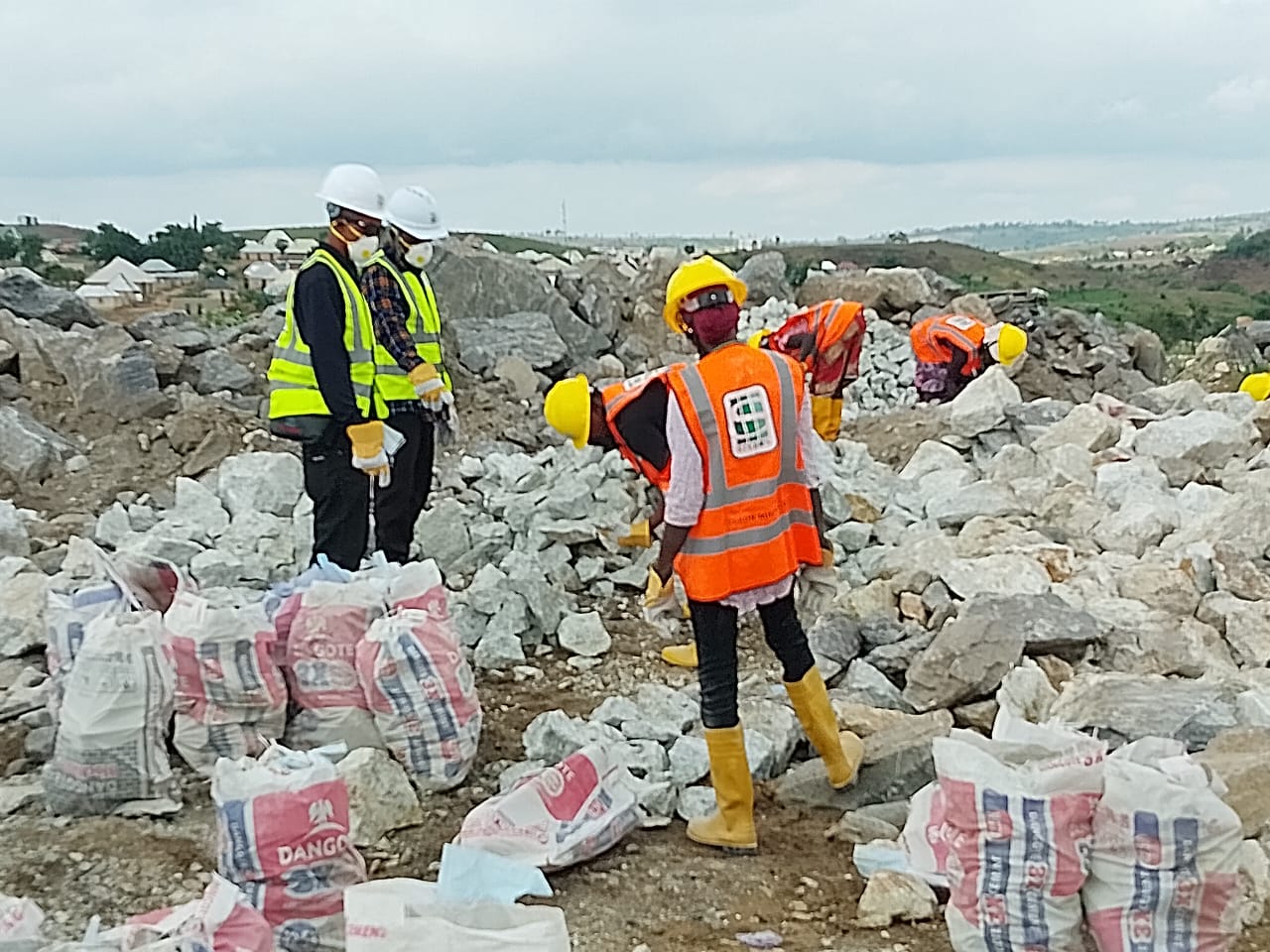
Umar stated this during an excursion to Steron Mining Company’s operational site in Abuja by delegates attending the African Natural Resources and Energy Investment Summit (AFNIS) and members of the African mining community.
According to him, the visit provided a platform to demonstrate the capacity of indigenous Nigerian firms to successfully manage large-scale mining operations.
READ ALSO: Nigerian Government Backs Mining Marshals, Warns Illegal Miners
“We are honoured to host AFNIS and members of the African mining community on this excursion, showcasing what it looks like for a local Nigerian company to successfully run a mining operation of this scale,” he noted.
He explained that delegates were taken through the entire mining value chain, from mineral occurrence and exploration activities to drilling, resource identification and extraction.
Umar said the company showcased exploration processes, including core drilling, identification of mineral veins, determination of mineral depth, and analysis of lithium deposits found within the site.
The Steron Mining CEO further noted that visitors were introduced to the production phase of mining operations, including drilling, blasting and underground tunnelling activities used for mineral extraction.
He disclosed that the company currently operates both open-pit and underground mining systems, adding that the site was initially developed for granite quarrying before the discovery of lithium deposits several years ago.
According to him, ongoing exploration has also revealed occurrences of tantalite, opening up additional opportunities for mineral development.
“Exploration activities are still ongoing, and we have now discovered occurrences of tantalite. This marks the beginning of even greater opportunities for mineral development,” the CEO revealed.
Speaking on the strategic importance of lithium, Umar described the mineral as critical to the global energy transition because of its role in battery production and renewable energy technologies.
“Lithium is essential for the production of batteries and is helping to power the future. It remains one of the most important minerals driving the transition from fossil fuels to renewable energy,” he said.
The CEO further revealed that the company established an inferred lithium resource exceeding one million tonnes in 2023, with further exploration ongoing to expand the resource base.
On value addition, Umar said Steron Mining upgrades mineral products by separating waste materials from mineral-bearing ore before supplying them to processing plants.
According to him, the process increases lithium concentration from between one and three per cent to about 67 per cent, making the product suitable for advanced processing.
The mining executive commended the Federal Government for policies aimed at boosting local participation in the mining industry while attracting foreign investment.
“The current administration has dedicated considerable effort toward ensuring that local participation is prioritised in the mining industry. These policies have enabled indigenous companies like ours to thrive while also creating opportunities for foreign investors,” Umar explained.
He also praised AFNIS for creating a platform to showcase Nigeria’s mining potential to investors and stakeholders across Africa and beyond.
Umar stressed that the company places strong emphasis on community engagement, safety and responsible mining practices, noting that host communities remain central to its operations.
“We have prioritised our host communities by placing their safety, well-being and development at the centre of our operations. Their success is our success,” he emphasised.
He reaffirmed Steron Mining’s commitment to responsible mining, community development and supporting Nigeria’s growing role in the global critical minerals value chain.