The Nigerian Government has urged state governments to increase investment in primary healthcare and immunisation, saying stronger collaboration across all levels of government is critical to improving public health outcomes.
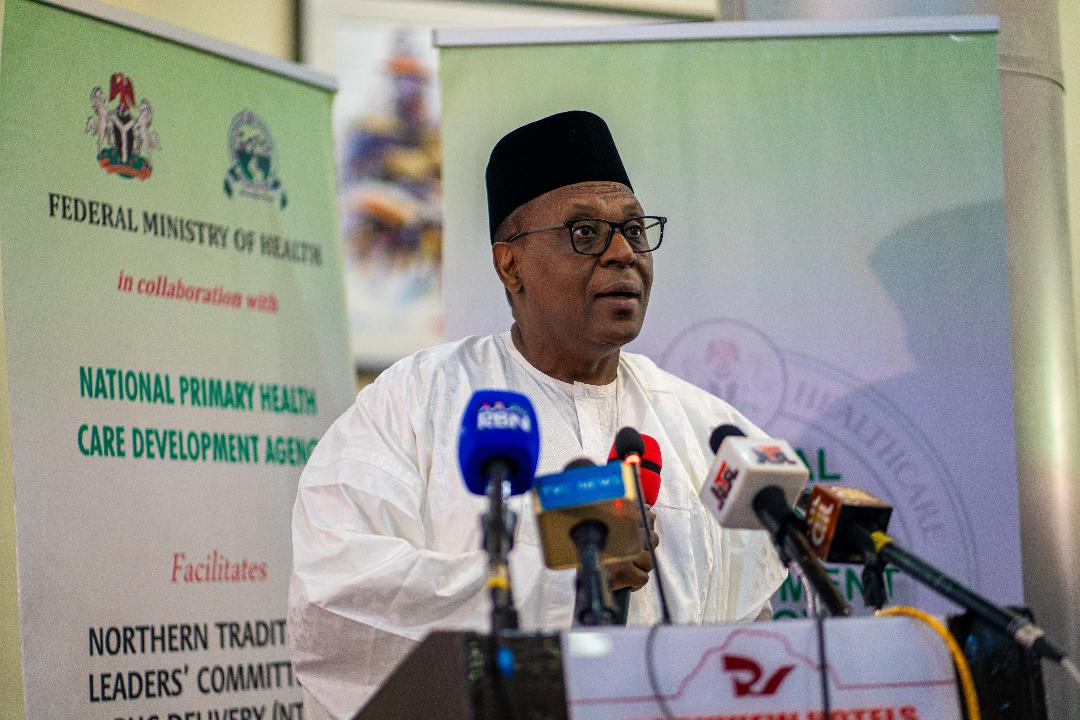
The Coordinating Minister of Health and Social Welfare, Professor Muhammad Ali Pate, made the appeal on Thursday in Abuja at the Quarterly Review Meeting of the Northern Traditional Leaders Committee on Primary Health Care (NTLC).
Pate commended northern traditional rulers for their contributions over the past 15 years in improving immunisation coverage and expanding access to maternal and child healthcare through advocacy and community mobilisation.
He said their efforts had helped save millions of children’s lives and strengthened public confidence in vaccination programmes.
“The Federal Government deeply values this partnership because you have demonstrated repeatedly that lasting health outcomes are achieved not only through sound government policies, but also through trusted community engagement and leadership,” he said.
Pate also welcomed Gavi’s commitment of 500 million dollars to Nigeria between 2026 and 2030, noting that the funding would support vaccine procurement, cold chain expansion and primary healthcare services.
However, he stressed the need for Nigeria to progressively finance its own health system.
“We cannot maintain true sovereignty while relying indefinitely on external funding. As a responsible nation, we must invest directly in our population’s health,” he stated.
The minister warned that despite progress against vaccine-preventable diseases, the emergence of circulating variant poliovirus type 3 in some high-risk states demands urgent action.
He urged traditional rulers to intensify efforts to address vaccine hesitancy and ensure every eligible child receives routine immunisation, reaffirming the government’s commitment to delivering quality primary healthcare through the Health Sector Renewal Investment Initiative.
Earlier, the Executive Director and Chief Executive Officer of the National Primary Health Care Development Agency (NPHCDA), Dr Muyi Aina, said Nigeria had recorded measurable improvements in routine immunisation and primary healthcare, according to the latest Mini Demographic and Health Survey (Mini-DHS).
He disclosed that coverage of the second dose of the Inactivated Polio Vaccine (IPV2) increased by 10.5 percentage points within one year, while coverage of the third dose of the pentavalent vaccine (Penta3) rose from 53 per cent to 54.5 per cent.
“We’re still not where we want to be, but that’s a big jump from where we were in the space of one year,” Aina said.
ALSO READ: Libya, WHO Sign Health Care Cooperation for 2026-2027
He noted that while some states recorded improvements of between 15 and 20 percentage points, others continued to struggle with reaching underserved communities due to insecurity and access challenges.
Aina called for stronger collaboration among traditional rulers, federal and state governments, local authorities and development partners to close existing immunisation gaps.
“President Tinubu is committed to making sure that no child is left behind; every child is protected against vaccine-preventable diseases,” he said.
Representing the Sultan of Sokoto, the Chairman of the Northern Traditional Leaders Committee on Primary Health Care and Emir of Argungu, Alhaji Samaila Muhammadu Mera, reaffirmed the commitment of traditional rulers to strengthening primary healthcare and ending polio transmission.
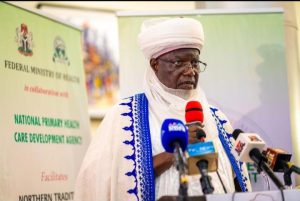
He said the committee had recorded significant progress in routine immunisation and maternal and child health through its partnership with government and development partners.
“We have proven that when we combine government resources with community trust, we can overcome even the most daunting health challenges,” Mera said.
He urged traditional rulers to ensure that no child is denied immunisation, no pregnant woman is left without healthcare, and no community is left behind.
Also speaking, the World Health Organisation Representative in Nigeria, Dr Pavel Ursu, described traditional rulers as indispensable partners in Nigeria’s immunisation programme, saying their influence remains critical to reaching zero-dose children.
He noted that Nigeria had secured about 515 million dollars in Gavi support for vaccines and immunisation systems between 2026 and 2030, alongside increased domestic financing.
“Traditional leaders are more than custodians of culture and faith; you are custodians of trust, and trust is one of the most powerful tools we have to protect public health,” Ursu said.
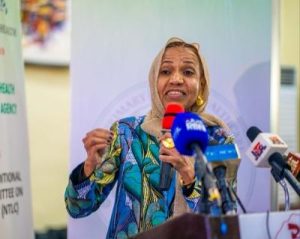
The UNICEF Representative in Nigeria, Wafaa Saeed Abdelateef, also praised traditional and religious leaders for their role in Nigeria’s wild polio-free certification, urging them to intensify efforts to reach children in remote, insecure and underserved communities.
“The challenge before us is no longer simply to eliminate a virus; the challenge is to ensure that every child is reached.
“When you champion vaccination, families have confidence, and when you lead, children actually live, and live healthy and strong.”