The Federal Government has appealed to private investors to play a greater role in expanding electricity access across healthcare facilities as part of efforts to improve healthcare services and patient outcomes nationwide.
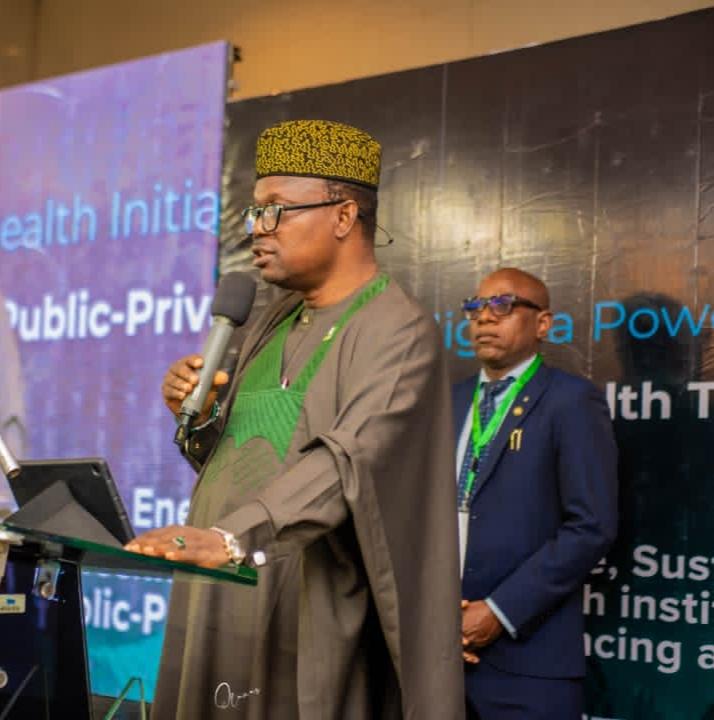
The call was made by the Minister of State for Health and Social Welfare, Dr. Iziaq Adekunle Salako, during the National Healthcare Electrification Investors Matchmaking Forum held in Lagos under the Nigeria Power for Health Initiative (NPHI).
Speaking at the event, Salako emphasised that dependable electricity is fundamental to the delivery of quality healthcare, noting that critical medical services rely heavily on uninterrupted power supply.
ALSO READ: Minister Celebrates Midwives, Strengthens Maternal Health Systems
He explained that electricity supports essential hospital operations, including surgical procedures, vaccine preservation, laboratory diagnostics, oxygen production systems, digital health solutions and emergency medical care.
“Reliable power is not an optional service in healthcare facilities; it is a vital component of an effective health system, just like skilled healthcare personnel,” he stressed.
According to him, many health institutions across the country continue to face challenges arising from unstable electricity supply, escalating fuel costs and repeated disruptions to the national grid.
He noted that these difficulties increase operating expenses and hinder efficient healthcare delivery.
Salako warned that inadequate power infrastructure contributes to poor health outcomes, limits access to services and weakens public trust in healthcare institutions.
To address the challenge, he said the Nigeria Power for Health Initiative was developed to introduce a sustainable financing model that encourages greater private sector participation in healthcare electrification.
Under the proposed Energy-as-a-Service framework, private energy companies will be responsible for financing, installing, operating and maintaining energy systems, while healthcare facilities focus on delivering medical services to patients.
The minister noted that although the programme currently targets federal tertiary health institutions, its long-term objective is to support primary, secondary and tertiary healthcare facilities across both public and private sectors nationwide.
He disclosed that the government had established a comprehensive governance structure to ensure transparency, accountability and investor confidence.
This, he said, includes an Inter-Ministerial Steering Committee, an Inter-Agency Technical Committee and dedicated Energy Management Teams within participating healthcare facilities.
Salako further highlighted ongoing efforts to secure funding through blended financing arrangements that combine government support, development finance, climate-related funding, concessional capital and private investment.
He commended the United Kingdom Partnership for Accelerating Climate Transition (UK PACT) and Landell Mills International for their contributions to developing a national framework aimed at promoting sustainable energy access in the health sector.
The minister encouraged commercial banks, development finance institutions, climate investors and energy developers to explore the opportunities created by the initiative, assuring stakeholders of government support through favourable policies and an enabling investment environment.
He expressed optimism that stronger partnerships among government agencies, investors and development organisations would accelerate access to affordable and sustainable energy in healthcare facilities, ultimately strengthening Nigeria’s health system and improving the quality of care available to citizens.