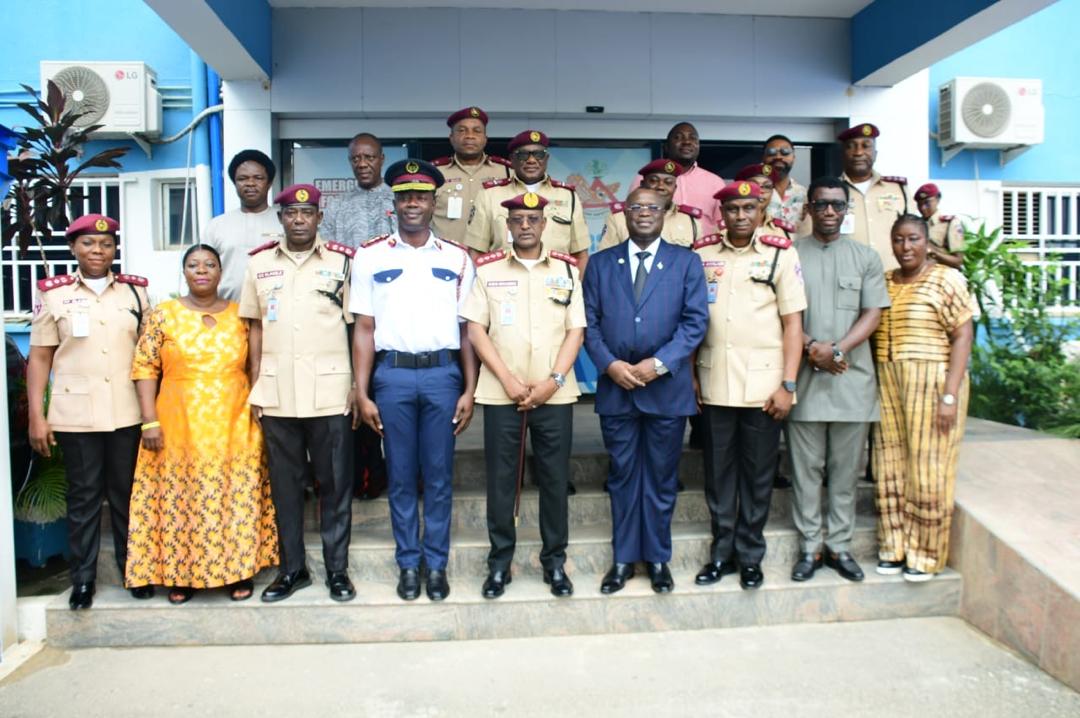
Nigeria’s Federal Road Safety Corps (FRSC) and the Sierra Leone Road Safety Authority (SLRSA) have strengthened regional cooperation on road safety with the signing of a five-year Memorandum of Understanding (MoU) aimed at enhancing institutional collaboration, knowledge exchange and coordinated action across West Africa.
The agreement was signed at the FRSC National Headquarters in Abuja on Friday.
The partnership reinforces the commitment of both agencies to innovation, capacity building, data-driven road safety management, research, vehicle administration and enforcement, to reduce road traffic fatalities and advance the Sustainable Development Goals across the sub-region.

Speaking at the ceremony, the Executive Director of SLRSA, Mr James Bagie Bio, described the agreement as a defining moment in the relationship between the two institutions.
He applauded the professionalism, operational excellence and technological advancement of the FRSC under the leadership of Corps Marshal Shehu Mohammed.
Bio said the Sierra Leone delegation was inspired by the Corps’ best practices and pledged that the agreement would be translated into concrete actions through structured implementation, institutional engagement and regular progress evaluation.
He reaffirmed Sierra Leone’s commitment to ensuring that the partnership delivers measurable road safety outcomes.
Also speaking, the Deputy High Commissioner of Sierra Leone to Nigeria and Deputy Head of Mission to ECOWAS, Major General (Rtd.) Dauda Alpha, commended the transformation of the FRSC and attributed its growing continental reputation to the leadership of the Corps Marshal.
He said the Corps had evolved into a reference point for road safety administration in Africa and described the partnership as a strategic bridge that would further strengthen regional integration and collective efforts to safeguard lives on African roads.
The agreement marks another step in FRSC’s drive to expand international partnerships and strengthen regional cooperation on road safety.
Both organisations are expected to work closely under the framework of the agreement to promote cross-border collaboration, innovation and shared responsibility in pursuit of safer mobility and sustainable development across the ECOWAS region.