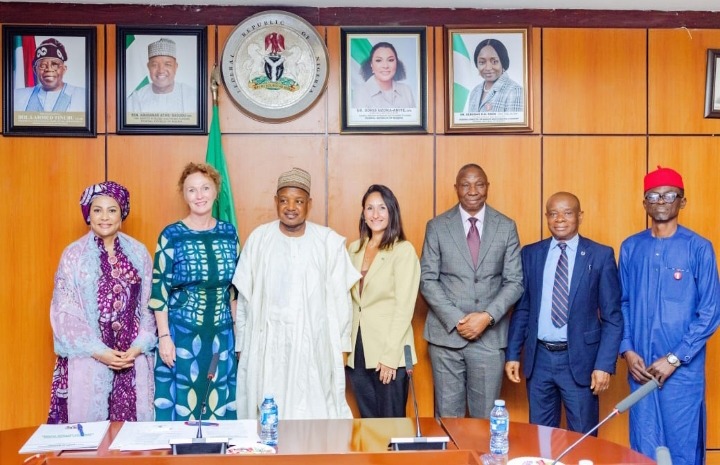
The Nigerian Government and the Government of Sweden have reaffirmed their commitment to deepening bilateral economic cooperation.
The two countries placed particular emphasis on project preparation, infrastructure development, investment mobilisation, digital infrastructure, financing and private-sector participation.
The commitment is aimed at strengthening economic ties and promoting sustainable development through increased collaboration in key sectors.
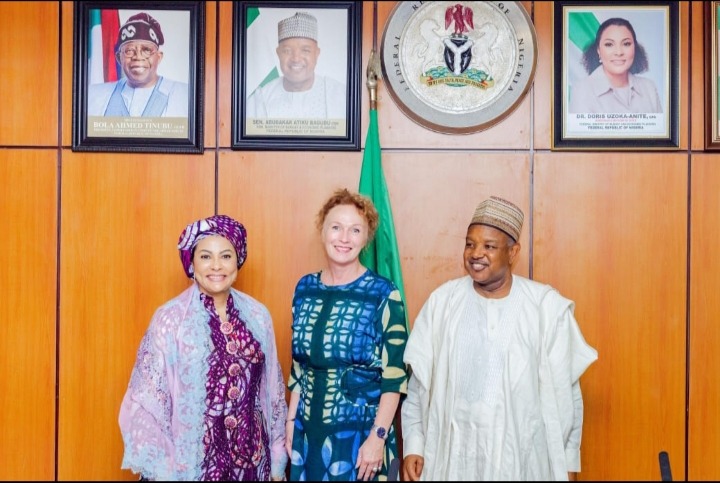
This was reaffirmed at a high-level meeting between the Federal Ministry of Budget and Economic Planning and a Swedish delegation, led by the Swedish Ambassador to Nigeria, Ms Anna Westerholm.
Welcoming the Swedish delegation to the Ministry in Abuja, Minister of Budget and Economic Planning, Senator Abubakar Bagudu, expressed appreciation for Sweden’s continued engagement with Nigeria, particularly its technical support for project preparation.
Senator Bagudu said the engagement was timely as Nigeria advances the implementation of its development priorities and seeks to strengthen its capacity to prepare bankable projects capable of attracting domestic and international investment.
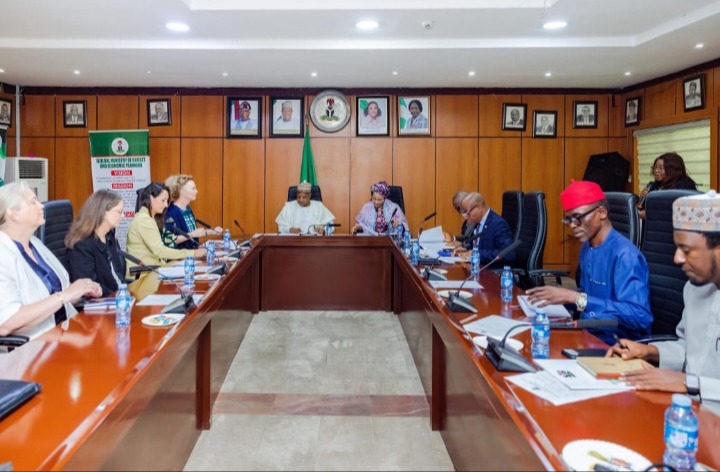
He emphasised that project preparation remains critical to bridging the gap between development priorities and available financing, noting that well-prepared, properly structured projects are essential to mobilising private and institutional capital.
The Minister also highlighted the proposed National Development Finance Corporation as an important mechanism for strengthening Nigeria’s capacity to develop, structure and finance strategic projects through project-preparation facilities, guarantees and other financing instruments.
Enhanced Cooperation
Senator Bagudu identified digital infrastructure and telecommunications as key areas for enhanced cooperation with Sweden, highlighting opportunities in data centres, artificial intelligence, technology development and digital skills.
He also highlighted Nigeria’s large, youthful population as a significant asset for developing digital talent and for strengthening the country’s position in the global digital economy.
The Minister highlighted investment opportunities at the subnational and local levels, noting that Nigeria has mapped economic opportunities across its wards to identify local drivers of prosperity, challenges, and areas with investment potential.
According to him, “opportunities exist across infrastructure, transport, agriculture, tourism and other productive sectors, with the country’s 36 states offering further opportunities for developing projects capable of attracting private and institutional capital.”
Senator Bagudu also emphasised the importance of sustaining Nigeria’s economic reforms and strengthening investor confidence, particularly as the country seeks to mobilise long-term domestic and international investment.
Speaking at the engagement, the Minister of State for Budget and Economic Planning, Dr Doris Uzoka-Anite, highlighted significant investment opportunities across Nigeria’s 36 states and their diverse economic ecosystems.
Subnational Level
Dr Uzoka-Anite said the Nigerian Government is working to identify investment opportunities at the subnational level and to encourage states to develop projects that can attract domestic and international capital.
She identified tourism as one of the areas with considerable potential, noting that Nigeria’s federal structure offers states opportunities to develop projects based on their respective economic strengths, resources and comparative advantages.
The Minister of State explained that the Nigerian Government is focused on identifying opportunities to absorb capital, developing suitable projects, and using the budget system strategically to de-risk investments and build greater confidence among private-sector investors.
She noted that Nigeria’s ambition to build a $1 trillion economy requires effectively mobilising investment opportunities across the country, including at the state and local levels.
Dr Uzoka-Anite emphasised the importance of ongoing collaboration with development and investment partners to identify viable opportunities, structure projects appropriately, and create the conditions necessary to attract capital.
Also speaking during the engagement, Ambassador Anna Westerholm recalled the opening of the Swedish Trade Office in Lagos in April 2025, calling it an important milestone in Nigeria-Sweden relations.
The Ambassador noted that Sweden remains committed to supporting Nigeria through the coordinated “Team Sweden” approach, which brings together Swedish institutions with expertise in trade promotion, export financing, guarantees, development cooperation and investment mobilisation.
Ambassador Westerholm explained that “the Team Sweden model enables Sweden to provide appropriate support at different stages of the project development and investment cycle.”
She invited the Nigerian Government to submit priority project proposals through the Swedish Embassy or through the Trade Commissioner to Nigeria at Business Sweden, Mrs Marlena Batist Hager.
She promised that the proposals would be directed to the appropriate Swedish institution for consideration.
Similarly, speaking on behalf of the Swedish Export Credit Agency (EKN), Ms Katarina Hirsch (Senior Underwriter, Infrastructure and Telecom) highlighted the agency’s capacity to provide export guarantees and risk coverage to support Swedish exports and participation in strategic projects in Nigeria.
Ms Hirsch noted Swedish expertise across sectors including agribusiness, energy, infrastructure, transport and railways, emphasising the importance of early project preparation and financial structuring to make projects bankable.
Representing the Swedish Export Credit Corporation (SEK), the Director Origination and Strategic Partnerships, Ms Ida Littorin explained that the institution provides long-term financing solutions as part of Sweden’s export-credit system and works closely with international and commercial banks to structure financing for viable projects.
Ms Littorin stressed that project bankability and appropriate financial structuring are essential to unlocking financing for major development projects.
Representing the Swedish International Development Cooperation Agency (SIDA), Infrastructure Finance Manager, Mr Maximilian Jonsson expressed interest in exploring opportunities for technical assistance, infrastructure financing, institutional strengthening and mobilising private capital.
Mr Jonsson described the engagement as an opportunity to deepen understanding of Nigeria’s infrastructure priorities and to identify areas where Swedish development cooperation could provide additional support.
Both sides agreed on the importance of maintaining continuous engagement and of developing a practical mechanism to identify, prepare, and present priority Nigerian projects to Team Sweden.