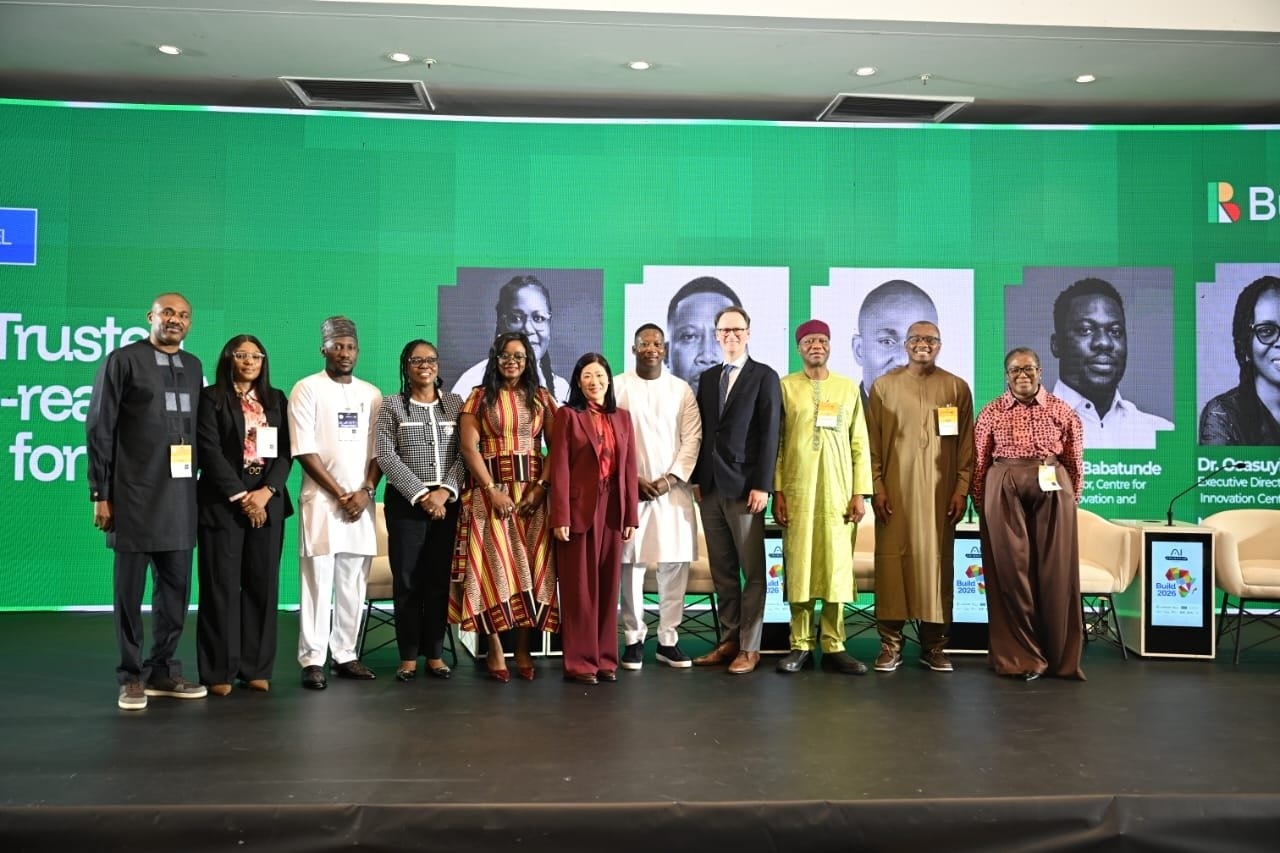
Nigeria is targeting to accelerate Artificial Intelligence development through shared computing infrastructure, regional technology partnerships and strategic investment.
This comes as the Nigerian Government moves to address structural constraints limiting Africa’s competitiveness in the global digital economy gaps.
The Minister of Communications, Innovation and Digital Economy, Dr Bosun Tijani, stated this while declaring open BUILD 2026 themed Building Africa’s Shared Compute and AI Infrastructure on Wednesday, in Abuja.
The Minister, represented by the National Director of the National Centre for Artificial Intelligence and Robotics (NCAIR), Dr Olubunmi Ajala, called for coordinated African action to address critical infrastructure.
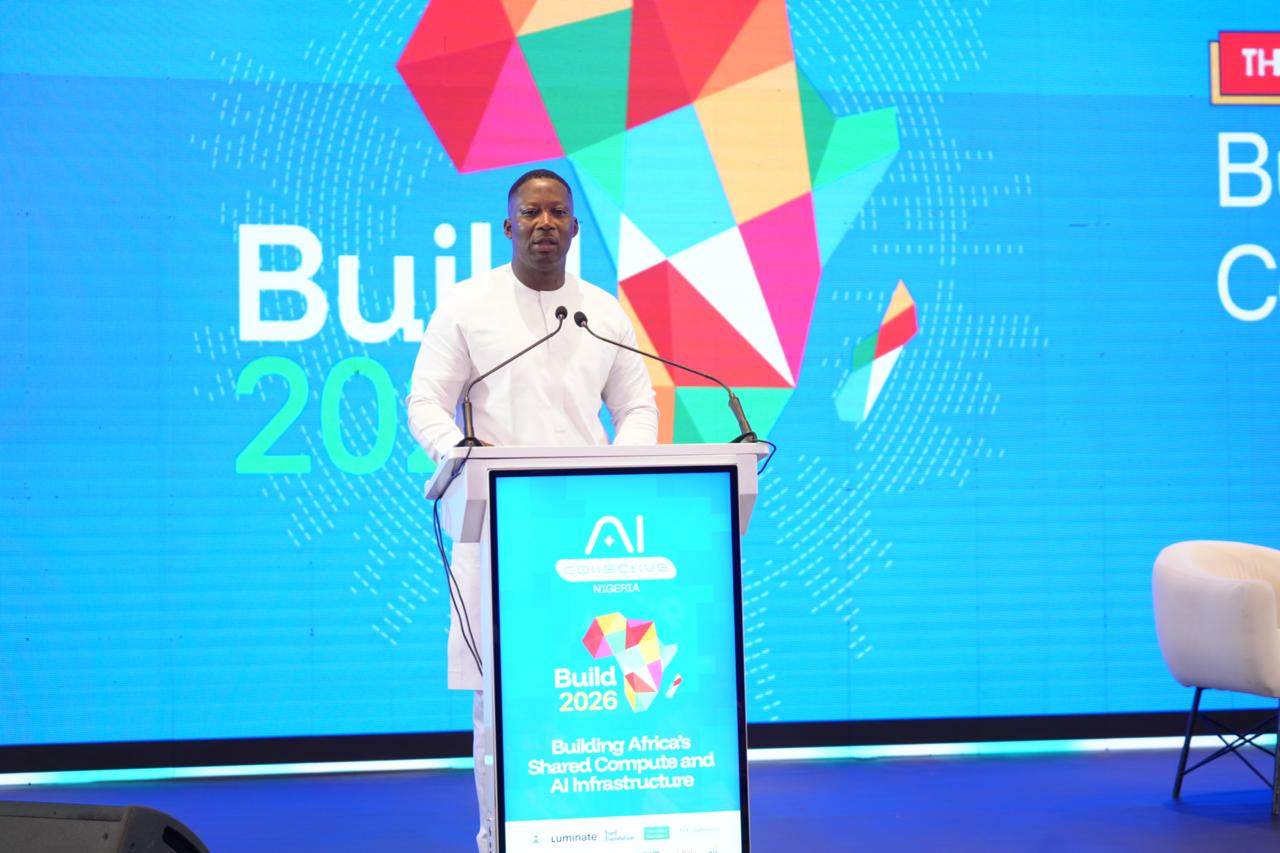
Dr Tijani said “access to computing power, electricity, connectivity and advanced chips will be decisive in determining whether Nigeria and other African countries can shape the future of artificial intelligence rather than remain dependent on technologies developed elsewhere.”
He disclosed that Nigeria had improved its position in the Oxford AI Readiness Index from 103rd to 73rd over two years, but stressed that further progress would require sustained investment in the infrastructure underpinning AI innovation.
“For us to get there, infrastructure is a key point,” he said.
Dr Tijani identified electricity, broadband connectivity, cloud computing and access to advanced semiconductor chips as major challenges, noting that the rapid evolution of chip technology and global supply constraints could deepen Africa’s disadvantages.
He highlighted plans for a Nigeria–Togo data park and expanded fibre connectivity, while proposing a continental model that would allow countries to pool computing resources for large-scale AI research and development.
“Nigerian capacity might not be big enough, but over the night, maybe forty eight hours, we could aggregate this for all of us, and you’ll be able to do what you want to do,” he said.
The proposal places shared computing infrastructure at the centre of BUILD 2026’s three strategic priorities: infrastructure, economics and digital sovereignty.
The conference is convened by the Nigeria AI Collective to bring together government institutions, regulators, development finance institutions, researchers, investors, technology companies and innovators to develop practical solutions for Africa’s AI infrastructure needs and strengthen the continent’s influence in global AI governance.
Earlier, Executive Director of the Policy Innovation Centre (PIC) and host of the Nigeria AI Collective Secretariat, Dr Osasuyi Dirisu, said the conference was designed to expand collaboration and establish a shared vision for an African AI future driven by local expertise, inclusive innovation and evidence-based policymaking.
Launched in October 2024, the Nigeria AI Collective is a community of practice bringing together civil society, academia, media, innovation, policy and the broader AI ecosystem to promote safe, ethical and inclusive artificial intelligence.
Dr Dirisu said “the initiative seeks to ensure that Nigeria’s AI development remains locally relevant, globally competitive and aligned with the National Artificial Intelligence Strategy.”
“Our own AI journey could be owned by us, could be locally relevant or globally competitive,” she said.
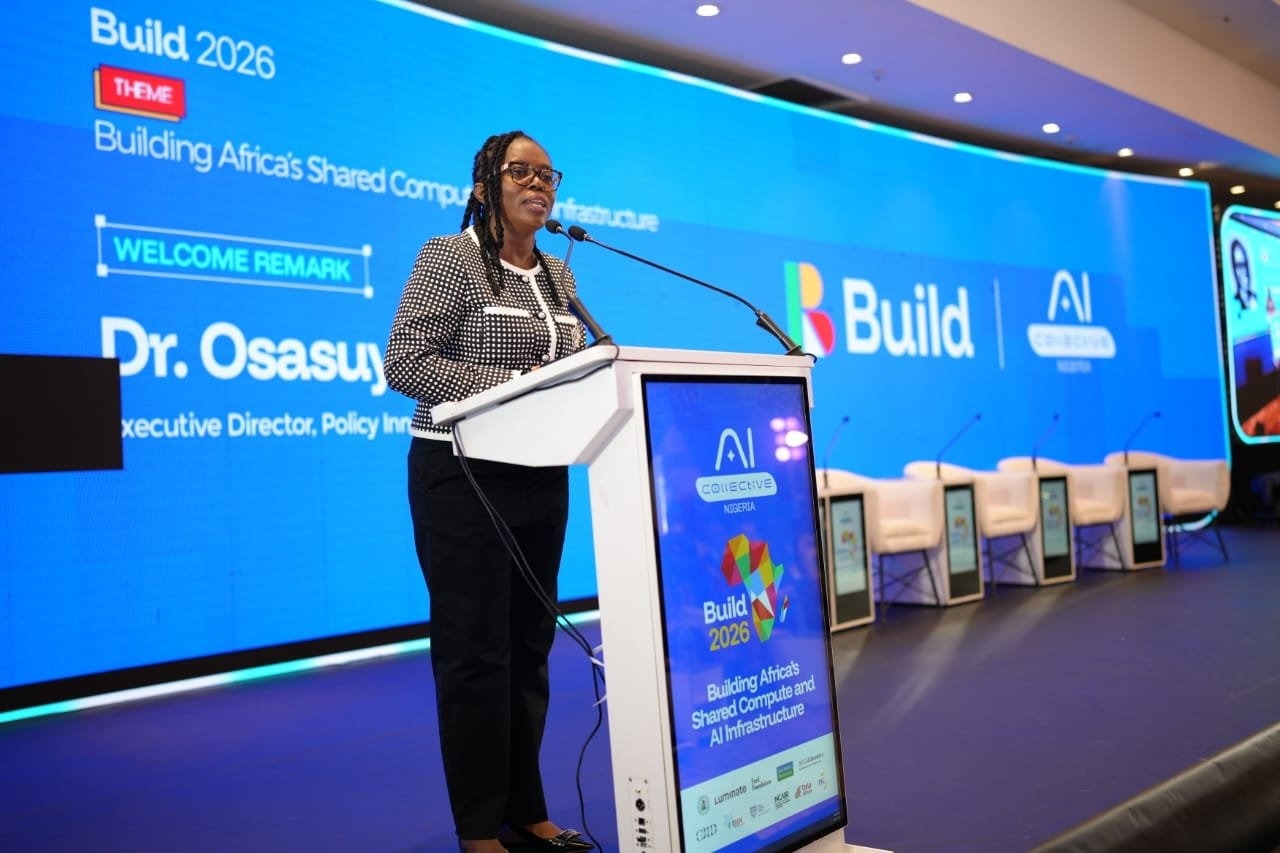
The Collective is managed by Lagos Business School, Pan-Atlantic University, Data Science Nigeria, the Centre for Journalism, Innovation and Development, and NCAIR, an agency of the Federal Ministry of Communications, Innovation and Digital Economy. PIC provides central coordination, evidence-based policy engagement, gender-inclusive strategies and thought leadership in collaboration with the Ministry.
Supported by Luminate, AI Collaborative, Ford Foundation and MacArthur Foundation, the Collective is working to broaden participation in AI development and strengthen collaboration across the continent.
Dr Dirisu disclosed that BUILD 2026 had attracted applications from innovators across Africa and beyond, alongside research presentations intended to inform policy and investment.
She urged participants to sustain the collaboration beyond the conference, emphasising the need to create opportunities for emerging innovators to contribute to Africa’s technological future.
At stake is not just technological advancement, but Africa’s ability to control more of its data, develop solutions tailored to local needs and translate digital innovation into inclusive economic growth through the development and sharing of AI infrastructure.