The Nigerian Government has reaffirmed its commitment to completing the 750-kilometre Lagos-Calabar Coastal Highway, announcing that construction is progressing faster than anticipated across several sections of the project.
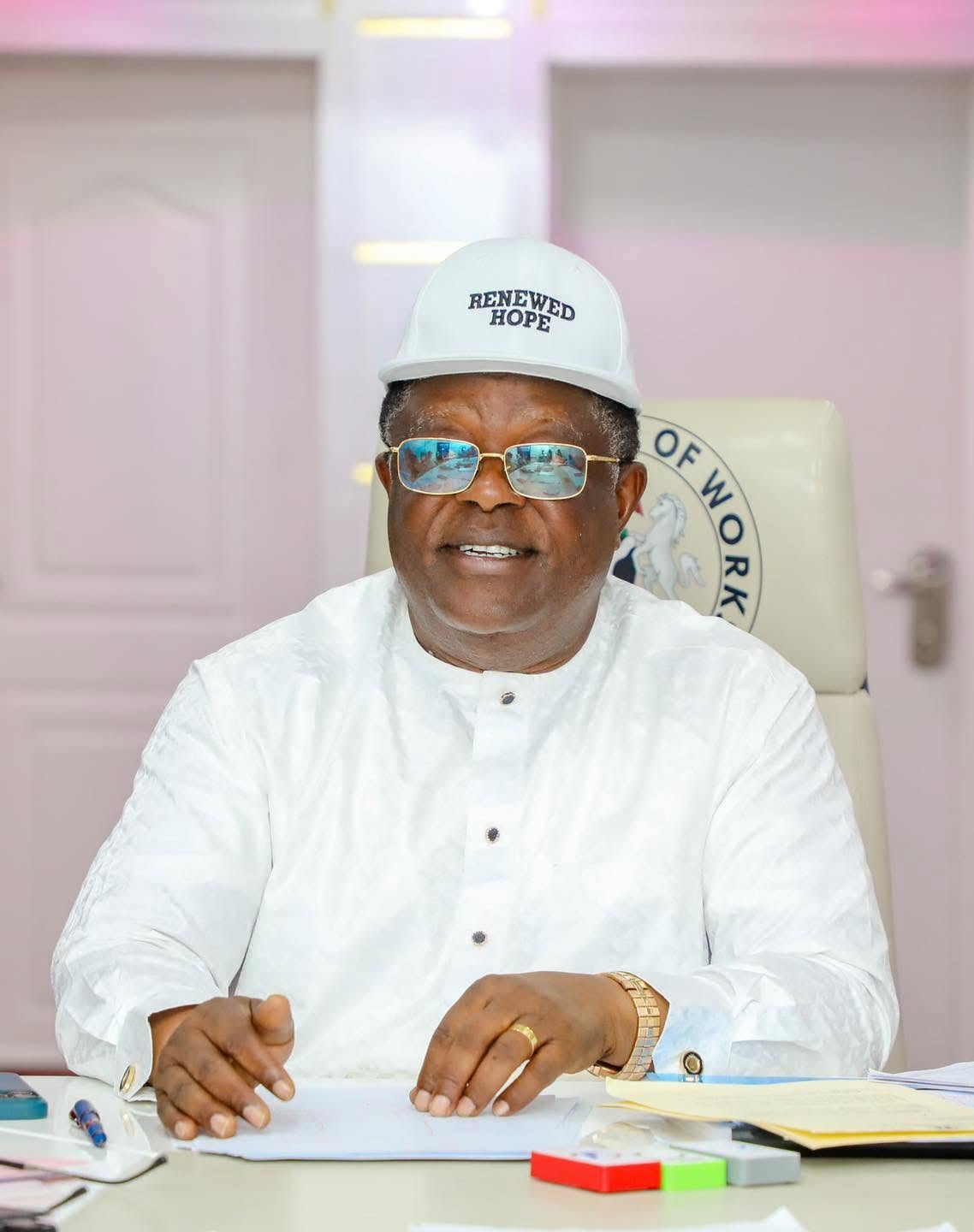
The Minister of Works, Senator David Umahi, gave the assurance while speaking to State House correspondents on Monday after meeting with President Bola Tinubu at the State House, Abuja.
Umahi dismissed social media reports alleging that the Federal Government had abandoned or altered the highway project, maintaining that construction, surveying and design activities were progressing along the corridor.
He explained that Section One of the highway, covering 47.47 kilometres in Lagos State, had been constructed, while work on the 55-kilometre Section Two was progressing towards completion by the middle of November 2026.
He highlighted that the proposed integration should not be misconstrued as abandonment or reduction of the original Lagos-Calabar Coastal Highway, explaining that technical activities were continuing along sections yet to enter full construction.
Nobody has abandoned the 750-kilometre Lagos-Calabar Coastal Highway. In fact, as we are talking now, we have designers, we have surveyors. We are surveying the axis of Edo State, Delta State, Bayelsa and Rivers State,” Umahi stated.
Umahi explained that the ongoing surveys and design activities formed part of the preparations for extending construction across the remaining sections of the corridor.
He disclosed that the Ministry of Works was seeking President Tinubu’s approval to integrate approximately 400 kilometres of the existing East-West Road, stretching from Edo State through the Niger Delta towards Akwa Ibom and Cross River States, into the broader coastal highway development.
What we have done is to also seek the approval of Mr President to add the 400 kilometres of the East-West Road, starting from Edo State down to Akwa Ibom and also to Cross River,” he explained.
Umahi said the proposed integration had become necessary because sections of the existing East-West Road were constructed below flood levels, making them vulnerable to flooding and structural damage.
He recalled that portions of the road around Agbaro in Delta State were recently damaged at several points, a situation that required the intervention of the Delta State Government, while similar challenges had been experienced in Edo State.
According to him, construction is also advancing on Sections 3A and 3B along the Cross River and Akwa Ibom axis, where more than 40 per cent progress has been recorded.
Umahi disclosed that work was equally ongoing on Sections 4A and 4B, covering approximately 65 kilometres across Ogun and Ondo States, adding that construction activities had extended into Ondo State.
He further explained that substantial progress had been recorded at the Calabar end of the highway, in line with President Tinubu’s directive that work on the four legacy road projects should commence simultaneously from their starting and terminal points.
The Minister said Section Five, covering approximately 62.5 kilometres in Akwa Ibom State, had also recorded more than 20 per cent completion despite construction having commenced less than three months ago.
Umahi maintained that incorporating the affected corridors into the wider infrastructure development would strengthen connectivity across the Niger Delta and provide a more sustainable transportation network.
Drawing a parallel with other legacy infrastructure projects, Umahi disclosed that President Tinubu had also approved an expansion of the Akwanga-Jos-Bauchi-Gombe-Biu-Maiduguri highway, originally designed to cover approximately 700 kilometres.
The Minister explained that the expansion of the northern corridor and the proposed integration of the East-West Road into the coastal highway were consistent with the President’s broader strategy of developing interconnected transportation infrastructure across the country.
Umahi consequently maintained that the original 750-kilometre Lagos-Calabar Coastal Highway remained unchanged in its overall scope, insisting that its implementation would continue alongside the complementary road developments.
“The 750-kilometre Coastal Highway is intact and cannot be changed. Nobody has the power to change it because it is already designed and it is ongoing,” the Minister declared.