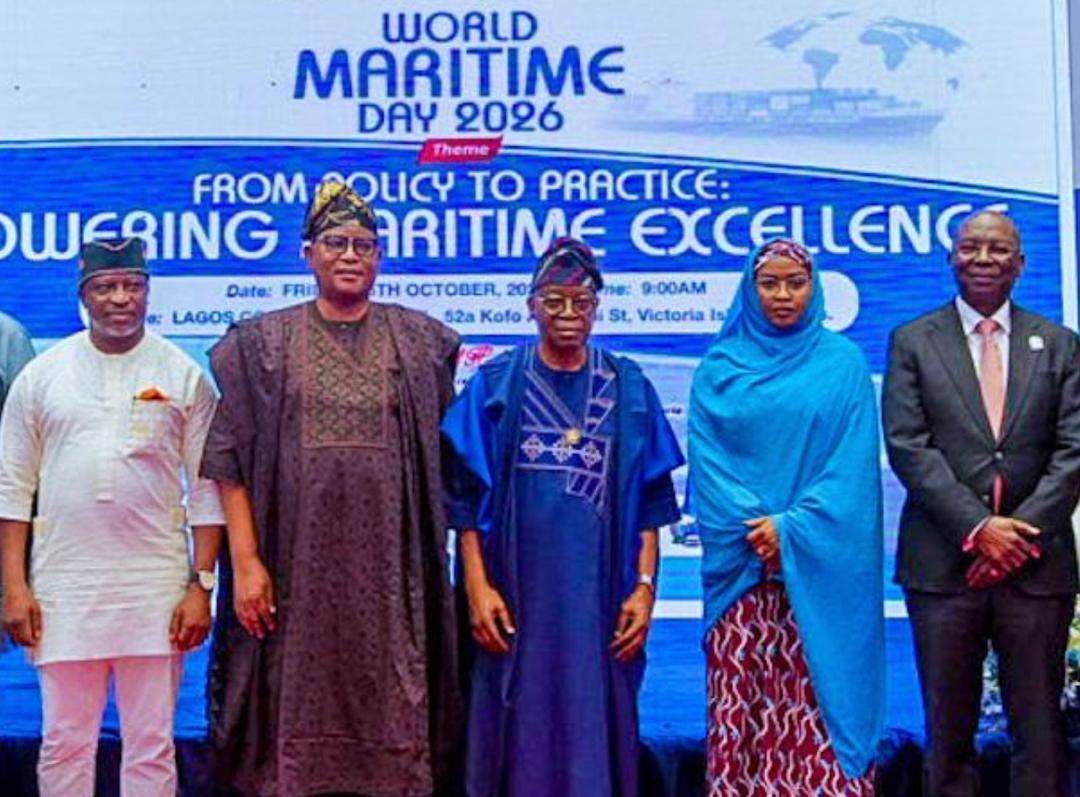
The Director-General of the Nigerian Maritime Administration and Safety Agency, NIMASA, Dr. Dayo Mobereola, has urged maritime stakeholders to prioritise effective policy implementation.
He said this is important as Nigeria seeks to strengthen its position in the global maritime industry and maximise the economic benefits of its marine resources.
Mobereola made the call on Friday, October 16, 2026, during the commemoration of World Maritime Day 2026, themed “From Policy to Practice: Powering Maritime Excellence.”
He emphasised that the future of Nigeria’s maritime industry depends on the ability of government institutions, regulators and private-sector operators to translate policy decisions into practical outcomes that improve industry performance, attract investment and create sustainable opportunities for Nigerians.
“The development of a competitive maritime sector requires more than the formulation of policies and regulations. It demands consistent implementation, institutional accountability and a shared commitment to delivering measurable economic and social benefits,” he said.
The NIMASA Director-General described the maritime industry as a strategic component of Nigeria’s economy, supporting international trade, investment, employment and the operations of businesses across multiple sectors.
READ ALSO: NIMASA Unveils Blue Economy Accelerator Programme
He noted that the 2026 World Maritime Day theme provided an opportunity for stakeholders to assess the effectiveness of existing policies and identify practical measures to strengthen the industry’s contribution to national development.
Maritime Influence and Economic Opportunities
Highlighting Nigeria’s strategic importance in the Gulf of Guinea, Mobereola disclosed that the country accounted for more than 46 per cent of total port calls in the region in 2025.
He said the figure demonstrated Nigeria’s significant role in regional maritime activities and reinforced the need to sustain investments in maritime infrastructure, institutional development and skilled manpower.
However, he stressed that the country’s maritime success should extend beyond vessel traffic and operational statistics to include improved maritime security, efficient port operations, environmental sustainability and greater participation of Nigerians in vessel ownership, management and operations.
He reaffirmed NIMASA’s commitment to ensuring that regulatory frameworks and government policies produce practical improvements in safety, operational efficiency, professionalism and economic opportunities throughout the maritime value chain.
Reforms Strengthening Maritime Industry
Mobereola highlighted several developments recorded in the sector over the past two years, attributing the progress to sustained institutional reforms and the strategic leadership of the Minister of Marine and Blue Economy.
Among the milestones he identified were four consecutive years without reported piracy incidents in Nigerian waters, Nigeria’s re-election to the International Maritime Organization (IMO) Council after a 14-year absence, and the lifting of United States Condition of Entry restrictions after 12 years.
He also cited the establishment of the Cabotage Vessel Financing Fund (CVFF) application portal, preparations for the fund’s disbursement, the full automation of the Nigerian Ship Registry and the implementation of the IMO Standards of Training, Certification and Watchkeeping for Seafarers Compliance Audit after 18 years.
According to the Director-General, these developments illustrate how targeted interventions and institutional reforms can strengthen Nigeria’s maritime administration and improve its standing within the international maritime community.
He explained that sustained improvements in maritime security help build confidence among shipowners, operators and investors, while digitalisation of the Ship Registry supports more efficient administrative processes and strengthens Nigeria’s integration into the global maritime system.
Improvements in seafarer training and certification would enhance the competence of Nigerian maritime professionals and increase their prospects of securing employment in the international maritime labour market,the Director General said
Access to Maritime Financing
Addressing the importance of financing for indigenous operators, Mobereola said the CVFF represented an important opportunity to strengthen local participation in the shipping industry.
He noted that access to funding could enable eligible Nigerian operators to acquire vessels, expand existing businesses, generate employment and increase the country’s capacity to participate more actively in maritime transportation.
He stressed that the effectiveness of maritime policies must ultimately be determined by their impact on businesses, workers and the broader economy.
The Director-General, however, cautioned that the progress achieved so far must not lead to complacency. He called for continued investment in infrastructure, technological innovation, workforce development and stronger cooperation among government agencies and industry operators.
He emphasised that sustainable progress would require coordinated efforts involving the Federal Ministry of Marine and Blue Economy, NIMASA and other government agencies, terminal operators, shipowners, seafarers, maritime labour unions, financial institutions, academic institutions, development partners and private-sector organisations.
Blue Economy and Sustainable National Development
Mobereola also underscored the role of the Blue Economy in diversifying Nigeria’s economic opportunities through the sustainable management and utilisation of marine and maritime resources.
He called for stronger collaboration among public and private-sector stakeholders to ensure that the country’s maritime assets contribute more significantly to economic growth, investment and employment.
According to him, effective implementation of maritime policies would be essential to unlocking these opportunities while maintaining appropriate standards for environmental protection, operational safety and sustainable resource management.
Placing Maritime Workers at the Centre of Development
The NIMASA chief recognised the contributions of maritime professionals whose work supports shipping operations, port activities and international commerce.
He acknowledged the dedication of seafarers, dockworkers, port workers, ship operators, regulators, security personnel, engineers and other industry professionals, stressing that their contributions remain essential to the continued functioning of the maritime sector.
He maintained that workers’ safety, welfare, dignity and professional development must remain central considerations in maritime policy implementation.
Mobereola also commended the Minister of Marine and Blue Economy for providing strategic direction and acknowledged the contributions of government institutions and industry stakeholders to the development of Nigeria’s maritime sector.
Turning Maritime Policies into Tangible Results
As part of the 2026 World Maritime Day commemoration, Mobereola urged stakeholders to renew their commitment to building a maritime industry that is safe, secure, efficient, environmentally sustainable and globally competitive.
He stressed that Nigeria’s maritime potential could only be fully realised through practical implementation, sustained institutional reforms and stronger indigenous participation.
The Director-General called on stakeholders to move beyond policy formulation and focus on delivering measurable results that strengthen the country’s maritime standing, expand economic opportunities and improve the livelihoods of Nigerians.