


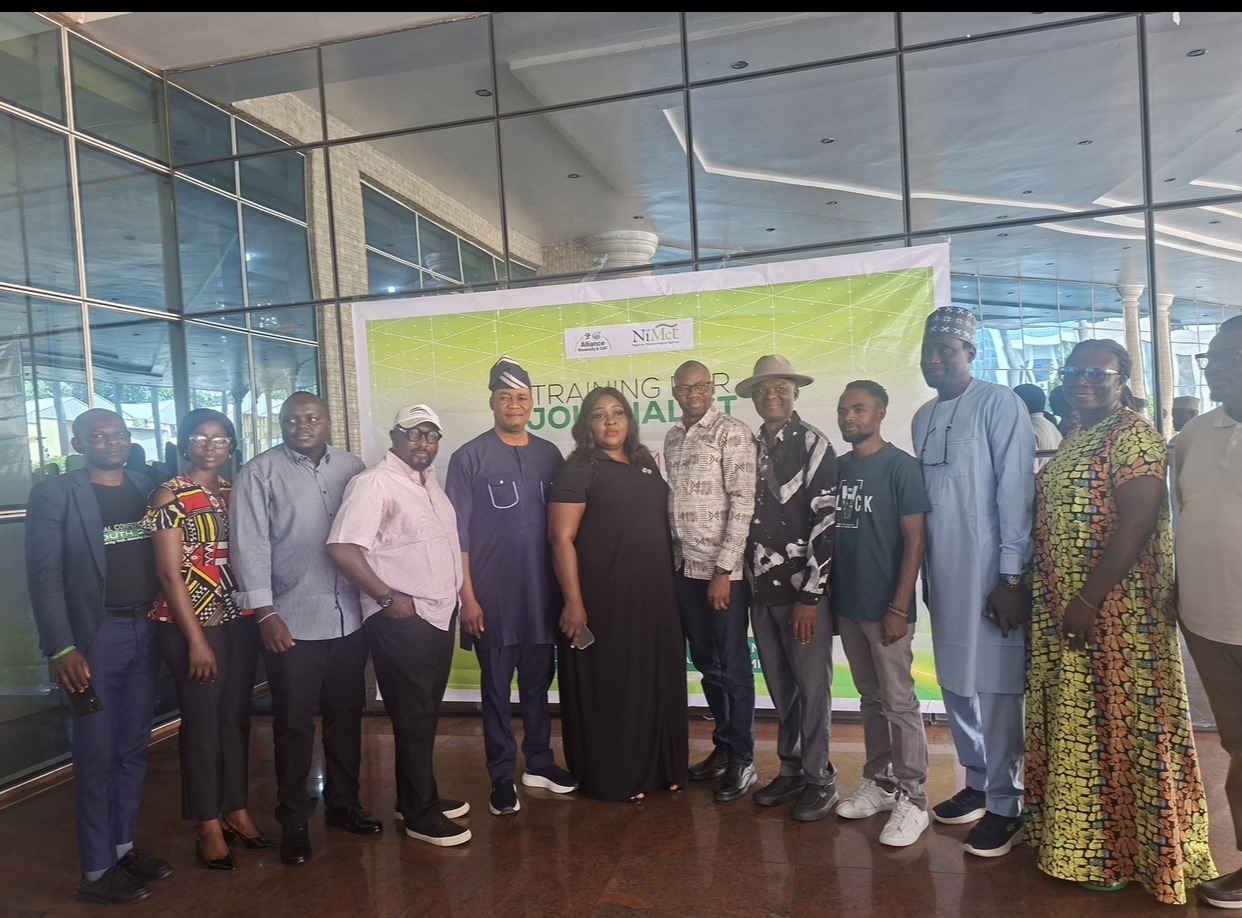
The Nigerian Meteorological Agency (NiMet) has urged media professionals to prioritise accuracy, clarity and public safety in reporting weather and climate information to ensure that scientific forecasts translate into informed decisions and effective preparedness among Nigerians.
The agency highlighted the media’s critical role in bridging the gap between scientific climate information and the public, particularly farmers, pastoralists, transport operators, policymakers and vulnerable communities who depend on timely weather updates.
NiMet’s Director-General and Chief Executive Officer, Professor Charles Anosike, made the call at a capacity-building workshop for radio professionals on climate information services and climate-smart agriculture in Nigeria. The agency organised the workshop in collaboration with the Alliance of Bioversity International and CIAT in Abuja.
READ ALSO: NiMet Director-General Wins Climate Leadership Award
Represented by Professor Vincent Weli, Anosike stressed that weather forecasts should not remain on scientists’ desks but must be communicated effectively to the public to support timely responses and minimise the risks associated with severe weather events.
He described media professionals as essential partners in translating scientific knowledge into practical action, noting that effective climate reporting went beyond attracting public attention to ensuring that audiences understood weather-related risks and took appropriate measures.
The NiMet chief urged journalists to adopt five key principles in weather reporting, beginning with prioritising accuracy over speed. He advised them to verify the issuing authority, date, location and validity period of forecasts before publication and seek clarification from relevant experts when necessary.
On clear communication, Anosike encouraged journalists to use simple language without distorting scientific information or omitting important qualifications. He said reports should explain the practical implications of forecasts, identify affected communities and sectors, and direct audiences to official sources for updates.
He also called for greater use of local languages, community radio and accessible communication formats to ensure climate information reached people beyond internet-connected audiences. The Director-General particularly highlighted the need to reflect the experiences of farmers, women, young people, persons with disabilities and other vulnerable groups.
Anosike further advocated stronger collaboration between journalists, meteorologists and climate experts, stressing that effective communication required continuous dialogue. He encouraged media practitioners to engage scientists before emergencies occurred, ask relevant questions and report challenges affecting the delivery of climate information.
The NiMet chief urged participants to share the knowledge gained with colleagues in their newsrooms, describing weather and climate reporting as a continuous public service rather than an occasional headline. He reaffirmed the agency’s commitment to strengthening partnerships with media organisations to improve access to reliable and useful climate information.
Earlier, the representative of the Alliance of Bioversity International and CIAT, Issa Ouedraogo, called for stronger collaboration with radio professionals to improve the communication of climate information services to farmers and pastoralists across Nigeria.
Ouedraogo stressed the need to bridge the gap between the availability of weather forecasts and their effective use by rural communities, noting that climate change was increasingly affecting agriculture and rural livelihoods through unpredictable rainfall, rising temperatures, droughts and floods.
He observed that although weather forecasts and climate information were becoming more accessible, the challenge remained translating them into simple, timely and actionable messages that farmers could understand and apply in their daily activities.
Ouedraogo described radio professionals as critical partners because of their wide reach, trusted voices and ability to communicate in local languages. He said effective radio reporting could help farmers make informed decisions on planting, water management, fertiliser application, input use and other climate-related risks.
He disclosed that, through its Climate Action Science Programme, the Alliance was implementing a €2 million initiative on digital advisory services and climate-smart agriculture in collaboration with NiMet to strengthen the last-mile delivery of climate information services.
The representative explained that the workshop was designed to equip radio professionals with practical skills to understand climate information, translate forecasts into farmer-friendly messages, explore rainfall monitoring tools and identify opportunities to expand radio coverage and audience engagement.
He urged participants to move beyond merely broadcasting weather forecasts to providing practical advisories that would enable farmers and pastoralists to make informed decisions. Ouedraogo also reaffirmed the Alliance’s commitment to working with NiMet and other partners to promote inclusive and effective climate information services in Nigeria.

