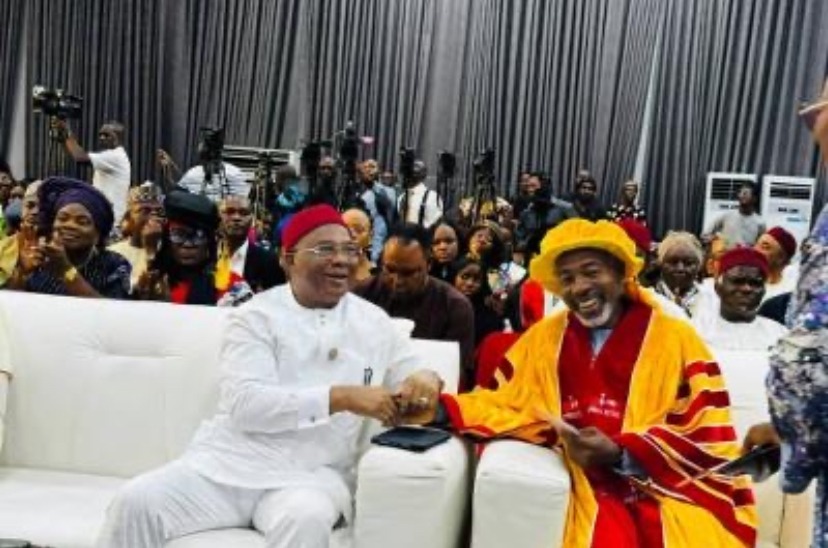
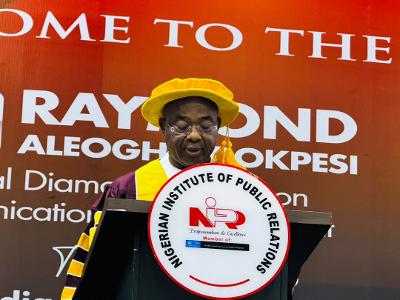
The President of the Nigerian Institute of Public Relations (NIPR), Dr Ike Neliaku, has identified legacy, perception and impact as critical elements of effective leadership, urging leaders and institutions to prioritise service, accountability and lasting contributions.
He stated this at the Third Raymond Aleogho Dokpesi Annual Diamond Lecture on Communication and Development in Abuja, where he also called for collective support for Nigeria’s reputation-building efforts ahead of the World Public Relations Forum.
READ ALSO: WPRF 2026: NIPR Seeks to Reshape Nigeria’s Global Image
Dr. Neliaku said leadership should be measured by the positive difference people make rather than the positions they occupy.
“We are holding different offices, we are answering big names. But the bottom line is: What legacy are you leaving behind? If you cannot live a life of legacy, you will disappear once you are gone.
It is not about press syndication. It is not about sinking boreholes and all those things. It is about touching lives, because that is the beginning and the end of legacy,” he said.
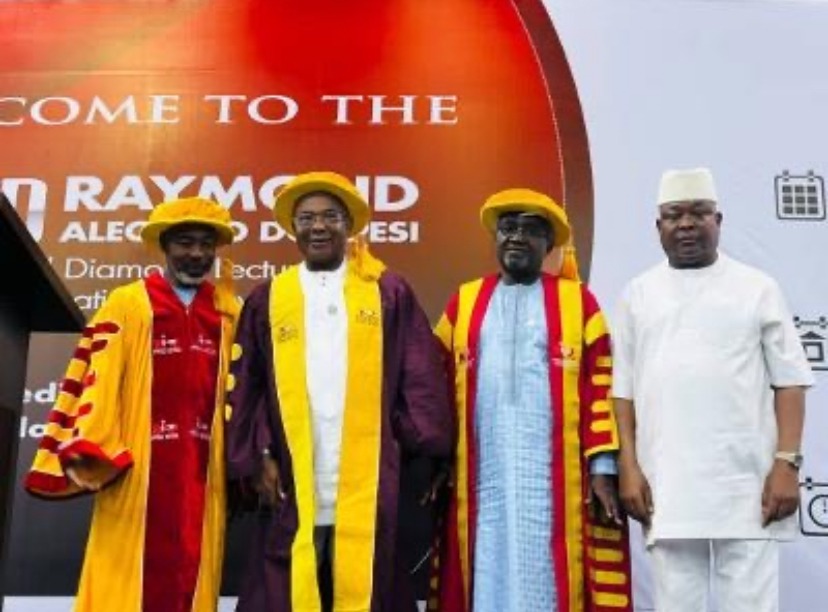
Paying tribute to the late media entrepreneur and founder of DAAR Communications, High Chief Raymond Aleogho Dokpesi, he said his contributions helped shape the broadcasting industry and the public relations profession.
“Dokpesi’s life demonstrated how personal generosity, institutional contributions and commitment to others could combine to create a lasting legacy.
“We refused to let his legacy die. Because we wouldn’t be here today; we can’t be talking about the Nigerian Institute of Public Relations if that man did not put his foot forward,” he said.
Neliaku also acknowledged the institute’s first registrar, Pa Adekunle Salu, 94, stressing the importance of recognising institutional pioneers.
“In NIPR, we believe that when the chips are down, your legacy answers your name. You can claim to be anything, but what you leave behind will speak for you,” he said.
On perception, Neliaku urged public relations practitioners to verify claims and communicate evidence-based information, noting that public opinion may not always reflect actual performance.
He cited NIPR’s assessment of claims about Imo State Governor Hope Uzodimma’s performance, explaining that the institute dispatched a three-member team to independently verify the information before providing him with its platform.
“We collected it from him, and we dispatched three people to Imo State to go and verify some of the things he claimed. And we were shocked when the report came back to council that indeed he has been working and doing very well.
That is perception, the challenge of perception. And you know in public relations, perception can become reality if not effectively managed. Practitioners must use their expertise responsibly to project, to promote, and to stand for what is right”, he said.
Wide Support
On the World Public Relations Forum, Dr. Neliaku urged government institutions, corporate organisations and other stakeholders to partner with NIPR, warning that the event could either strengthen or damage Nigeria’s international reputation.
“The issue now is what does Nigeria do with their coming? That’s the challenge. Because it’s a double-edged sword. If we don’t manage it well, we are in soup as a nation. If we manage it well, we will triumph, because it’s a reputation project.
“If we don’t manage this opportunity very well, these people come from different countries, it will be the critics of Nigeria. But if you manage them well, they become country advocates and ambassadors of Nigeria,” he added.
Also speaking, the Chairman of the Board of Directors of DAAR Communications Plc, Raymond Dokpesi Jnr., urged young Nigerians, particularly first-time voters, to take responsibility of strengthening democracy.
He said his late father established Raypower FM and Africa Independent Television (AIT) to expand access to information and promote democratic accountability.
“He did not enter broadcasting simply to run a business. He entered it to spark a revolution. He believed a lasting democracy needed a people with a voice: people who could see themselves, hear themselves and hold themselves as well as their leaders accountable,” he said.
Addressing first-time voters, Dokpesi Jnr. described the Permanent Voter’s Card (PVC) as an instrument of democratic participation.
“For a first-time voter, your PVC is not just a piece of plastic. It is your share certificate in the corporate entity called Nigeria. It is your power, your voice and your mandate. Never let anyone convince you that your voice does not matter,” he said.
He announced plans for a media incubation and civic-technology initiative, scheduled for a pre-launch presentation on December 1, 2026, to equip young Nigerians with digital tools for monitoring governance, reporting community needs and documenting elections.
“We are moving you from passive consumers of media to active digital architects of our democracy. With modern storytelling, data journalism and strategic communication, we are placing the tools of democratic consolidation directly in your hands,” he said.
He urged political leaders to regard independent media and youth engagement as essential to democracy.
“I urge you to see a free press and a restless, engaged youth not as threats to governance, but as the ultimate insurance policy for a healthy democracy.
“When the media thrives, democracy is fortified. When democracy is stable, development is inevitable,” he added.
In a lecture titled “Media, Democratic Consolidation and Development,” Imo State Governor Hope Uzodimma said credible information and media freedom were essential to democratic accountability and national development.
“The quality of information available to citizens affects the quality of decisions they make about public affairs. Those decisions influence democratic institutions and leadership. These institutions and the decisions they make consequently impact development and economic growth,” he said.
Uzodimma also paid tribute to Dokpesi, whose legacy, he said, continues through AIT and RayPower FM.
“Only very few people in the world can be said to still live long after they have passed. This is because their legacies are etched in the hearts of those they left behind, who also sustain their names for decades or even centuries afterwards,” he said.
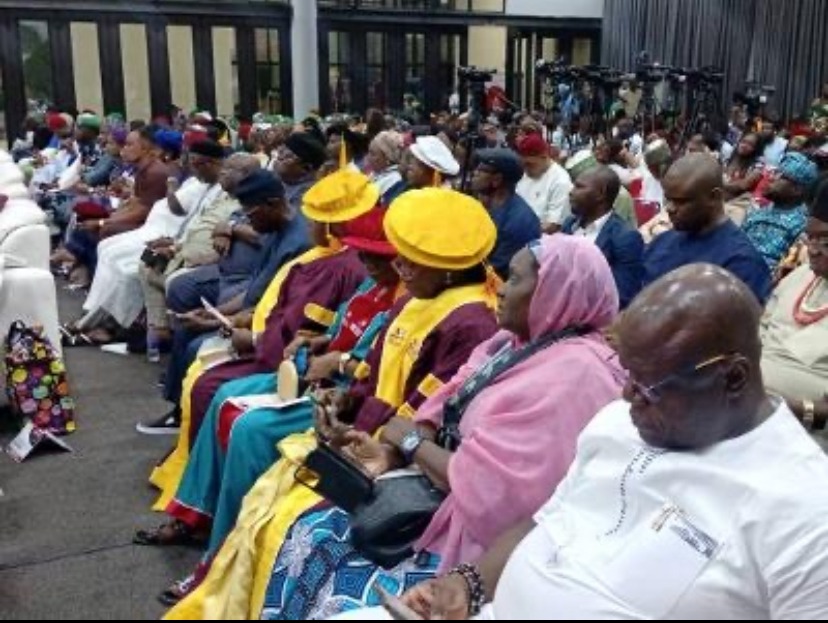
The annual lecture brought together stakeholders to honour Dokpesi’s contributions and examine the role of communication in democratic consolidation and national development.