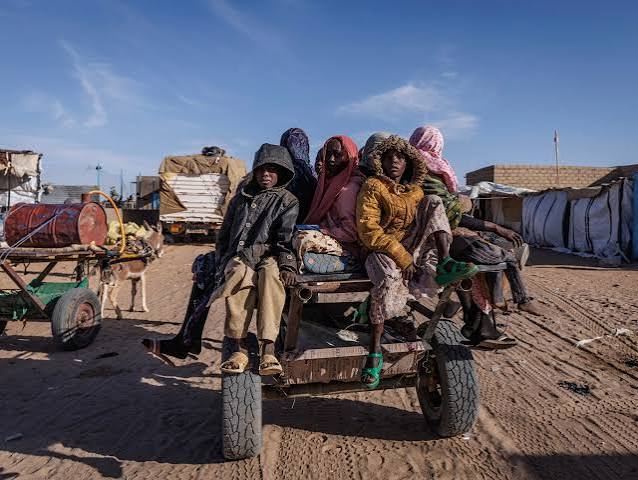
More than 55,000 Sudanese refugees have fled into eastern Chad since the beginning of 2026, with the United Nations warning that the pace of arrivals has accelerated sharply amid worsening insecurity and dwindling humanitarian funding.
The UN said on Friday that more than 400 Sudanese refugees were now crossing daily through the border areas of Adre and Tine in eastern Chad, about 20 times the daily rate recorded in recent months.
Mamadou Dian Balde, the UN regional refugee coordinator for the Sudan situation, disclosed this while briefing reporters in Geneva.
“More than 55,000 Sudanese refugees have fled to eastern Chad so far this year,” Balde said, warning that the pace of arrivals had increased significantly over the past week.
He said the surge was being driven by continued fighting and insecurity, particularly in Sudan’s Darfur and Kordofan regions and Blue Nile State.
The conflict between Sudan’s army and the paramilitary Rapid Support Forces (RSF), which began in April 2023, has killed more than 200,000 people, according to aid workers, and triggered one of the world’s largest hunger and displacement crises.
UN figures show that about 11.3 million people remain forcibly displaced by the conflict, including 6.4 million displaced within Sudan and 3.5 million who have crossed international borders as refugees.
READ ALSO: UNHCR Chief Visits Sudanese Refugees In Ethiopia
Nearly one million Sudanese refugees have crossed into Chad, according to the UN Refugee Agency (UNHCR).
Balde said airstrikes, drone attacks and intensified fighting were forcing more civilians to flee while also restricting humanitarian access to affected areas.
He warned that humanitarian assistance was failing to keep pace with the growing needs.
UNHCR said it had received only 18 per cent of the $1.6 billion required in 2026 to address refugee needs linked to the Sudan crisis across the region.
In Chad, more than 190,000 refugees remain in difficult conditions along the border, with most receiving less than half the minimum daily water requirement, Balde said.
He added that a transit centre in Tine was already sheltering more than 4,300 people and facing urgent shortages of shelter, water, sanitation and protection services.
UNHCR warned that declining humanitarian support could force refugees to seek safety, legal status and better living conditions elsewhere, including through migration routes towards Europe.
Africanews