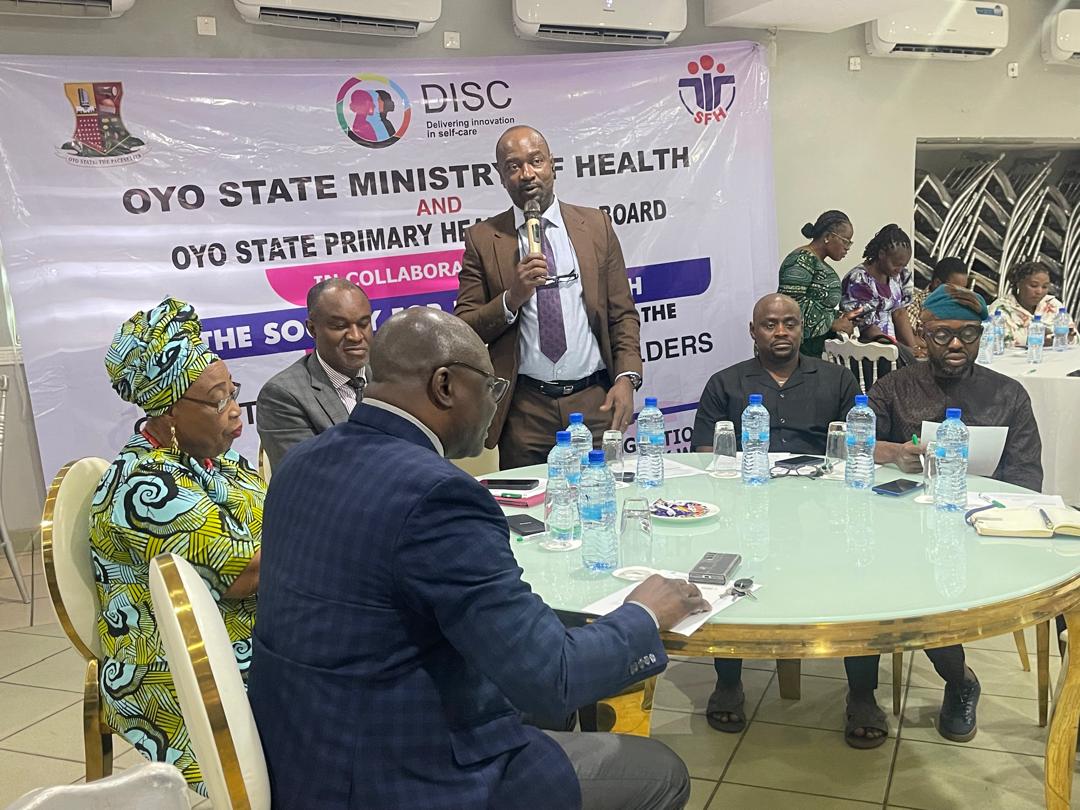
The Oyo State Government has reaffirmed its commitment to strengthening family planning services, increasing government ownership and promoting sustainable healthcare delivery across the state.
The Executive Secretary, Oyo State Primary Health Care Board, Dr Muideen Olatunji, said the changing funding landscape had made it necessary for the government to strengthen its institutions and take greater responsibility for sustaining essential health programmes.
Olatunji disclosed that the state invested N50million in family planning commodities in 2025 and had earmarked another N50 million for 2026 to ensure the sustained availability of essential commodities and prevent disruptions in service delivery.
He noted that the state had recruited nearly 4,000 healthcare personnel to strengthen the health workforce and improve service delivery, particularly at the primary healthcare level.
Olátúnjí stated that “Ward Development Committees across the state’s 351 political wards were being leveraged to promote community participation and increase awareness of family planning services.”
The Association of Local Governments of Nigeria (ALGON) Chairman, Oyo State Chapter, Sikiru Sanda, represented by the Vice Chairman, Olayanju Kazeem, called for increased awareness of family planning among women and families.
He stressed the importance of providing accurate information to enable individuals to make informed decisions, particularly in view of prevailing economic realities.
The Iyaloja of Ibadanland, Alhaja Risiwa Amiringun, also called for sustained sensitisation and training of market women on family planning.
He noted that inadequate information and limited literacy could affect women’s understanding and utilisation of available services.
In a presentation on: Society for Family Health and Delivering Innovation in Self-Care (DISC) 2.0 interventions, members of the DISC team, Paulina Adeyemi, Afeez Tijani and Oluwabunmi Olajide said that “more than 1,000 healthcare workers from 573 health facilities had been trained on family planning and counselling for choice.”
The team said the training equipped healthcare workers with the knowledge to address myths and misconceptions about family planning methods and provide accurate information to clients.
They stated that providers were trained to counsel clients on possible menstrual bleeding changes associated with some methods, as local government monitoring and evaluation officers received training to improve data quality, reporting and accountability.
The DISC team disclosed that community health extension workers, community mobilisers and Ward Development Committees had been equipped with family planning messages to strengthen awareness and demand creation.
An assessment presented at the meeting showed that Oyo State recorded 65.2 percent institutional readiness for family planning, while nine Local Government Areas had incorporated key activities into their routine programmes.
Ibarapa North, Saki West and another local government area were, however, identified as requiring further strengthening.
The stakeholders, comprising government representatives, local government authorities, development partners, community structures and healthcare workers, reviewed progress and identified areas requiring further attention.
They stressed the need for stronger coordination, sustained investment and effective community engagement, noting that family planning should remain an integral part of the state’s primary healthcare system through adequate commodities, quality counselling, community participation, reliable data, and accountability.
Victoria ibanga