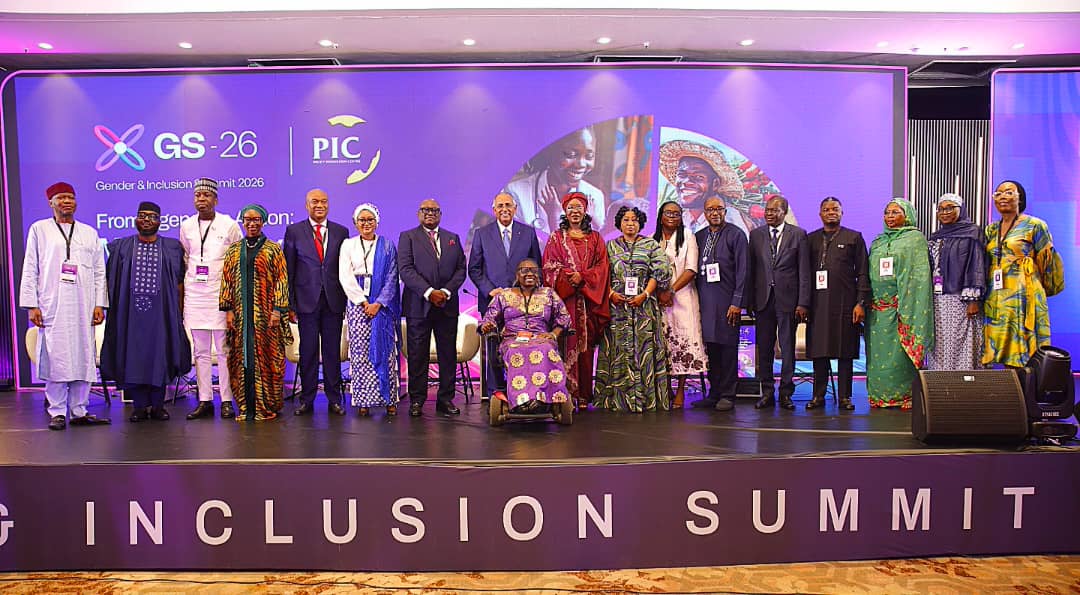
The Executive Director, Policy Innovation Centre, PIC, Dr Osasuyi Dirisu, says the Gender and Inclusion Summit, GS-26, is focused on ensuring innovative policy and programme solutions translate into tangible improvements for people most in need across Nigeria.
Speaking on PIC’s last-mile-themed approach at GS-26, Dirisu said the last mile goes beyond geography to also capture conditions that limit people’s access to resources and opportunities.
“So, in breaking down the last mile, the last mile for us means ensuring that the last mile means the end user that needs the solutions we are developing the most,” she said.

She identified access to financing, education, literacy and healthcare as conditions defining the last mile.
“We are bringing people from the last mile to discuss their problems, their challenges, so that when we are discussing the solutions, we are taking into context the real issues that they face within their geographical locations or their conditions,” Dirisu said.
She said the summit had featured beneficiaries of the Nigerian for Women Project and a farmer, who shared their experiences and how interventions made a difference.
“We may not be able to go to the last mile to have these conversations, but we are bringing the last mile right into the conversations here at GS26,” she said.
On youth participation, Dirisu disclosed that PIC had worked with young Nigerians to co-create a charter that would give them an opportunity to articulate their aspirations.
“With the support of government and partners, we have been able to co-create a dream charter that can give young people that opportunity to aspire and that will be launched tomorrow,” she said.
She added that young people would, for the first time at GS-26, have an all-day youth conference to shape discussions on their future.
Meanwhile, co-founder of Amandla Institute for Policy and Leadership Advancement, Erelu Bisi Adeleye-Fayemi, said Nigeria’s challenge was no longer a shortage of policies and programmes for women but the persistent gap between interventions and measurable impact.
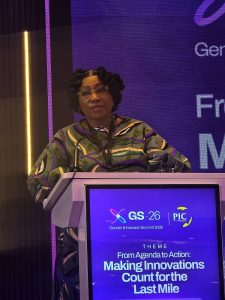
She said innovation must address structural barriers limiting women’s economic power, including unequal access to assets, finance, markets, technology and decision-making.
“Unless we address these structural issues, we risk designing better programmes around fundamentally unequal systems,” Fayemi said.
Global CEO of Malala Fund, Nabila Aguele, urged stakeholders to judge progress by what happens after policy commitments are announced.
“The success of this summit cannot simply be that we had the right people in the room or the right conversations on the stage. It has to be what happens when we leave,” she said.
Aguele said the real measure of innovation was whether policies, resources and commitments reached the people they were designed to serve.
“Not simply by the policy written. Not simply by the commitment announced. But by whether it reaches the person it was meant to serve.”
The summit panel sessions challenged stakeholders to move beyond policy pronouncements and programme outputs to measurable and truly lasting changes in the lives of underserved Nigerians.