The Plateau State Government has urged members of the public to exercise restraint in their interactions with Vehicle Inspection Officers (VIOs), saying anyone dissatisfied with an officer’s conduct should seek redress through legal and administrative channels.
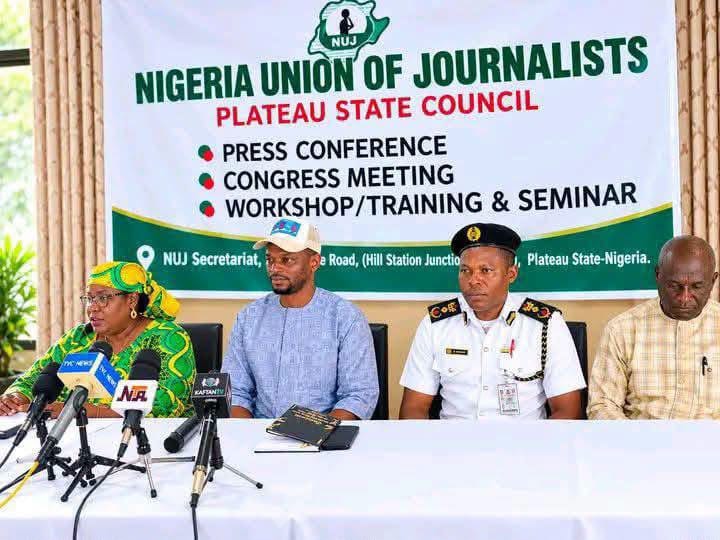
The Commissioner for Transport in the state, Hon. Jatau Gyang, made the appeal during an interactive session with journalists and stakeholders on the activities of the Plateau State Integrated Mobility and Transport Management (PIMT).
Gyang said the session was part of measures being taken by the ministry to reform the VIO system and improve its relationship with motorists and other road users.
“That is why we are having this meeting. We need to hear from you, our partners, and also hear from us. It is not acceptable for motorists to assault our men,” he said.
The commissioner disclosed that one suspect had been arrested in connection with attacks on VIO officers, while the owners of vehicles allegedly involved in the incidents had also been arrested.
He warned that allowing physical confrontation to become a means of resolving disputes could create wider disorder in society.
Gyang advised members of the public who believed they had been harassed or abused by VIO personnel to document their complaints and seek redress through the courts or relevant government agencies.
He also disclosed that the state government had paid fines running into millions of naira in cases where courts ruled against it over allegations of assault involving VIO personnel.
Plateau Government Moves gainst extortion
The commissioner directed members of the public to report VIO officers found demanding money illegally, describing such acts as criminal offences.
“Anytime you find someone in a VIO uniform doing this, report it to me. We will prosecute,” he said.
According to Gyang, officers found guilty of misconduct would first face disciplinary action in line with civil service rules, while cases involving criminal extortion would be prosecuted.
“Government has identified a lot of gaps in the operations of the VIO following the submission of a committee report on the agency’s activities. The report contained complaints from both VIO personnel and members of the public, including what I describe as perceived excesses by officers.
“We have identified where our weaknesses and loopholes are. We are contacting the relevant government agencies that need to act,” he said.
Government Condiders Electronic Vehicle Checks
Responding to complaints about repeated stops and inspections by VIO officers, Gyang said motorists also had a responsibility to ensure their vehicles were roadworthy before putting them on the road.
He urged drivers to routinely check essential components of their vehicles, including brake lights, brakes, engine oil and other safety features before embarking on journeys.
The commissioner, however, acknowledged concerns over repeated physical inspections and disclosed that the government was exploring technology-based systems to reduce unnecessary checks of vehicle documents.
He said discussions were ongoing with the Plateau State Internal Revenue Service on a system that would enable officials to verify vehicle particulars electronically.
VIO Not Revenue Collection Agents
On revenue generation, Gyang maintained that the primary responsibility of VIO officers was not revenue collection but the enforcement of road safety standards and other relevant regulations.
He urged motorists to cooperate with VIO officers during legitimate inspections, while assuring the public that the government would continue to address misconduct and improve the agency’s relationship with road users.
“We are not oblivious to their excesses. The government has organised sessions aimed at ethically reorienting VIO personnel and improving their conduct. Let me stress that VIO activities are guided by state domesticated laws.
“I therefore call for collaboration to protect officers and improve road safety,” he concluded.