Presidential aides coordinating community engagement across Nigeria’s six geopolitical zones have outlined major infrastructure interventions undertaken by President Bola Ahmed Tinubu’s administration, highlighting investments in infrastructure as part of ongoing efforts to accelerate development nationwide.
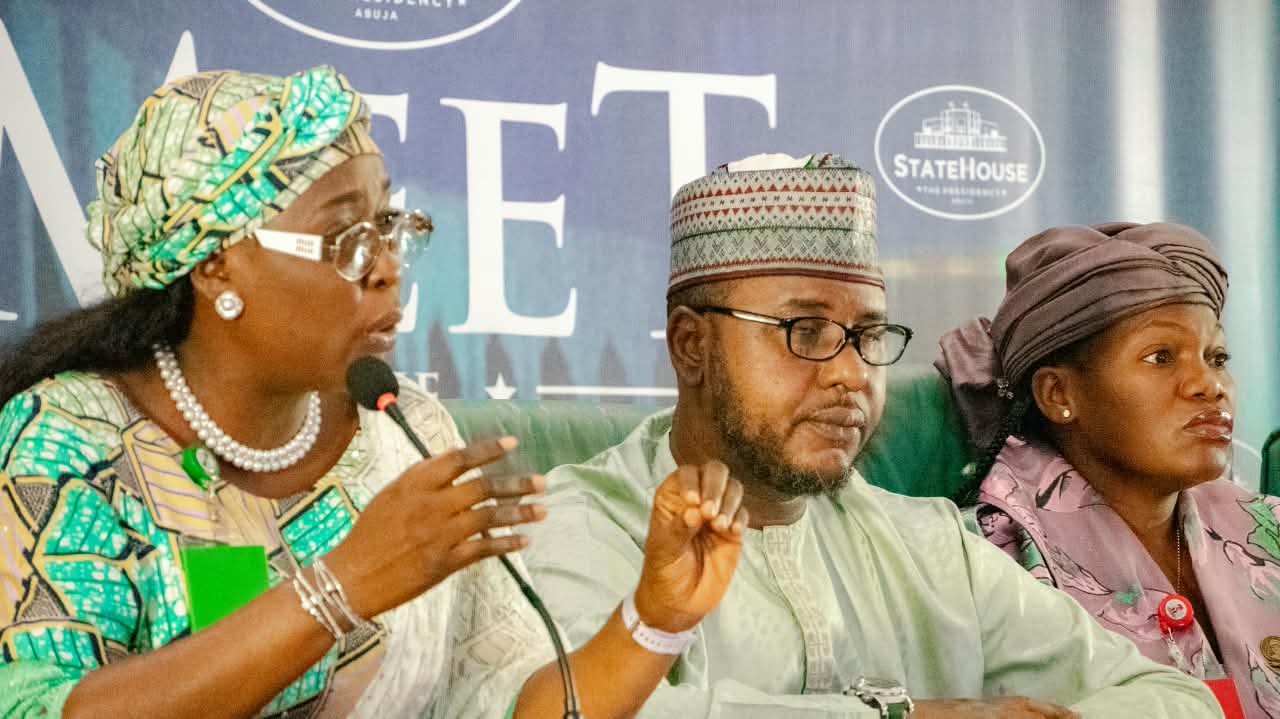
The aides, who also serve as zonal directors under the Infrastructure Mobilisation and Sensitisation Directorate of the Presidential Campaign Council, made the remarks while addressing State House correspondents at the Presidential Villa, Abuja, on Tuesday, where they called for public support for the President’s re-election bid in 2027.
Speaking on developments in the North-Central region, the Senior Special Assistant to the President on Community Engagement, Dr Abiodun Essiet, disclosed that over 167 kilometres of roads had been completed, while more than 1,207 kilometres were under construction, including the Shendam Bridge, Lafia Bypass, Makurdi–Otukpo–9th Mile Road and Abuja–Lokoja highway.

READ ALSO: Presidential Aide Claims South-South Support for President Tinubu
Essiet maintained that President Tinubu remained attuned to the economic and social challenges confronting Nigerians through regular community engagement and feedback from government officials. “Some of the reality of what our people are facing is what we are communicating to Mr President,” she stated.
“I usually tell people, You think Mr President doesn’t know the price of eggs or bread in the market? He does, because we brief him regularly, and so do members of the Federal Executive Council,” she said, emphasising that infrastructure development remained central to addressing citizens’ needs.
Citing the Mokwa–Bida Road in Niger State, Essiet said the project reflected the administration’s response to longstanding infrastructure challenges. “The last time that road was given out on contract was 46 years ago. So tell me if that is not the wish of the people,” she said, adding that the president had directed its reconstruction using reinforced concrete rather than asphalt to improve durability.
She further highlighted investments in agriculture, including fertiliser distribution, tractors and rural market construction, alongside solar-powered electrification projects and educational support through the Nigerian Education Loan Fund (NELFUND). She also identified the Lagos–Calabar Coastal Highway and the Akwanga–Bauchi–Gombe–Biu–Maiduguri corridor as important infrastructure investments.
In the North-West, the Senior Special Assistant to the President on Community Engagement, Abdullahi Tanko Yakassai, highlighted the reconstruction of the Abuja–Kaduna–Zaria–Kano highway using concrete pavement technology, with solar-powered streetlights and proposed security installations to improve road safety.
Yakassai also identified the Sokoto–Badagry Superhighway, the Kaduna–Kano railway project and approved monorail projects for Kaduna and Kano states as strategic investments expected to strengthen transportation, facilitate agricultural trade and stimulate economic activities across the region.
For the South-East, the Senior Special Assistant to the President on Community Engagement, Barrister Chioma Nweze, disclosed that approximately 1,000 kilometres of road projects were ongoing, including the Enugu–Onitsha and Enugu–Port Harcourt highways, alongside interventions around the First and Second Niger bridges to improve connectivity and ease traffic congestion.
Nweze also cited the establishment of the South-East Development Commission and proposed expansion of household gas distribution as measures aimed at addressing longstanding development concerns, reducing energy costs and promoting industrial growth, expressing confidence that the initiatives would strengthen support for the President ahead of the 2027 elections.
In the South-South, the Senior Special Assistant to the President on Community Engagement, Gift Johnbull, identified the Lagos–Calabar Coastal Highway, East–West Road reconstruction, Benin–Agbor Road interventions and Kaa–Ataba Bridge in Rivers State as major projects intended to connect communities, improve transportation and expand economic opportunities beyond the oil and gas sector.
Johnbull maintained that improved road connectivity would facilitate agricultural production, strengthen commercial activities and enhance access to markets and essential services, particularly in communities historically affected by inadequate infrastructure.
Similarly, the Senior Special Assistant to the President on Community Engagement for the North-East, Abdulhameed Abba, highlighted federal interventions in road construction, education, healthcare and water resources, particularly projects linking Akwanga, Jos, Gombe and Biu, which he said would improve regional connectivity and economic activities.
In the South-West, the Senior Special Assistant to the President on Community Engagement, Moremi Ojudu, highlighted infrastructure development and local government reforms.
She maintained that more financial autonomy for local councils would strengthen grassroots development, support businesses and improve revenue generation.
The presidential aides reaffirmed their support for the administration’s development agenda and its continuation beyond 2027.