


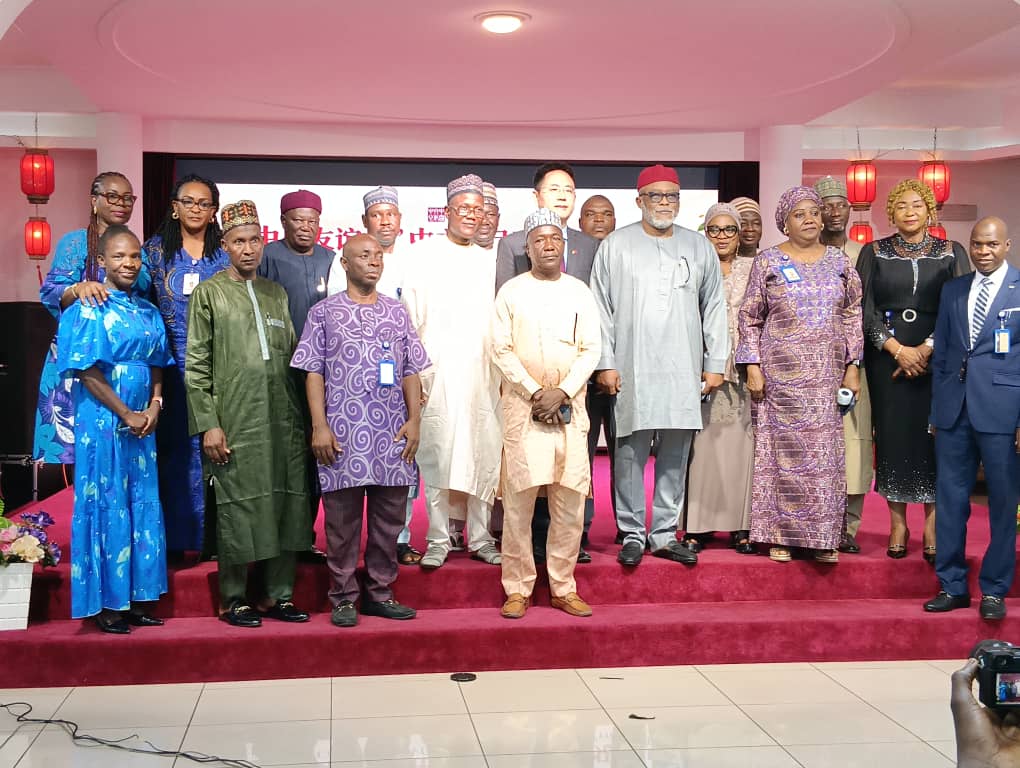
The Director of the China Cultural Centre in Nigeria, Yang Jianxing, has described the China-Nigeria Bridge Chinese Radio Programme as a significant milestone in promoting cultural diplomacy, mutual understanding and stronger people-to-people relations between China, Nigeria and Africa.
Speaking at the programme’s launch in Abuja, Yang explained that the initiative, which combines Mandarin lessons with reports on China-Africa cooperation, was designed to deepen Africans’ understanding of China’s language, culture, development and partnership with the continent.
“This is much more than a radio programme; it is a bridge of friendship connecting the hearts of the Chinese and African people and promoting mutual learning and understanding among civilisations,” Yang said.
READ ALSO: VON Launches Mandarin Service, Expands Global Reach
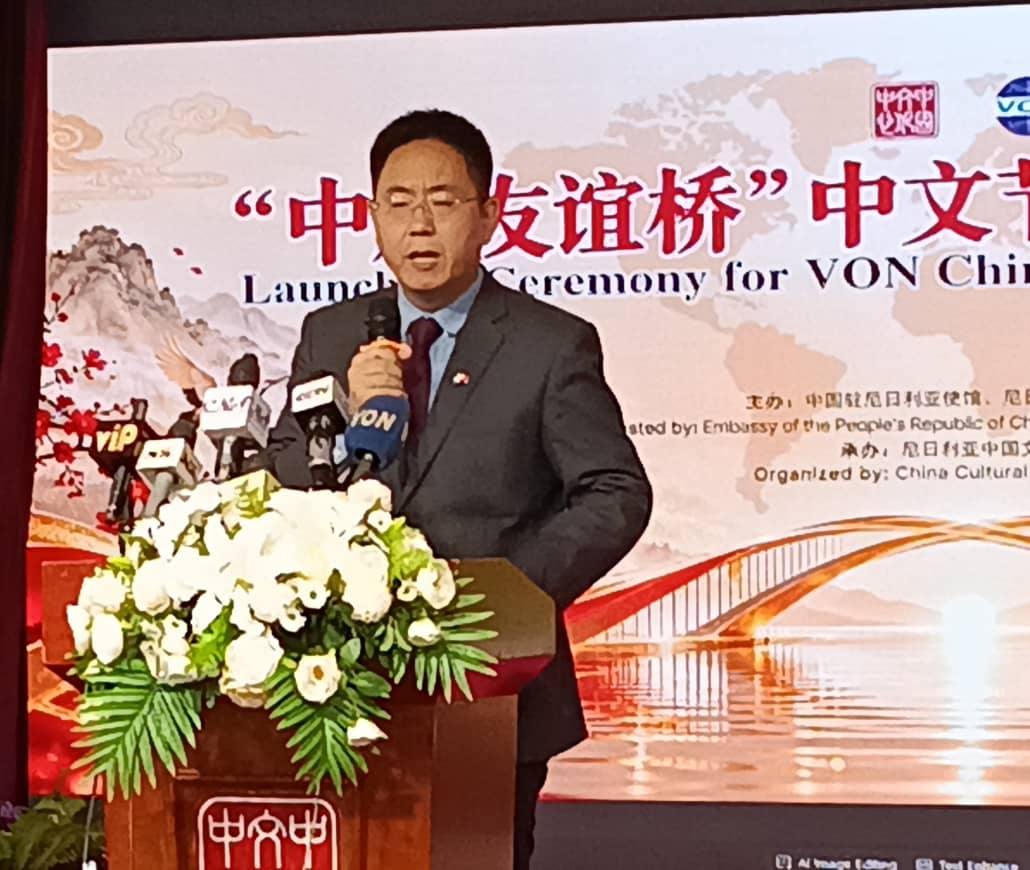
The programme was jointly initiated by the Chinese Embassy in Nigeria, Xinhua News Agency Africa Regional Bureau and Voice of Nigeria (VON), with the China Cultural Centre serving as a supporting partner.
Yang described the initiative as timely, particularly as 2026 marked the 55th anniversary of diplomatic relations between China and Nigeria and the China-Africa Year of People-to-People Exchanges. He also recalled the 2024 Beijing Summit of the Forum on China-Africa Cooperation (FOCAC), which reaffirmed both sides’ commitment to building a shared future.
The Director disclosed that 10 episodes had been broadcast since the programme commenced on September 2, attracting appreciation from listeners across Africa. He expressed confidence that it would become an important platform for cultural exchange, particularly among young Africans.
Yang commended VON and its Director-General, Mallam Jibrin Baba Ndace, for their commitment to the partnership, affectionately describing Ndace as his “big brother”.
“Through concrete actions, your institution, Voice of Nigeria, has demonstrated a strong commitment to promoting mutual learning among Chinese and African civilisations, deepening mutual understanding and friendship between our peoples, and building a solid foundation of public support for practical China-Nigeria and China-Africa cooperation,” the envoy stated.
Beyond cultural exchange, Yang highlighted the expanding economic relationship between China and Africa, particularly China’s zero-tariff policy for African countries with which it maintains diplomatic relations.
The policy, which commenced in May 2026, covered all 53 eligible African countries, including Nigeria. Figures presented by the Director showed that China-Africa trade exceeded $207.4 billion in the first half of 2026, while China’s imports from Africa reached $28.5 billion between May and June, representing a 23.5 per cent year-on-year increase.
Yang noted that the policy was estimated to have contributed to an approximately six per cent increase in African exports to China.
Nigeria’s performance was particularly notable, with bilateral trade between the two countries reaching $17.4 billion in the first half of 2026, representing a 35 per cent year-on-year increase.
“China’s imports from Nigeria amounted to $2.25 billion, representing a remarkable increase of 81 per cent. In May and June alone, imports from Nigeria recorded year-on-year growth of more than 40 per cent in each month,” Yang disclosed.
The envoy expressed optimism that the growing trade relationship would create more opportunities for economic cooperation and shared prosperity.
On African development, Yang highlighted the importance of political leadership, institutional reforms and sound governance. He outlined President Xi Jinping’s four principles for addressing conflicts in Africa: an African-led approach, fairness and justice, ending hostilities through peaceful resolution, and addressing both the symptoms and root causes of conflicts.
He also called for stronger China-Africa cooperation in the mining sector, based on respect for African countries’ sovereignty over natural resources, mutual benefit, high-quality development and a fair, open environment for cooperation.
Yang urged African media organisations to give greater attention to China-Africa relations, assuring that the Chinese Embassy, China Cultural Centre and Xinhua News Agency would continue working with VON to improve the programme and expand its reach.
Also speaking, the Executive Secretary of the Nigeria Press Council, Dilli Ezughah, commended the initiative, describing it as a demonstration of the importance of cultural diplomacy, media collaboration and people-to-people engagement.
Ezughah observed that China-Nigeria relations had evolved beyond economic and diplomatic cooperation to embrace cultural understanding, knowledge sharing and mutual respect.
“The relationship between China and Nigeria has continued to evolve beyond economic and diplomatic cooperation to embrace cultural understanding, knowledge sharing, and mutual respect. Initiatives such as this demonstrate that building lasting relationships between nations requires not only government-to-government engagements, but also meaningful connections between their peoples,” he said.
The Executive Secretary praised the partnership between the Chinese Embassy and VON, formalised in May 2026, particularly its combination of Mandarin lessons and Xinhua news reports. He noted that the programme’s ambition to reach audiences across all 54 African countries gave it broader continental significance.
Ezughah also disclosed that the council was working towards establishing stronger professional media relations with China, following an understanding he initiated during a previous visit to the country.
Encouraging Nigerians to travel and experience other cultures, the Executive Secretary recalled that his experience in China revealed similarities between Chinese hospitality and traditional African values of welcoming visitors and showing kindness to strangers.
“When you go to China, you will recognise that in indigenous African societies, we are welcoming people, we are loving people. You visit a place, the first thing is that you’re given water to drink or to wash your feet. You will see that in China,” Ezughah added.
He further urged Nigerians to preserve their indigenous cultural heritage, noting that China’s ability to sustain and develop its traditional culture alongside modernisation offered important lessons for African societies.
“The difference between us and the Chinese is that they continued to develop their indigenous culture, while at a point in our history, it was terminated by other cultures which we have tried to embrace,” the Executive Secretary observed.
The launch of the China-Nigeria Bridge Programme represents an important step towards making cultural diplomacy more accessible to ordinary people.
As more Africans learn about China and more Chinese citizens gain a deeper appreciation of African cultures, the programme has the potential to transform cultural exchange into enduring friendship and practical cooperation, ensuring that the bridge being built today remains strong for generations to come.

