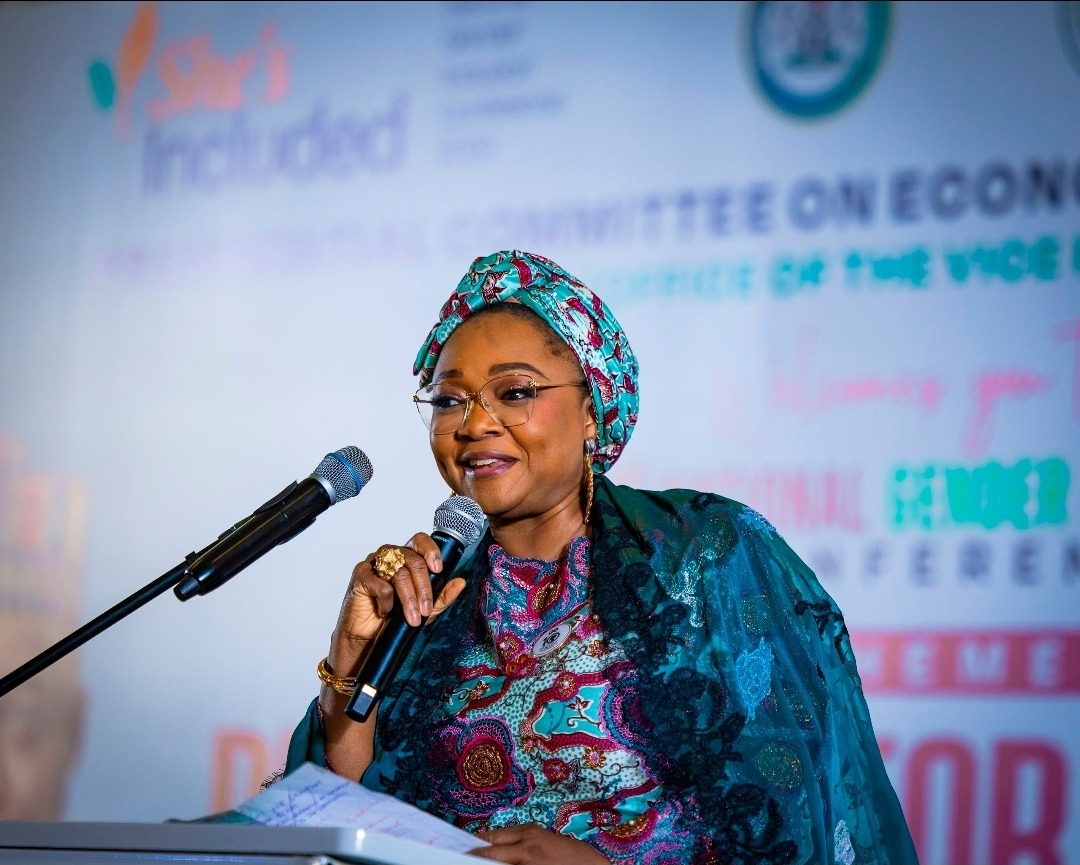
The Minister of Women Affairs and Social Development, Hajiya Imaan Sulaiman-Ibrahim, has charged financial institutions, regulators and governments to redesign economic systems to reach millions of Nigerian women currently excluded from formal finance.
The Minister said Nigeria no longer needed to debate whether women should be economically included, but must confront systems failures to deliver inclusion where women live and work.
Delivering the keynote address at the Second National Gender Inclusion Conference, themed: “Designing for Delivery: Financing, Systems and Scale for Women’s Economic Transformation” Sulaiman-Ibrahim said the country’s greatest challenge was not ambition, but delivery.
“Our difficulty has been design,” she declared.
According to her, financial instruments developed at the centre frequently fail to reach women in underserved communities because the delivery chain is not built around their realities.

“We design excellent instruments at headquarters and they travel about as far as the nearest paved road,” she said.
READ ALSO: Women Minister Reaffirms Commitment to Grassroots Women’s Economic Empowerment
Sulaiman-Ibrahim also interrogated financial models that continue to rely heavily on conventional collateral, despite evidence that women can sustain viable businesses and repay loans.
“A loan carrying a woman’s photograph on the brochure but the same collateral requirement behind it remains the same loan,” she said.
She called for alternative-data credit scoring, guarantee-backed lending, group-based financing and affordable digital payment systems that reflect how Nigerian women actually save, trade and build enterprises.
The Minister said government was already building the infrastructure required to support such financing, citing the Nigeria for Women Programme Scale-Up, which targets 4.5 million women through 300,000 Women Affinity Groups nationwide.
She said the groups represent more than social organisation, noting that their savings and lending activities provide a potentially valuable basis for credit assessment.
“They are, in substance, the credit file our institutions have long said Nigerian women do not possess. It exists today, it is verifiable,” she said.
The Minister further demanded gender-disaggregated reporting across financial and public institutions, saying data was indispensable to effective policy.
“Where our data is not disaggregated, we are designing in the dark and calling it policy,” she stated.