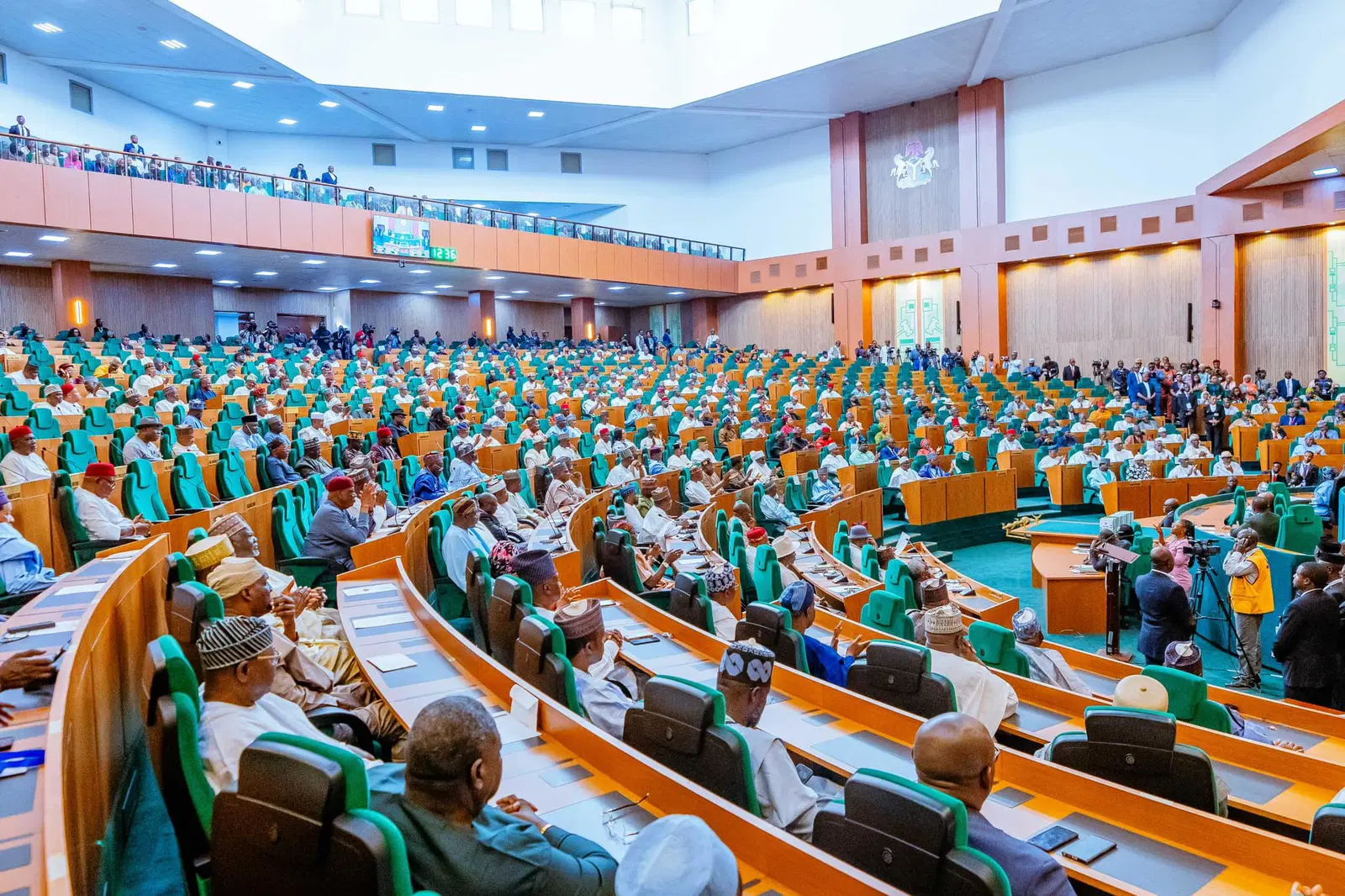
The House of Representatives has urged the Nigerian Government to consider increasing financial subventions to public tertiary institutions to reduce their dependence on internally generated revenue through student charges.
It also urged the Federal Ministry of Education and the National Universities Commission (NUC) to engage with the Management of Public Tertiary Institutions to suspend school fee increments and initiate a comprehensive review of tuition structures to align with current economic realities.
The resolutions were a sequel to the adoption of a motion on the “Need to Halt the Recent Increase in School Fees by Public Tertiary Institutions and its Impact on Nigerian Education Loan Fund (NELFUND)” moved by Mr Ifeoluwa Ehindero, at plenary.
- READ ALSO: Reps Urge Calm Over Suspected Ebola Threat
While leading the debate on the motion, Mr Ehindero said that Education is the cornerstone of national development and is recognised as a fundamental state objective under Section 18 of the Constitution of the Federal Republic of Nigeria, 1999 (as amended), which states that the government shall direct its policy towards ensuring that there are equal and adequate educational opportunities at all levels.
“Also note that the Federal Government recently launched the Nigeria Education Loan Fund (NELFUND) with the noble aim of providing interest-free loans to indigent students to access tertiary education without financial hindrance.
“Aware that the NELFUND loan scheme was designed based on existing tuition benchmarks and institutional cost structures, and that arbitrary or sudden hikes in fees by institutions threaten to undermine the sustainability, equity, and effectiveness of the loan programme.
“I observed that the recent widespread increases in school fees and other mandatory charges by several public tertiary institutions across the country, including universities, polytechnics, and colleges of education, in some cases by over 100%, have been implemented without broad consultation or consideration of the economic realities facing many Nigerian families.
“Worried that if allowed to continue unchecked, these fee increments may create significant disparities in the allocation of education loans, crowd out students from less affluent backgrounds, and frustrate the objectives of NELFUND in bridging access to higher education,” the lawmaker said.
He noted that the House is disturbed that such trends, if not immediately addressed, may lead to increased student dropouts, campus unrest, and overall loss of public confidence in government’s commitment to affordable education.
The House mandated the Committees on University Education, Federal Polytechnics and Higher Technical Education, and Federal Colleges of Education to investigate the extent and justification of the recent school fee increase by public tertiary Institutions