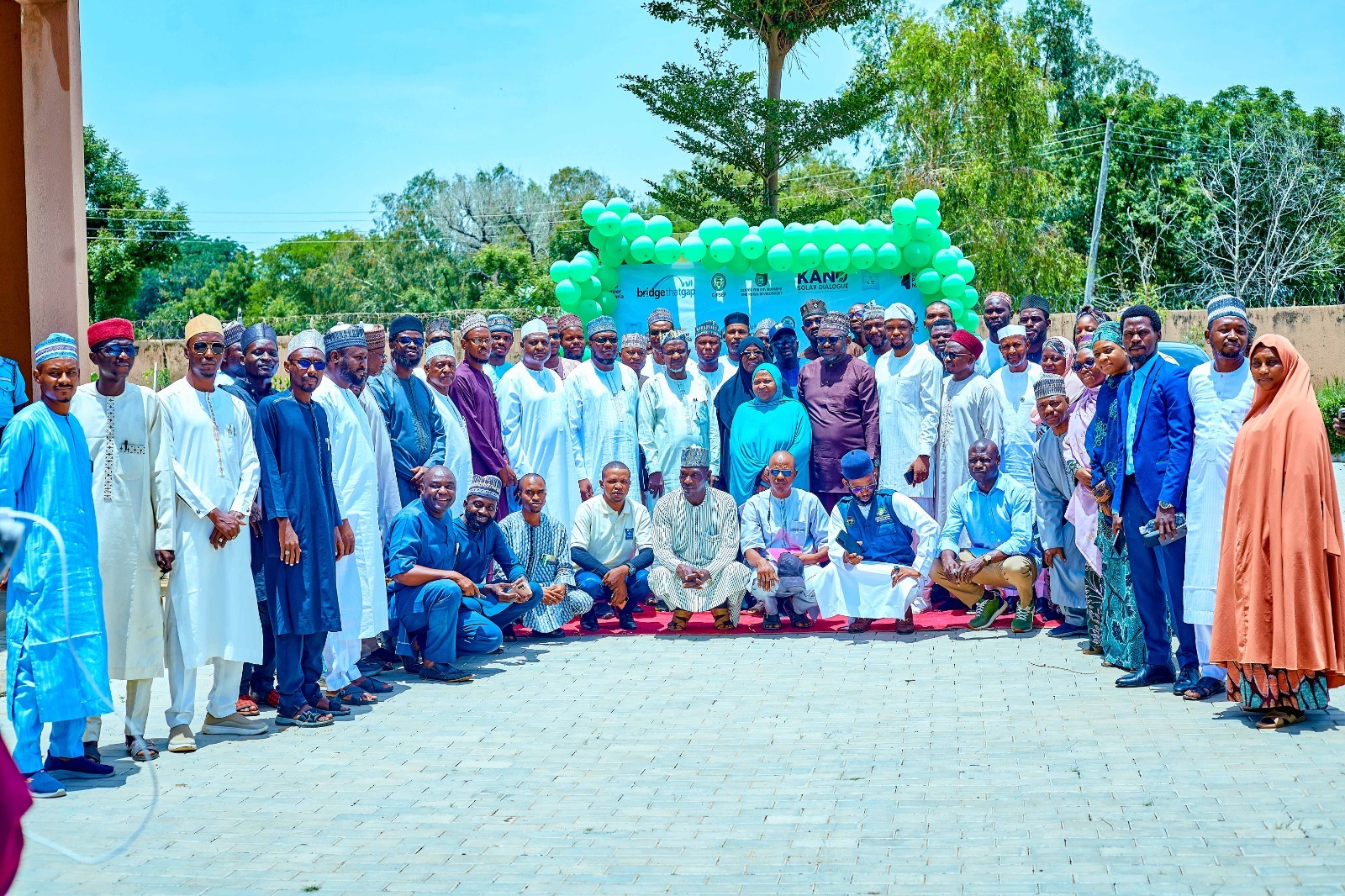
Stakeholders in Nigeria’s renewable energy sector have called on the Nigerian Government to develop a National Renewable Energy Industrialisation Roadmap to accelerate the growth of clean energy industry, strengthen local manufacturing, and expand access to affordable electricity.
The call was made at the Kano Solar Dialogue 2026, held at the Centre for Renewable Energy and Sustainability Transition (CREST), Bayero University, Kano.
The event was jointly organised by CREST and the Global Initiative for Food Security and Ecosystem Preservation (GIFSEP), under the Solar Power Nigeria Campaign.
The dialogue brought together representatives from government, academia, the private sector, financial institutions, civil society organisations, regulatory agencies and renewable energy companies to discuss Nigeria’s renewable energy future, investment opportunities, quality standards and the Federal Government’s proposed restriction on solar panel imports.
Delivering the keynote address, Executive Director of GIFSEP, Dr. Michael Terungwa David, said Nigeria continues to face the challenge of widespread energy poverty despite its vast energy resources due to lack of national energy industrialisation roadmap especially in the area of renewable energy.
Dr. David described “solar energy as a practical solution for providing reliable, clean and affordable electricity to millions of underserved Nigerians.”
He cited the World Bank’s 2025 report, which estimates that about 86.8 million Nigerians still lack access to electricity, making Nigeria one of the countries with the largest electricity access deficits, hence the need for renewable energy roadmap.
He however, warned against an immediate blanket ban on imported solar panels.
“While local manufacturing should be encouraged, a sudden restriction on imports could slow renewable energy adoption, increase costs and limit access to electricity for households and businesses,” he said.
READ ALSO: Kano Government Secures Landmark Renewable Energy Investments
He advocated a phased industrialisation strategy that combines incentives for local manufacturing, affordable financing, investment in research and technical training, stronger quality standards and gradual import substitution.
Dr. David also noted that the Electricity Act 2023 provides opportunities for state governments to expand electricity generation through renewable and decentralised energy systems.
At the end of the dialogue, participants unanimously recommended that the Federal Government adopt a National Renewable Energy Industrialisation Roadmap to guide the sustainable development of the sector.
They also called for increased investment in research, innovation, technical education and technology commercialisation, as well as fiscal incentives such as tax waivers to support local production of renewable energy technologies.
The stakeholders further recommended that any future restrictions on solar panel imports should be introduced gradually and only after Nigeria develops sufficient local manufacturing capacity to meet domestic demand.
The Kano Solar Dialogue is part of the Solar Power Nigeria Campaign, which seeks to promote evidence-based policies, strengthen local renewable energy manufacturing and support Nigeria’s transition to a sustainable and inclusive clean energy economy.