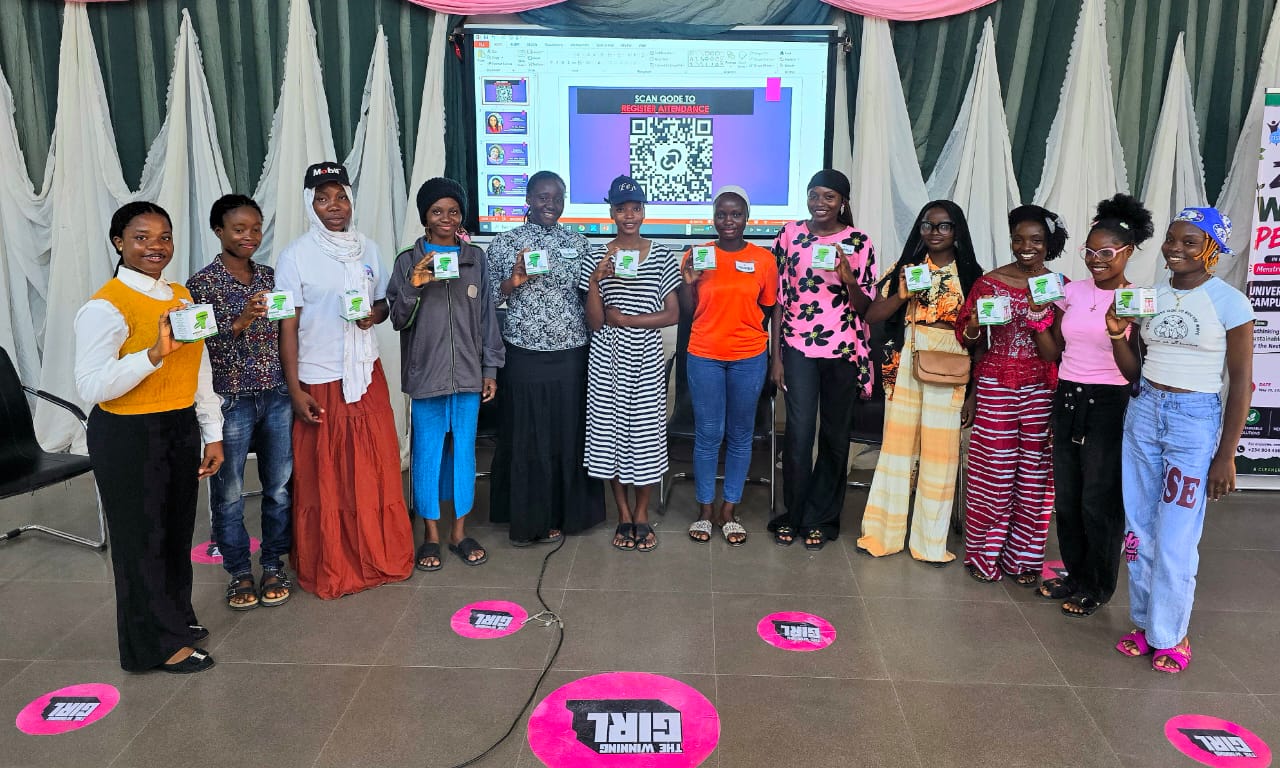
Stakeholders across the health, environmental, education, media and development sectors have advocated sustainable menstrual health practices and environmentally responsible waste management at a University of Abuja symposium commemorating Menstrual Hygiene Day 2026.
The event, organised by Helpline Social Support Initiative and Environmental Advocacy for Sustainable Solutions with support from Country Associates Network (CANET), was themed “Rethinking Menstrual Waste: Sustainable Solutions for the Next Generation”.
The President of Helpline Social Support Initiative, Dr. Jummai Ahmadu, said menstrual health conversations must address broader issues of dignity, health, education, environmental sustainability and social responsibility.
According to Ahmadu, “Today’s conversation is not just about menstruation; it is about dignity, health, education, environmental sustainability, and social responsibility.”
Represented by Mr Arome Onoja, she noted that while many girls still face challenges accessing safe menstrual products and hygiene facilities, the disposal of non-biodegradable sanitary products continues to create environmental concerns.
Ahmadu stressed that “sustainable menstrual solutions such as reusable pads, menstrual cups, proper disposal systems, and increased awareness on eco-friendly alternatives are no longer optional conversations; they are urgent necessities.”
She urged participants to become ambassadors of menstrual health awareness and environmental responsibility while calling on government institutions, development partners, private organisations and philanthropists to support such initiatives.
Zero Waste and Environmental Sustainability Advocate Ann Rhodes said her advocacy is rooted in environmental protection and the promotion of circular economy principles.
“The vision for me is about environmental protection. I am a zero-waste advocate, so I am always coming from a perspective of things that have negative impact on the environment,” she said.
Rhodes explained that the campaign encourages a transition from single-use menstrual products to reusable alternatives with lower environmental footprints.
“We try to advocate for alternatives that have far less environmental impact.”
Highlighting environmental concerns associated with disposable products, Rhodes said, “These microplastics, many of them, take an average of 500 years to leave the environment. They are non-biodegradable.”
She also underscored the economic advantages of reusable menstrual cups, noting that a single cup can last up to ten years under proper conditions of use.
In a panel session moderated by Shetu Jegubara Gamaliel, medical practitioner Dr. Ene Sokpo, speaking on menstrual health, fears of cancer spread and safety, said menstrual cups are safe when produced from quality materials and used correctly.
“Menstrual cups are medically safe for use, provided they meet some requirements, such as being made up of good quality materials, being used properly, and being tested.” She said
Dr. Ene, however, emphasised proper hygiene, handwashing and sterilisation to prevent infections arising from improper use, stating, “In themselves, menstrual cups do not cause infection because the silicone that they are made of does not allow microorganisms to grow on them.”
From an environmental health expert perspective, Tina Eyegbaghanren Imole described menstrual waste as a public environmental concern, warning against flushing sanitary products into toilets or burning them, noting the implications for sewage systems and environmental pollution.
“What you give to the environment, the environment gives back. It becomes a public concern because it is not just you that has that menstrual flow. It is a concern that will affect a lot of people. It is the environment, it is the public, it is the government,” she advocated.
Sharing practical lived experiences, Mrs Comfort Omoyele, a long-term menstrual cup user, said she had used the product for more than a decade after being introduced to it by a colleague.
“When I am on my high flow, I move around; I travel with ease, free, no scratches, no itches, free, and clean.” She shared.
Also speaking, Menstrual Cup User and advocate Mrs Lizzy Okoji described her first experience with the menstrual cup as seamless, saying despite having a heavy flow, the cup enabled her to move around comfortably and confidently; “I did not even know I was putting on anything.”
Participants at the symposium said the campus symposium had expanded their understanding of sustainable menstrual health options.
Blessing Akinbola, a 500-level student of the Faculty of Agriculture, University of Abuja, said, “This programme has opened my eyes to see the pros and cons of using this, and I feel like it is very sustainable compared to the normal pads we use.”
Similarly, Anastasia Ashiem of the Department of Agricultural Extension and Rural Sociology said the symposium had improved her knowledge of menstrual cups and their benefits.
For Mercy Udo of the Faculty of Communication and Media Studies, the programme challenged societal perceptions about menstruation and highlighted environmentally friendly alternatives.
According to her, “Today I have learnt that menstruation is not a problem. It is not a taboo anymore. It should not be a problem to the environment.”
The symposium concluded with renewed calls for behavioural change, environmental responsibility and wider adoption of sustainable menstrual health solutions among young women.