


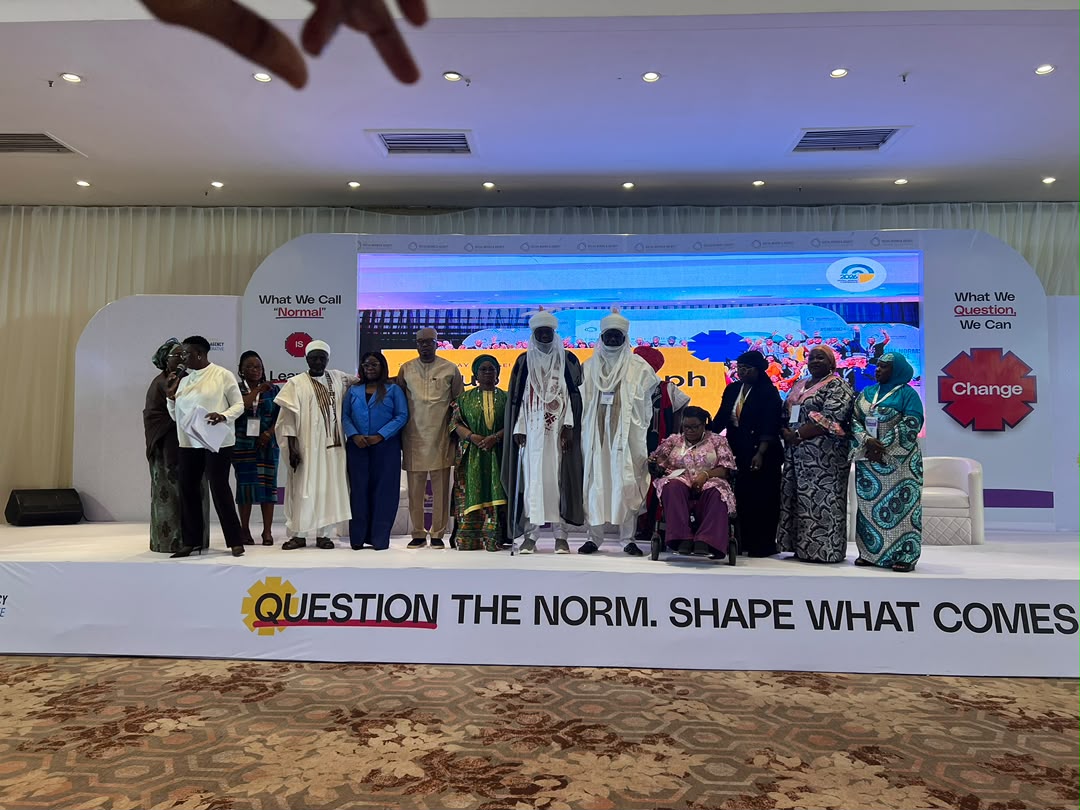
Stakeholders in Nigeria’s development sector have called for increased investment, stronger partnerships and community-driven interventions to tackle harmful social norms undermining progress in health, education, gender equality and sustainable development.
They made the call at the 2026 Social Norms Conference in Abuja, where participants highlighted the need to transform deeply rooted cultural practices and societal expectations that limit opportunities and affect the well-being of individuals and communities.
The two-day conference, which opened on 29 October at the Abuja Continental Hotel, was organised by the Nigeria Social Norms Learning Collaborative (SNLC), in partnership with the Anglophone West Africa Social Norms and Agency Learning Collaborative (AWALC).
With the theme, “Norms in a Shifting Landscape: Powering Progress for People and Place”, the event brought together government representatives, development partners, academics, health professionals, traditional and religious leaders, community representatives and other development stakeholders.

Discussions centred on the influence of social norms on maternal and child health, education, gender equality, women’s empowerment and behavioural change, with participants examining practical ways to encourage positive attitudes and eliminate harmful practices.
Speaking with Voice of Nigeria, a Principal at the Solina Centre for International Development and Research (SCIDaR), Dr Raihanah Ibrahim said social norms played a significant role in determining how individuals and communities responded to development interventions.
She explained that the conference provided an opportunity for organisations and professionals working across different sectors to share experiences, understand the influence of societal expectations and develop practical approaches to changing harmful behaviours.

According to her, social norms influence decisions as fundamental as whether a girl attends school, whether a boy abandons formal education to learn a trade, whether families seek professional healthcare and how communities respond to disease outbreaks.
She also noted that prevailing social behaviours could either support efforts to address climate change or worsen its effects.
Dr Ibrahim stressed that while harmful norms could obstruct development, positive social expectations and collective behaviours could accelerate progress by encouraging healthier choices, greater inclusion and improved access to essential services.
However, she identified inadequate funding as a major obstacle to sustaining social norms interventions.
She called on governments at all levels and development partners to demonstrate greater commitment by taking ownership of the initiative, defining priorities and providing the resources required to expand its reach and impact.
Also speaking, a keynote speaker and researcher at the University of Abuja, Professor Biyaya Beatrice Nwankwo, emphasised the importance of addressing unhealthy community practices, particularly those affecting maternal and child health.
She identified the preference for home deliveries over professional medical care as one of the practices requiring urgent behavioural change, noting that encouraging pregnant women to access healthcare facilities could help reduce preventable maternal and child deaths and complications.
Professor Nwankwo stressed that improving health outcomes required more than the availability of medical facilities; communities must also embrace positive attitudes and practices that encourage people to use essential health services.
In her remarks, the Minister of Women Affairs and Social Development, Hajiya Imaan Suleiman-Ibrahim, represented by Princess Dr Jumai Idonije, said the conference theme reflected Nigeria’s social development priorities.
She observed that social norms shaped people’s attitudes, behaviours, access to opportunities and the extent to which their rights and dignity were protected.
The Minister noted that legislation and government policies alone could not transform society without corresponding changes in societal values, beliefs, cultural practices and institutional behaviour.
“When harmful norms persist, progress is constrained, and when positive norms take root, equality, inclusion and sustainable development become possible,” she said.
She reaffirmed the commitment of President Bola Tinubu’s administration to strengthening relevant institutions, expanding opportunities for families and building resilient communities.
The Minister also commended the organisers for bringing together stakeholders to examine how positive social norms could contribute to national development.
Beyond the discussions, the conference featured exhibitions, drama, pantomime performances and an innovation and creativity challenge designed to showcase practical and creative approaches to social change.
Sadiq Abimbola Rukayat emerged as the overall winner of the innovation and creativity challenge at the 2026 conference.


