


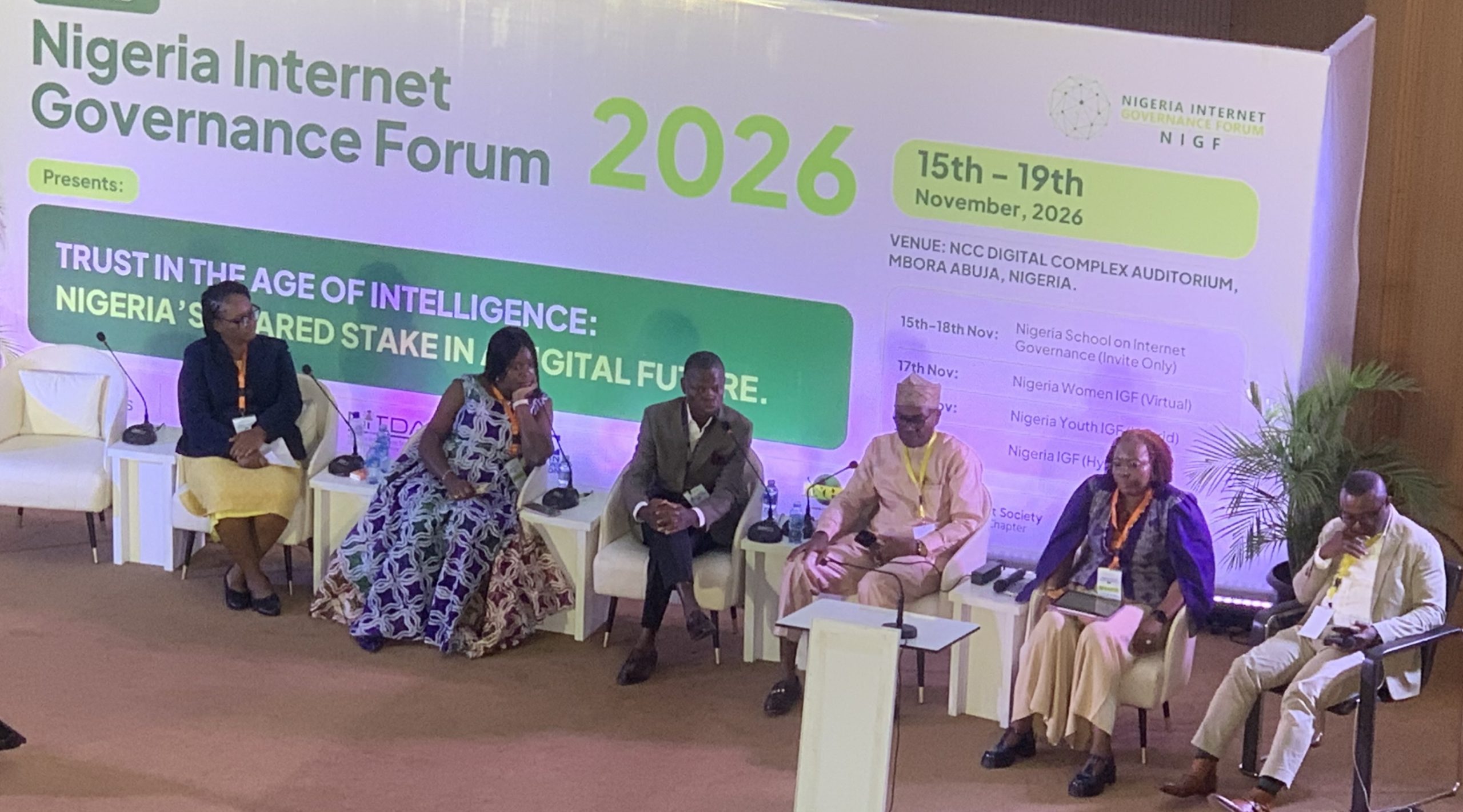
Stakeholders in Nigeria’s digital economy have called for deliberate investments in indigenous technology, stronger digital infrastructure, effective regulation and inclusive governance to build trust in the country’s evolving digital ecosystem.
The call was made at the 2026 Nigeria Internet Governance Forum (NIGF), held in Abuja, under the theme, “Trust in the Age of Intelligence: Nigerians’ Shared Stake in the Digital Future.”
The Director-General of the National Information Technology Development Agency (NITDA), Kashifu Inuwa, said the growing influence of Artificial Intelligence (AI) and other emerging technologies was shifting society from human-centred management towards what he described as “algorithm management.”
Represented by the Director of e-Government and Digital Economy Development, Salisu Kaka, he noted that as AI increasingly influences decisions across different sectors, trust had become critical, particularly because users often have limited control over how digital systems process and deliver information.
According to him, AI systems could generate misleading responses when they lack sufficient information – a challenge commonly referred to as AI hallucination, with potentially damaging consequences.
READ ALSO: NCC Unveils Strategic Roadmap to Power Nigeria’s Digital Economy
Inuwa stressed that trust must be deliberately integrated into the design, development and deployment of digital technologies.
“Trust is very necessary. And for us to earn this trust, we have to ensure that we design, we provide, we implement everything digital with that trust in mind,” he said.
He identified strategic investment in appropriate technology, the creation of an enabling environment for indigenous innovation and ensuring that technology aligns with national expectations and requirements as essential steps towards building digital trust.
In his remarks, the Executive Vice Chairman of the Nigerian Communications Commission (NCC), Dr Aminu Maida, reaffirmed the Commission’s commitment to an open, secure, resilient and inclusive internet.
Represented by Abdulazeez Adamu, Head of Online Safety, Cyber Security and Internet Governance, Maida highlighted the Commission’s Internet Code of Practice 2026, issued in February, which outlines the rights and obligations of internet access service providers and other entities operating over communications networks.
He said the Code addresses issues including transparent traffic management, protection of consumers’ personal data, safeguarding minors and vulnerable users, and notification to the Commission before deploying AI tools in network management and customer engagement.
Maida emphasised that building trust in the digital environment required shared responsibility among regulators, operators, civil society organisations, academia and the technical community.
He added that the Commission would examine recommendations emerging from the forum, particularly those relating to artificial intelligence, online safety, cybersecurity and the inclusion of women and young people in internet governance.
“The Commission will follow the deliberations with interest and will study the recommendations that emerge on artificial intelligence, online safety, cyber security, and the inclusion of young people and women in internet governance,” he said.
“We remain committed to working with all stakeholders represented here to translate the recommendations into action where they fall within its mandate,” he added.
Inspire Confidence
Also speaking, the Acting Permanent Secretary of the Federal Ministry of Communications, Innovation and Digital Economy, Adetunji Adeyemo, represented by Dr Patrick Oghuma, said Nigeria’s digital future must be built on a foundation that inspires confidence among citizens, businesses and public institutions.
He highlighted key government initiatives aimed at expanding connectivity and strengthening the country’s digital infrastructure, including the Nigerian Universal Communication Access Project (NUCA), which is targeting the deployment of 3,700 telecommunications towers to rural, riverine and hard-to-reach communities.
Adeyemo said the initiative would extend connectivity to more than 20 million Nigerians currently underserved by reliable telecommunications coverage.
The Acting Permanent Secretary further identified the Federal Government’s E-Government Master Plan 2.0 and the National Digital Addressing and Postcode System as important components of efforts to improve public service delivery, transparency, financial inclusion and digital commerce.
He maintained that infrastructure without effective governance remained vulnerable, while governance without infrastructure was ineffective, stressing the need for both to work together to sustain public confidence.
Similarly, the President of the Nigeria Internet Registration Association (NiRA), Adesola Akinsanya, described trust as essential infrastructure for the country’s digital economy, warning that without it, digital adoption, investment and innovation could suffer.
Akinsanya said artificial intelligence was increasingly influencing banking applications, education, healthcare and digital communication, making the authenticity and security of online platforms more important than ever.
He highlighted NiRA’s deployment of Domain Name System Security Extensions (DNSSEC) on the .ng domain in February 2026, describing it as a significant step towards ensuring the authenticity and integrity of information received by users accessing Nigerian domain names.
The NiRA president urged stakeholders to prioritise local technology development and governance, establish measurable trust standards and invest in digital literacy.
He also encouraged Nigerians to adopt .ng domains as part of efforts to promote digital sovereignty, retain economic value within the country and strengthen accountability in the digital space.
Akinsanya reaffirmed NiRA’s commitment to maintaining a secure, stable, resilient and inclusive .ng domain namespace in line with international best practices.
The speakers collectively stressed that Nigeria’s ability to benefit from artificial intelligence and emerging technologies would depend not only on technological advancement but also on public confidence, effective governance, local innovation and the protection of citizens’ digital rights.
The 2026 Nigeria Internet Governance Forum brought together representatives of government, regulatory institutions, the private sector, civil society, academia and the technical community to deliberate on Nigeria’s priorities in internet governance and its shared responsibility in shaping a trusted digital future.

